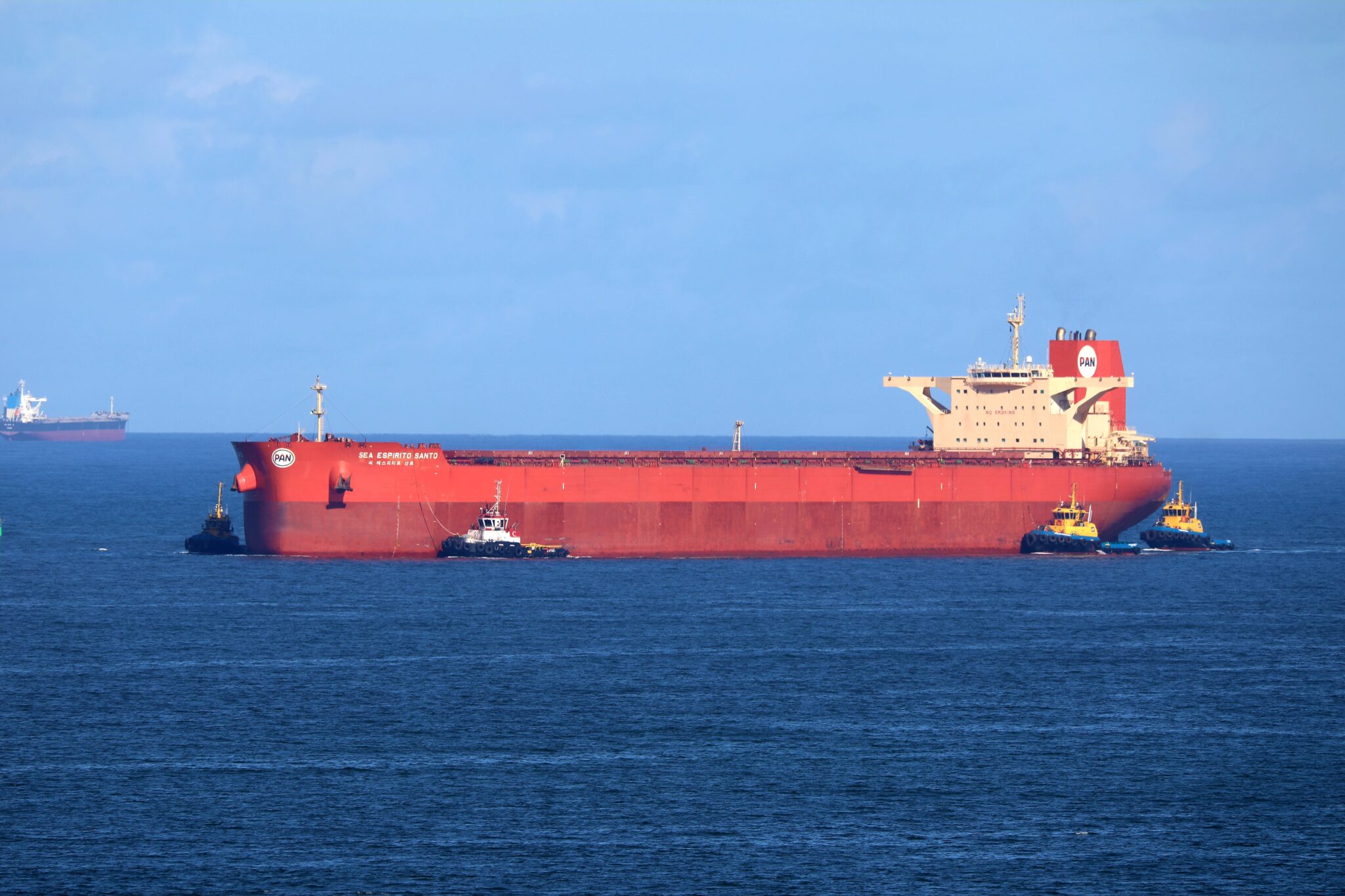
The European Union member states agreed on a price cap for Russian oil transported by sea on Friday (02/12), following a big “yes” from Poland.
The ceiling, after many days of intensive debate, was decided at 60 dollars a barrel.
Warsaw had resisted the proposed level as it considered an adjustment mechanism to keep the cap below the market price. It had pushed for negotiations at the European level calling for the cap to be as low as possible to squeeze Russia's revenues and limit Moscow's ability to fund the war in Ukraine.
Polish Ambassador to the EU Andrej Santos told reporters today that Warsaw supports the EU agreement, which includes a mechanism to keep the oil price ceiling at least 5% below the market price.
Η Poland and the Baltic States adopted a tough stance and pushed for a limit up to the 30 dollars a barrel.
For their part, the Greece, the Cyprus and the Malta they demanded a ceiling 70 dollars, they said in Euronews diplomats who know the situation.
The negotiations were an attempt to find a middle ground between the two sides, with the first proposal for a compromise being in the 65 dollars the barrel and a second one in the 62 dollars, which was still considered too high by the group of Eastern European countries.
The Thursday (01/12), the consensus came down to $60 (57 euros) a barrel, diplomats said, following a new proposal from the European Commission, which acts as a go-between for the bloc and the G7.
The final agreement was reached in Friday afternoon
The deal was «closed» on Friday afternoon, when Poland gave the long-awaited green lights, several diplomats told Euronews.
Russia, however, is already selling Urals oil at a reduced price, which in recent weeks has fluctuated between 77 and 64 dollars a barrel - about 20 dollars cheaper than the Bren crude benchmarkt.
According to the plan, Russia will lose the difference between the commercial price and the ceiling price. The threshold will be regularly reviewed in the light of developments in the energy sector.
The Agreement provides that European shipping companies will not be able to transport Russian oil to third countries if the price per barrel exceeds the flat rateν.
Once approved by the G7, the cap will enter into force on 5 December, on the same day that the same EU ban on Russian oil is scheduled to take full effect, a move that will remove millions of barrels from the market.
The reactions and what «the future holds»
A spokesman for the Czech Republic, which holds the rotating presidency of the EU and oversees negotiations among EU countries, said it had started the written procedure for the 27 EU countries to formally give the green light for the deal after Poland's approval.
Details of the agreement are to be published in the Official Journal of the European Union on Sunday.
The President of the European Commission Ursula von der Laien said that the price cap would significantly reduce the revenue of Russia.
«Θhelp us to stabilise global energy prices, to the benefit of emerging economies around the world», von der Leyen said in a Twitter post, adding that the ceiling would be «adjustable over time» to react to market developments.
The G7 price cap will allow non-EU countries to continue to import Russian oil by sea, but will prohibit to shipping, insurance and reinsurance companies to move cargoes of Russian crude around the world unless it is sold at prices below the cap.
Because the most important shipping and insurance companies are based in the G7 countries, the price cap will make it very difficult for Moscow to sell its oil at a higher price.
Ο White House welcomed news that the EU is «united» on the oil price cap and said this is expected to limit Russian revenues
«We still believe... that a price cap will help limit Putin's ability to profit from the oil market so that he can continue to fund a war machine that continues to kill innocent Ukrainians.», the spokesman for the National Security Council told reporters, John Kirby.
The US official stressed that Washington believes that $60 per barrel is the appropriate level for a price ceiling and will allow for the desired outcome. «We believe it is the right level and we believe it will have a positive effect.».
Kirby added that the intention of imposing a price cap was always twofold - to limit Russia's ability to profit from oil sales while helping to balance supply and demand.
«Just a month or so ago, the indications were that Putin was charging $100 a barrel, so this will be a significant drop»Kirby said, adding that coalition partners reserve the right to adjust the price cap in the future.
Ο Chairman of the Foreign Affairs Committee of the lower house of the Russian Parliament reacted by saying the EU endangers its own energy security, according to the Russian news agency TASS.
The cap on Russian crude oil transported by sea should be reduced to 30 dollars a barrel in order to further damage Russia's economy, assessed today a senior official of the Ukrainian presidency.
«This is what the McFaul-Yermak group proposed, but it would be necessary to reduce it to $30 in order to destroy the enemy's economy more quickly,» wrote Andrew Germak, head of Ukraine's presidential office, on Telegram, referring to the international working group on sanctions.
Information: APE-MPE, efsyn.gr