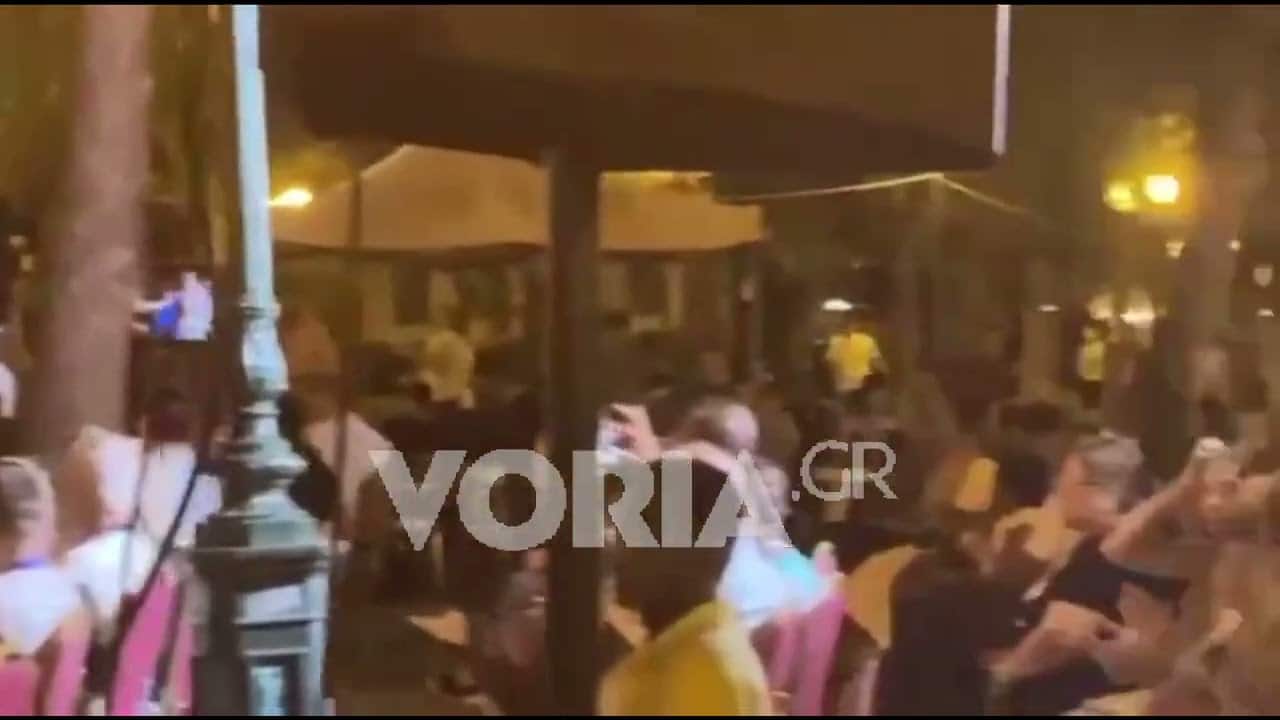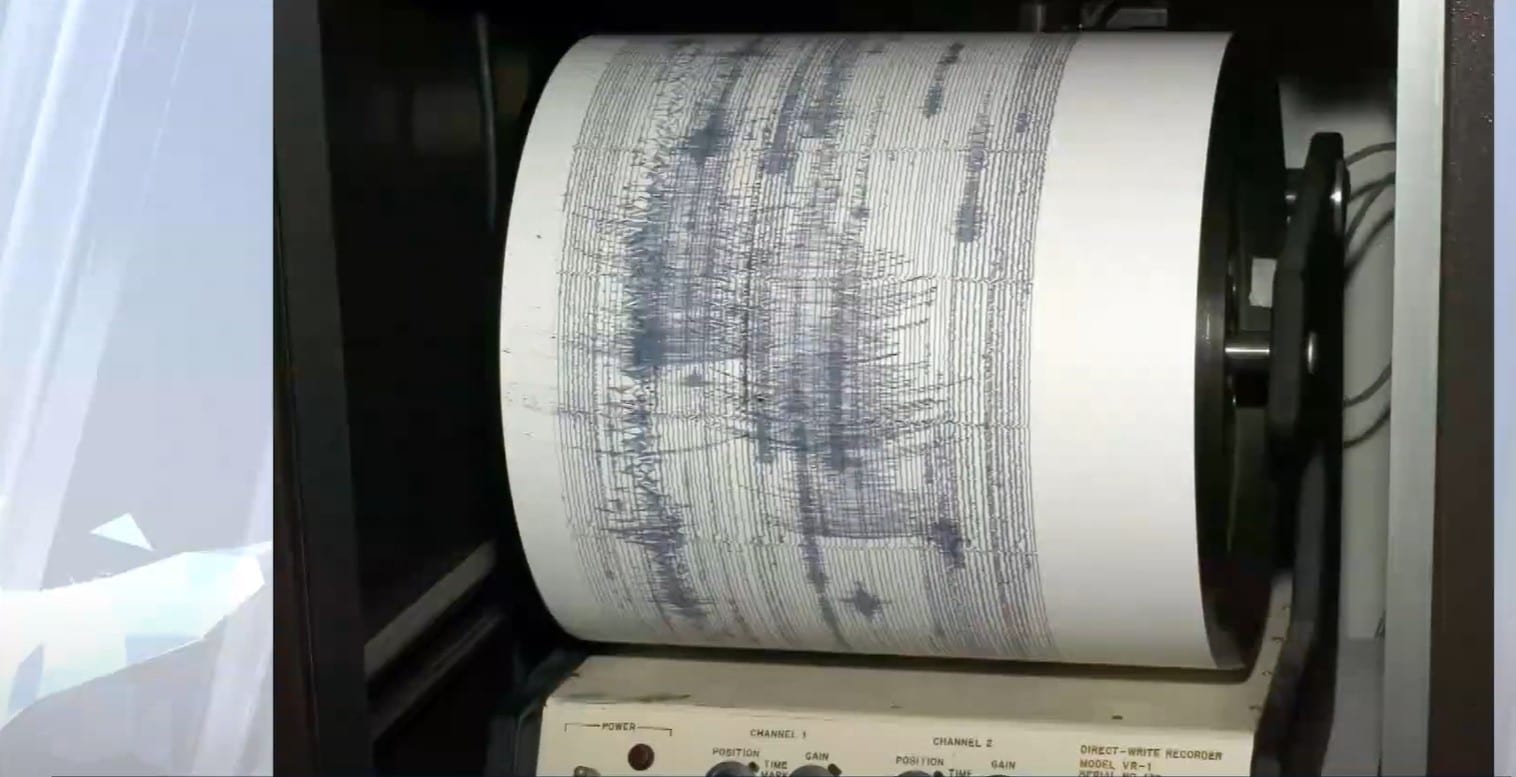
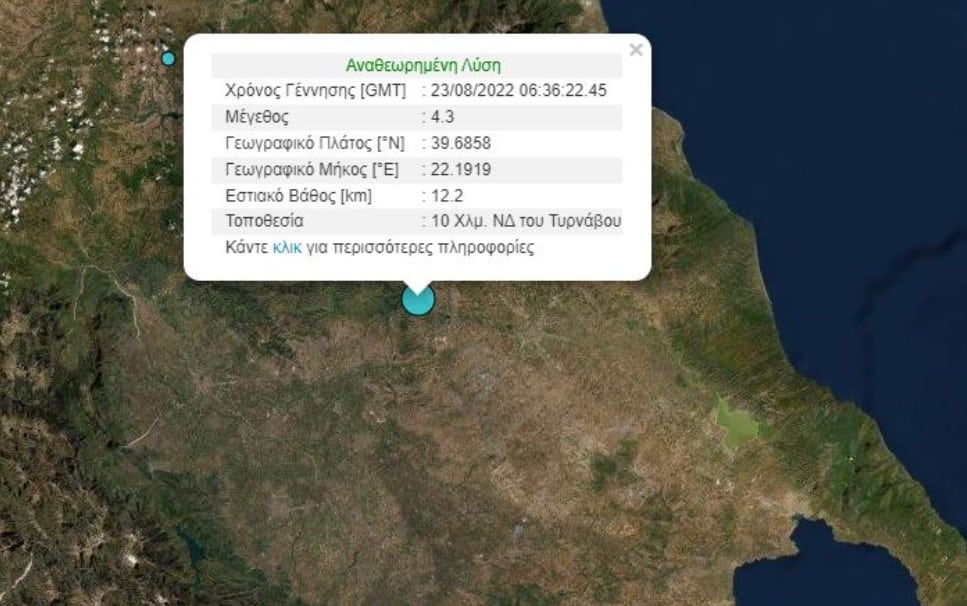
An earthquake of magnitude 4.3 on the Richter scale occurred at 9:36 Tuesday morning 10km southwest of Tirnavos.
Initial estimates put the focal depth of the earthquake at 12.2 km.
An earthquake centered on Tyrnavos had also occurred on Friday (19/8). 3.8 Richter and had been felt in the Larissa.
Measures to protect against earthquake
Citizens can find specific instructions on what to do during and after the earthquake on the website of the General Secretariat for Civil Protection. Here are the instructions:
When it becomes earthquake
If you are inside the house
- Keep your cool.
- Take cover under a sturdy piece of furniture (table, desk, desk), kneel down and hold his leg with your hands.
- If there is no sturdy furniture, kneel in the middle of the room, reducing your height as much as possible and protect your head and neck with your hands. Move away from large glass surfaces (windows, glass partitions) or furniture and objects that could injure you.
- Do not try to get away from home.
- Do not go out on the balcony.
If you are in a tall building
- Move away from windows and outside walls.
If you are in an entertainment venue, shopping centre or large store
- Keep your cool.
- Stay on site until the vibration stops.
- Don't get carried away by the panicked crowd moving disorderly towards the exits or you risk being trampled on.
If you are in an open space
- Stay away from areas under buildings, telephone or electrical wires.
- If you have a bag or briefcase with you, cover your head with it.
If you are in the car
- Shelter in an open area and stop the car carefully so that it does not block traffic.
- Avoid going through tunnels, bridges or overpasses.
What to do after the earthquake if you are inside the house
- Prepare for any aftershocks.
- Check yourself and those around you carefully for possible injuries
- If there are seriously injured people, do not move them.
- Evacuate the building from the stairwell (do not use the lift) after turning off the electricity, gas and water switches.
- Shelter in an open and safe place.
- Follow the instructions of the authorities and do not pay attention to rumours.
- Do not use your car unnecessarily so that you do not get in the way of the rescue teams' work.
- Use your landline or mobile phone in exceptional circumstances, as this will cause overloading of telephone networks.
- Avoid entering your home if you see damage, cut wires, gas or gas leaks.