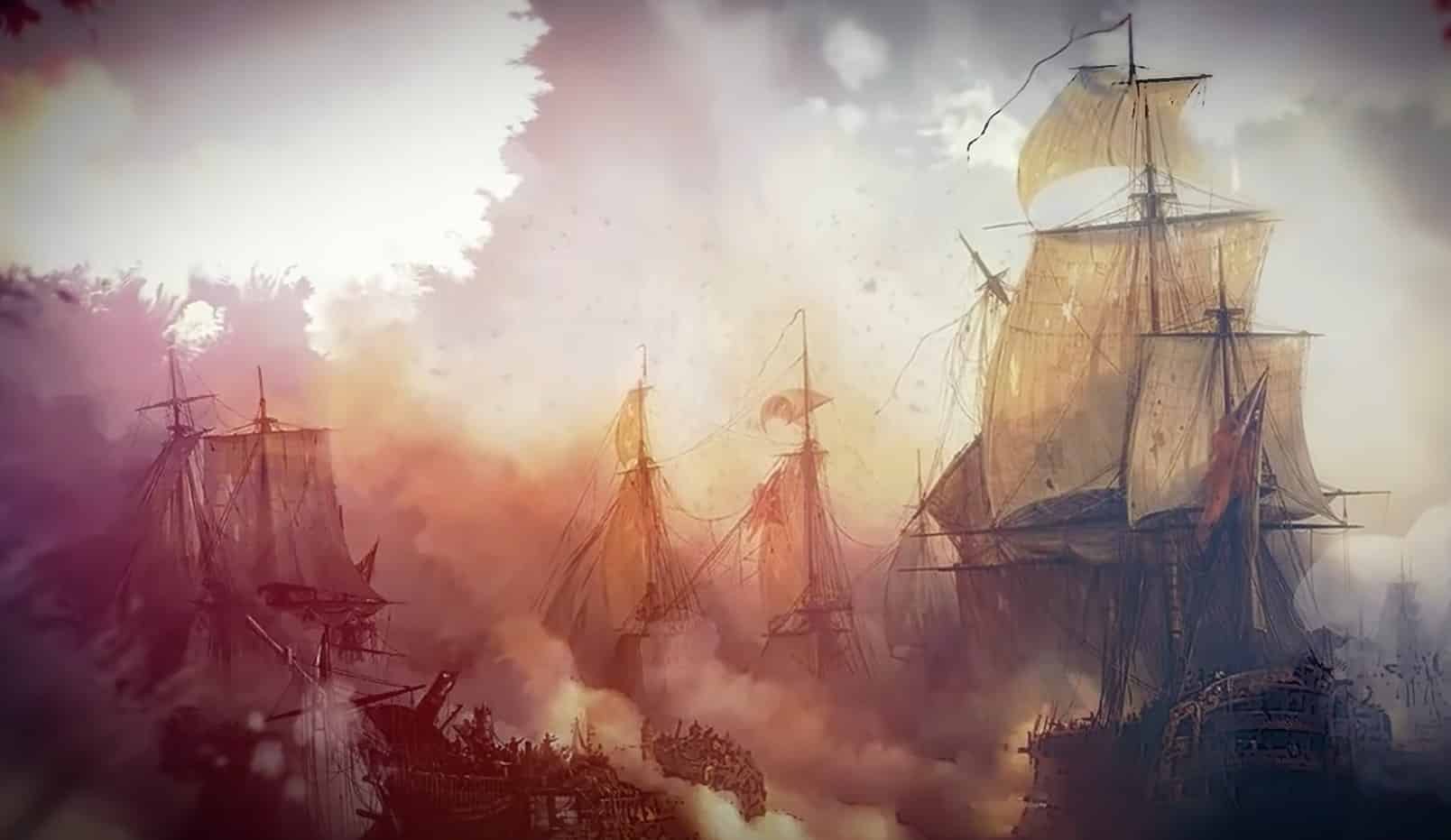
A decisive naval battle between the English and the Franco-Spanish fleets, which took place during the Napoleonic Wars (1800–1815). It took place on October 21, 1805, off the coast of Cape Trafalgar, on the southwestern coast of Spain, and It ended in a triumph for the English, but also with a great loss: the death of the English admiral Horatio Nelson.
In late September 1805, the French admiral, Pierre de Villeneuve He received orders to set sail with his fleet from the Spanish port of Cádiz, bound for Naples (Naples), where he would disembark troops for the French campaign in southern Italy. On the night of October 19–20, the French fleet left Cádiz and attempted to cross the western Mediterranean unnoticed to avoid being forced into battle with the British fleet, which was lying in wait. It did not succeed, as Nelson intercepted it off the coast of Cape Trafalgar.
The decisive engagement took place at noon on October 21, 1805. On one side were 33 ships of the British fleet, armed with 2,148 cannons and commanded by Horatio Nelson. On the other hand, the combined Franco-Spanish fleet under Pierre de Villeneuve, with an equal number of ships and 2,568 cannons. At 11:45 a.m., Nelson gave the signal to attack to his men with the message: «England expects every man to do his duty.».
The English admiral, with an ingenious strategy, broke through the enemy lines at two points, defeating the Franco-Spanish forces—who had lined up their ships in a single line, one behind the other. However, a single enemy musket shot fired by a sniper struck Nelson in the chest at 1:25 p.m. Three hours later (4:30 p.m.), he breathed his last on his flagship, the «Victory,» knowing that the battle was turning in favor of the British.
At 5:45 p.m., hostilities ceased for good, as the Franco-Spanish forces had lost 5,781 men (3,243 killed, 2,538 wounded) and 19 ships, while 7,000 had been taken prisoner, including the commander of their fleet, Admiral Villeneuve. The British lost 1,695 men (449 killed and 1,246 wounded), but no ships.
The British victory was of decisive importance. It ensured their dominance of the seas for another 100 years and put an end to Napoleon’s plans to invade the British Isles.