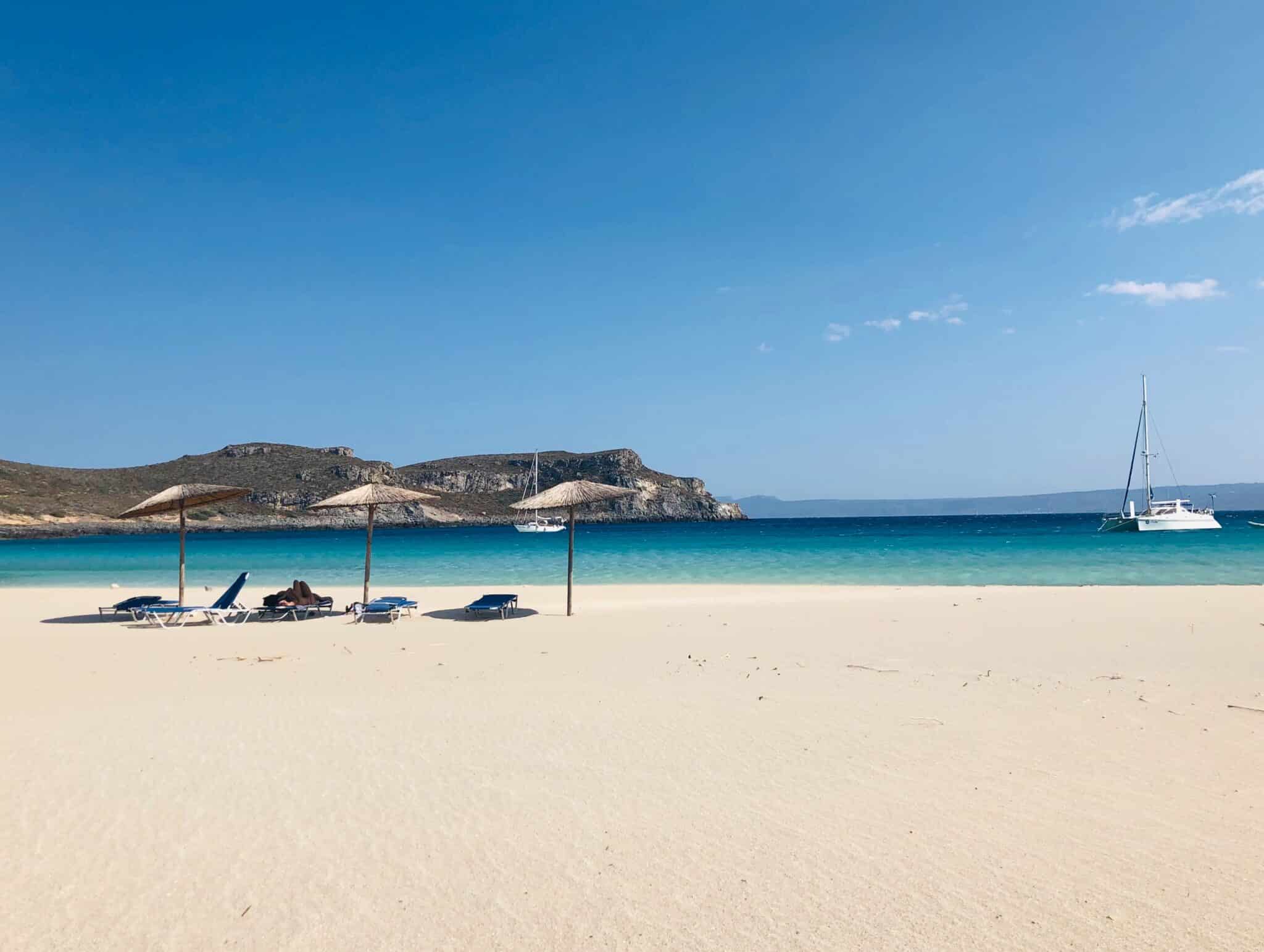
The implementation of the recently adopted law concerning the concession of simple use of the seashore and beach is in full swing.
In detail, more than 1,200 concessions have been or will be put up for electronic auction until 31 May on the special digital platform (https://eauctions.gsis.gr). It is noted that, in parallel, there are an additional 6,500 concessions from previous years that have an active contract and which have already been registered in the digital register of concessions for the simple use of the seashore and beach.
In any case, all concessions, whether new or existing, will be governed from this year by the same framework of controls and fines for illegal occupation of public space and exceeding the areas under concession. The land authorities and all relevant bodies are required to implement the relevant legal and regulatory framework immediately. However, the new picture will be fully in place by the end of June, when the relevant procedures for the new concessionaires' installation on the seashore and beaches will have been completed.
It is recalled that under the new law, auctions for the concession of parts of the seashore and beach are now exclusively digital through the special platform mentioned above.
The notice is posted on the platform and on the website of the municipality concerned at least 20 days before the date of the auction. The details (coordinates, polygon and aerial photographs) of each concession, the duration, the terms of the concession, and the time for placing and removing the movable elements are posted on the platform.
Concessionaires shall pay a minimum price, which is derived from a mathematical formula based on the objective values of the area, a weighting factor for the activity and a weighting factor for the seashore according to the specific characteristics of the beach.
In addition, it is recalled that the new law also defines high protection beaches and beaches («remote beaches») located in Natura areas, for which the concession and, by extension, the placement of umbrellas, sunbeds, etc.
New Rules and Obligations
It is noted that no concession is allowed when the length or width of the seashore and beach is less than 4 metres or when the total area of the seashore is less than 150 sqm. In addition, concessionaires are required to ensure that:
- at least 50% of the beach must be left free and at the same time the area of each concession cannot exceed 500 square meters.
- umbrella stands may occupy up to 60% of the area allocated or 30% for beaches located in Natura areas that have not been designated as remote.
- there must be a distance of at least 6 metres between concessions (3 metres on each side, or 4 metres in the case of businesses operating in adjoining buildings) and umbrella stands must be at least 4 metres from the sea for new concessions.
- the public has in any case free, unhindered and safe access to the seashore and the beach with special provisions for people with disabilities (such as through the installation of special platforms for their convenience, if they have not been installed by the municipality for the new concessions).
- the area is kept clean every day, taking care to maintain the balance of the ecosystem and the morphology of the coast. At the same time, they must return it to its original state at the end of the concession period.
- a sign with details of the concession is displayed in a prominent place on the seashore or beach.
- mobile elements are placed for the convenience of the public.
is covered by the municipality concerned, for new concessions.
Checks and severe penalties
As part of the new system, a digital MyCoast application for mobile phones, tablets, etc. has been created for all concessions (existing and new) and is available free of charge to citizens. Each concession is displayed on a satellite map and the citizen can select the relevant polygon where they can see the details and terms of the contract. Thus, citizens will be able to see the diagram of the part of the seashore and beach that has been concessioned and can immediately file a complaint if they find unauthorized occupation or exceeding of the concession.
At the same time, the use of new technologies (such as drones, satellites) is foreseen to make the control of beaches by the state more effective. In addition, an integrated control mechanism is created, with mixed control teams, consisting of executives from the Ministry of National Economy and Finance, the Land Service, the municipality, the Municipality, the ADSE, the Economic Police, the ELAS and the prosecution authorities, while mixed teams are also envisaged.
In case of violation, the penalties are scaled according to the severity of the violation and in particular whether there is a contract and the concessionaire has exceeded the concession or not, in which case it is an arbitrary occupation. In any case, umbrellas and sunbeds are removed and if there are illegal structures, they are demolished. In more detail the penalties are as follows:
* In cases of arbitrary occupation, the business is sealed and the operation of the business in the occupied area is stopped, the area is sealed with tape and entry is prohibited as well as any economic activity in it. A fine equal to four times the consideration of the concession is imposed and the offender is excluded from any concession procedure for five years.
* If the concession has been exceeded, the penalties start with fines and escalate to a ban on participation in auctions and suspension of the business. With the changes introduced in Parliament the framework is further tightened as the most severe penalties (exclusion from new concessions and suspension of operation) are imposed when the excess is greater than 30% of the concession (instead of 50% as originally envisaged).
* For the first time, fines for obstructing free public access to the sea, the coast and the beach are introduced, from 2,000 to 60,000 euros. Criminal penalties are also provided for anyone who makes any alteration to the seashore or the beach without a permit or in excess thereof, or with a permit issued illegally.