After the return of the USA in Paris Agreement, the planned Cop26, Earth Day, etc., it is on the horizon that major countries in the next thirty to forty years will pursue climate neutrality - carbonization. It is becoming clear that dependence on fossil fuels will gradually - and in some countries drastically - decrease.
In contrast, will increase dependence on a number of raw materials critical to the transition. The ecological transition of the economy will entail not only an increase in the consumption of steel, copper, aluminium, etc., but also of strategic elements for its achievement, such as cobalt (not unrelated to the assassination of the Italian ambassador to the Democratic Republic of Congo), lithium (the Bolivian crisis), «rare earths», which China produces in 62%. It is no coincidence that, while on 22 April the royalty price of a tonne of CO2 exceeded 47 euros, compared to 21.04 euros on 22.4.2020, and the prices (on 27 April) of copper, steel, cobalt, etc. are pulling a sharp uphill climb compared to 2018: these materials are essential for Renewable Energy technologies and electric mobility. For example, the Europe «rare earths» imported during the 98% from the China. This situation is a cause for concern in the EU if we take into account the opposition of the Biden in the EU-China agreement to be ratified at the end of the year.
Production of lithium batteries
The Vice-President of the European Commission, M. Sefkowitz, stressed that the secure supply of these raw materials is a necessary condition for the economy of ecological transition and recovery. «The EU's needs for lithium, used in car batteries and for electricity storage batteries, will be 18 times higher by 2030 and 50 times higher by 2050. For this reason - according to the Commission Vice-President - the EU must aim on the one hand at a endogenous production and moving in that direction, and on the other hand in the circular economy and innovation.
This is the direction of industry initiatives for the production of lithium batteries in the EU and the «Raw Materials Alliance», accompanied by the relevant Directives. Innovation has contributed to the fact that while in 2004 there were 16 grams of silicon per watt of power, in 2017 this was reduced to 4 grams. While recycling contributed to the recovery of 100,000 tonnes of lithium, which is almost 50% of waste lithium.
The terms and benefits
From the above, it appears that the circular economy is a productive process necessary for the pursuit of the ecological transition because it contributes significantly:
- First, to reduce the energy intensity of the economy, an indispensable condition of the ecological transition.
- Second, to reduce carbon dioxide emissions.
- Thirdly, to increase jobs.
The example of Italy
These consequences are further illustrated by the following. A recently published scientific study entitled «The Italian circular economy», carried out by the Fondazione Symbola e Comieca for the «Next Generation EU», which is part of the «Manifesto of Assisi» - Pope Francis' - for an economy tailored to man, against climate change. In Assisi is buried the «Poor man of God» (N. Kazantzakis). According to this study, Italy recycles 79 % of waste, compared to 56% for France, 50% for the UK and 43% for Germany. And it is the only one that, despite having a good performance, between 2010 and 2018 improved it by 8.7%. Mainly in the recycling of classic industrial residues (steel, aluminium, glass, paper, plastics, wood, textiles), it is the first country in absolute terms, above Germany. The implications are as follows:
1. The number of workers employed in the whole cycle, i.e. collection, preparation to industrial recycling, is 235,000.
2. The recovery of raw material in the course of production processes results in energy savings equivalent to 23 million tonnes of oil equivalent. The reduction in carbon dioxide equivalent (CO2) emissions reaches 63 million tonnes, which is 85% of the CO2 resulting from electricity generation (74.5 million tonnes in 2020).
3. The contribution to GDP amounts to €70 billion, almost 4% of the Italian GDP.
According to Symbola Foundation President Er. Realacci, «for the ‘Manifesto of Assisi’, facing with courage the pandemic is not only necessary, but is an appropriate opportunity to make our economy and our society more in tune with the human condition and therefore better able to face the future.’.
From landfills we go well...
And since we are talking about a cyclical economy, here are some interesting facts about our country.
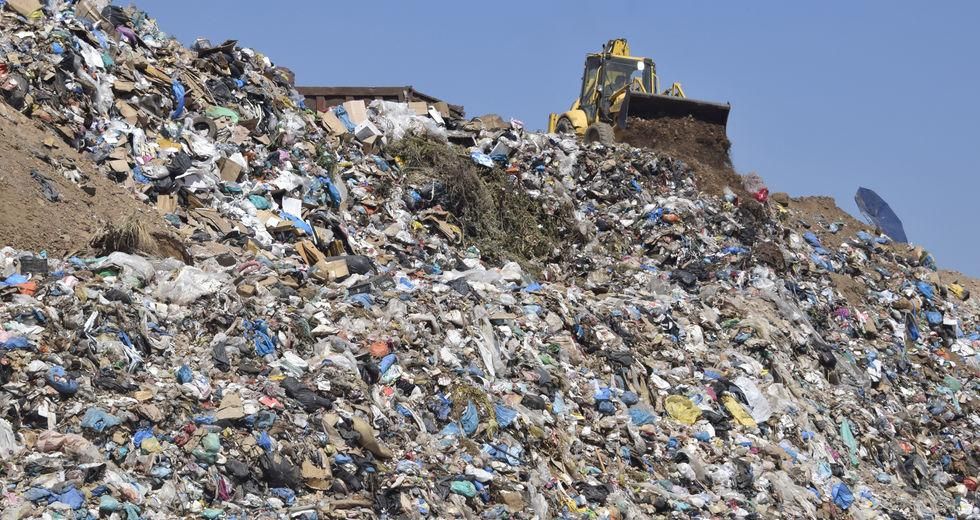
Indicatively, from the scientific study (Rapporto Rifiuti Urbani - Relazione 2020) on municipal solid waste in the EU by ISPRA (Istituto superiore per la protezione e la ricerca ambientale) for Greek data of 2017 (since they were not given in the EU of 2018 according to the indication of the research centre) the situation is the following: landfill 80%, recycling 15%, composting 4%, energy 1%. The data for Bulgaria (2017) is better: landfill 62%, recycling 17%, composting 8% energy 3%. Danish figures: landfill 1%, recycling 29%, composting 19%, energy 51%.
By Stathis Loukas