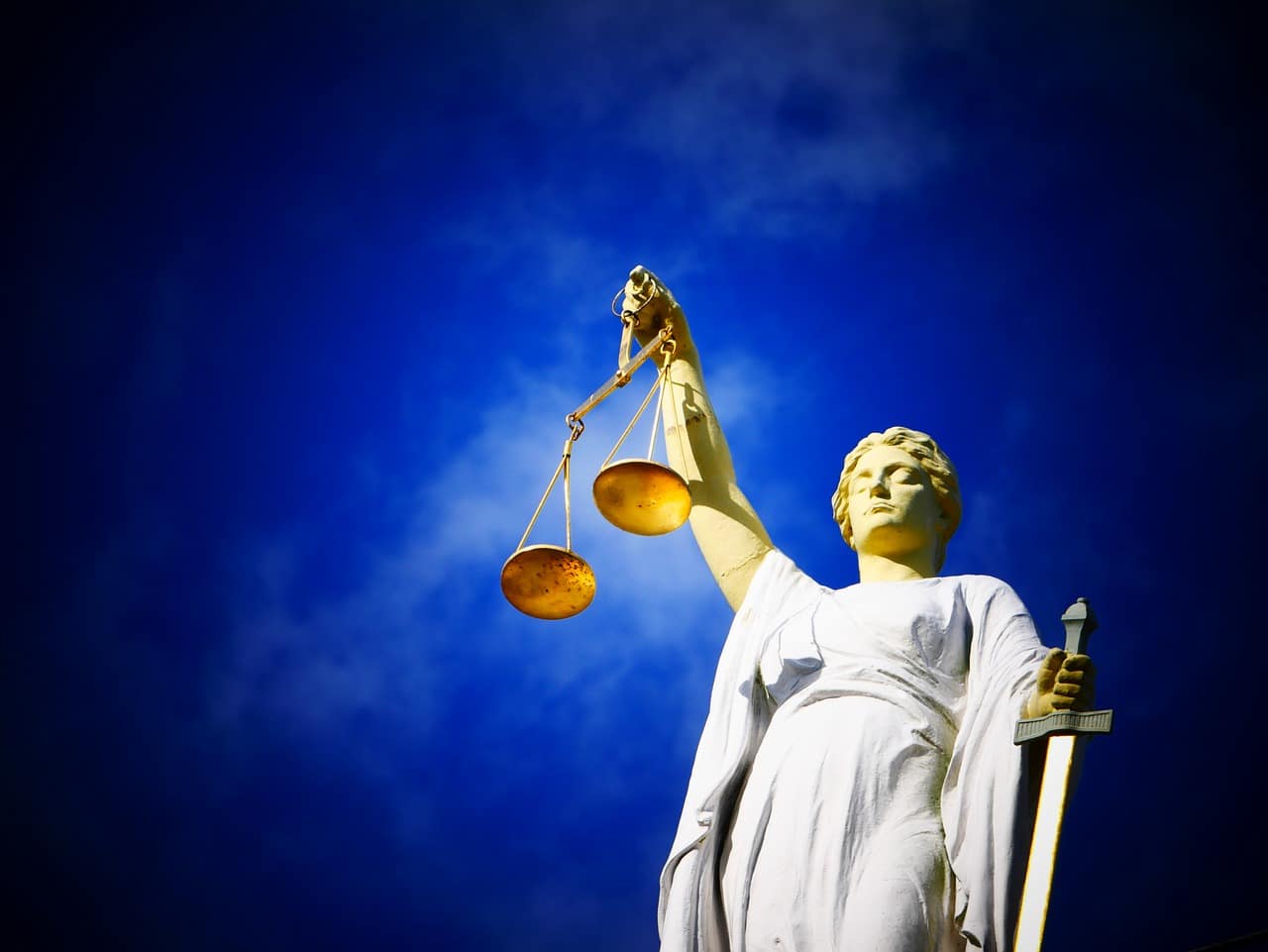
The word «justice» is one of those words that we pronounce in a low voice, almost in awe. We find it in constitutions, in courtrooms, in political speeches. It is a well-dressed word. It circulates with prestige, accompanied by seals, emblems and weighty proclamations.
And yet, we rarely encounter it in life. Injustice, on the contrary, we know it very well. We see it in the salary that doesn't reach the end of the month. In the industrial accident that is dubbed fatal. In the accident that is explained away by a convenient «human error». In the refugee who drowns «out of competence». The crime that goes unpunished because the guilty are powerful.
Justice, they say, is blind. But our societies are not.
They see very clearly who the law protects and who it leaves exposed.
The history of the West is, to a large extent, the history of a conflict, the conflict between reason and power. From Plato to modern philosophy, justice has been presented as a product of reason; as a universal principle that can restrain violence and arbitrariness.
In practice, the opposite has often happened.
The speech was recruited by the authorities. It became its tool.
There is no war that has not been presented as just. There is no massacre that was not accompanied by moral arguments. From Milos and Mytilene to the Crusades, Iraq, Ukraine, Gaza and Iran, the powerful always speak in the name of justice.
As Wyndham Lewis mockingly wrote, no war has ever been considered unjust, except the one fought by the enemy.
Yet, despite the systems, theories and laws, the sense of failure is pervasive.
Citizens feel that justice is not their concern. Or worse, that it does not protect them.
Racial and gender discrimination, institutional violence, «humanitarian» wars, attacks on refugees and migrants, the almost ritual impunity of the powerful have eroded trust. The word «justice» has become increasingly identified with the judiciary, even though the highest courts often have little to do with what people experience as justice.
This is where the great paradox occurs.
We almost never agree on what justice is. But we recognize injustice immediately.
The injustice is felt almost physically. It provokes anger, regret, an urgent need for action. Conversely, when we try to define justice positively, certainty recedes. What is shocking in its absence becomes ambiguous when we attempt to describe it as presence.
Injustice speaks to the heart.
Justice often comes down to a philosophical exercise.
Classical philosophy linked justice to the common good and the virtue of citizenship. In the ancient world every being had a purpose, the vineyard to give good wine, the craftsman to make good sandals, the citizen to become virtuous in the city.
The righteous city and the righteous citizen were two sides of the same coin.
This organic relationship between morality, politics and law has been dissolved in modernity. In its place appeared something more cold, the law.
Modern ethics replaced the good with the rule. Morality became conformity to universal laws, independent of social experience. But cold law does not produce justice; it produces duty - and often discomfort.
Desire and social ethos are cut off, and in their place appears a direct individualism.
Let's put it simply, justice does not hover above society. It is produced within it. Within material relations.
In the midst of the conflicts.
In the midst of class contradictions.
In a deeply unequal society, formal equality of rights is not enough.
The law is not neutral. It reflects power relations.
That is why justice often appears first outside the institutions. In contemporary social movements it is not defined in the abstract; it is experienced as a demand.
#MeToo, Black Lives Matter, environmental movements, labour and anti-racist struggles do not start from legal theories. They start from bodies being hurt and lives being devalued.
They speak the language of injustice. And that's why they convince.
The same thing is happening in Greece.
Here justice has a very specific face, precarious work, unpaid overtime, fear of dismissal. The law exists, but often remains inert in the face of the need to survive.
Privatisation was presented as a technical solution. In reality they were political acts of power redistribution, profit private, risk social.
The tragedy of the 2023 Tempi railway accident was not just an accident. It was a crack in the dominant narrative.
Society did not only ask for punishment. It asked for justice.
And when it didn't seem to come, something much more dangerous for any system of power was born: mistrust.
In this process, the role of the media has proved crucial. Injustice is not only undone in the courts, it is also undone in the narrative. By diffusing blame, by relativizing anger, by turning social indignation into «hyperbole».
And yet, justice insists on returning from elsewhere.
On the mobilisations. On strikes. To collective memories that refuse to be erased. Not as a perfect system.
But as an attitude.
As a decision not to regard injustice as a natural law of things.
Perhaps justice is not a definition we will one day conquer after all. Perhaps it exists only as an ongoing moral and political turn towards the other.
As a responsibility that transcends formal equality and takes its place in an unequal world. And in an unequal world, neutrality is not a virtue.
It's just an elegant way of staying on the right side of the force.
Justice, on the contrary, begins the moment someone decides to stand up to it.