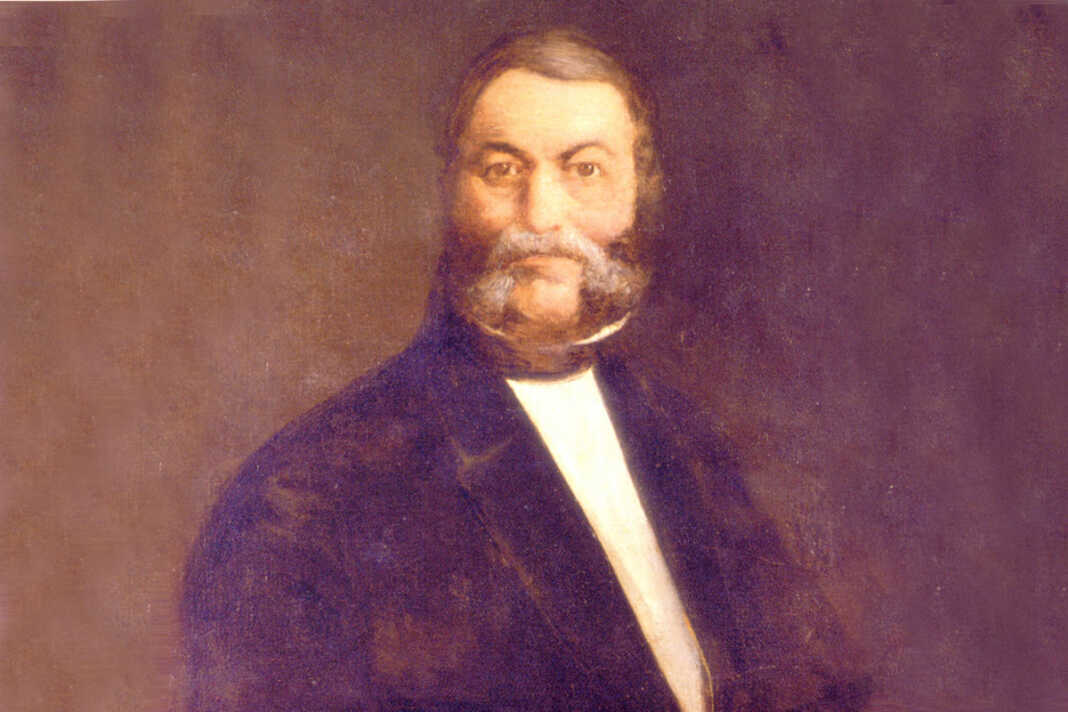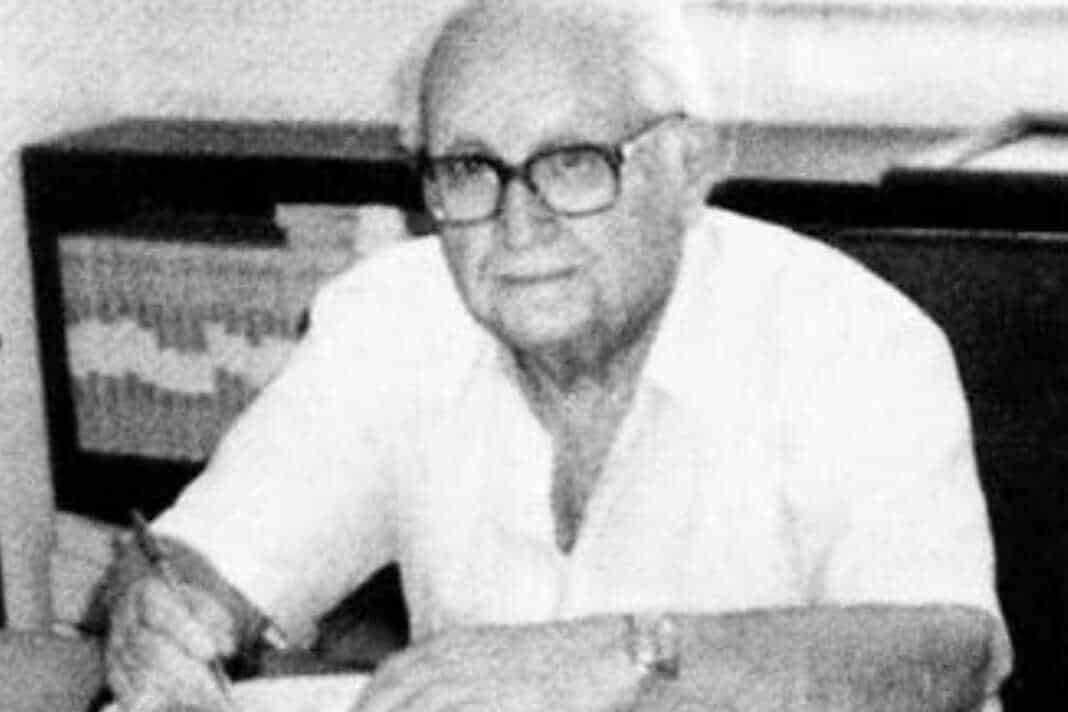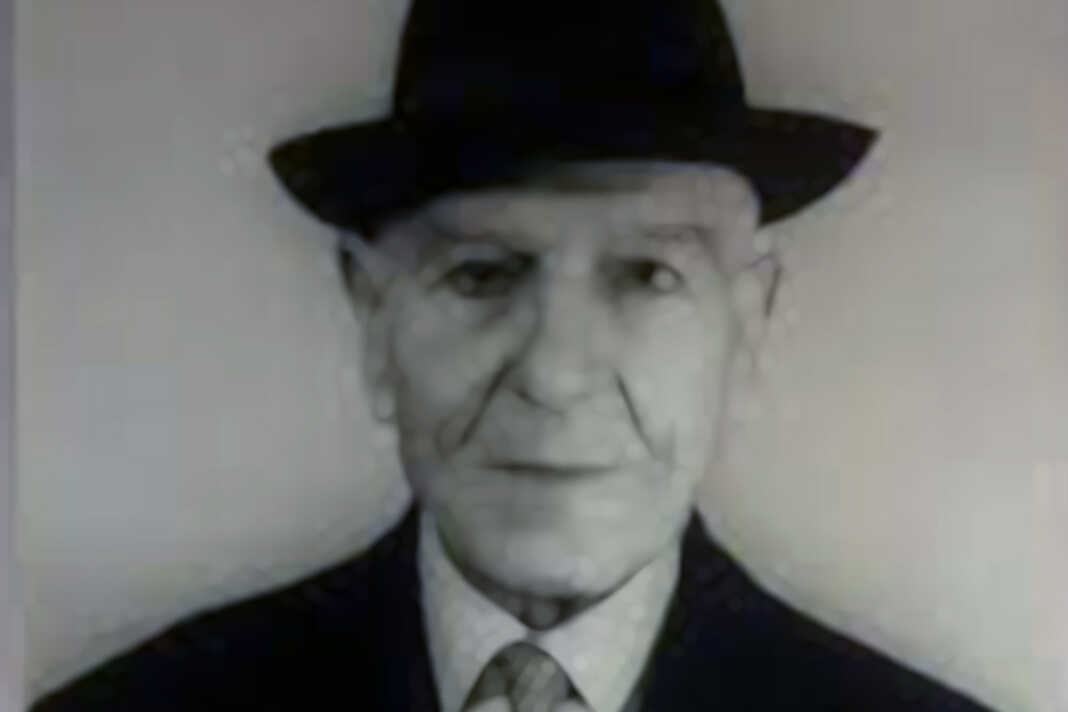
Panagiotis Tsitsilias was born in Potamos Kythera in 1881. His father was Kosmas Tsitsilias, a well-known merchant in Potamos who also served as mayor of the municipality of Potamia. He studied law in Athens, graduating in 1909. On July 6 of the same year, the «University Union» was founded and Tsitsilias was proposed by the founding members to assume the presidency. This organization was intended to strengthen the revolution of Colonel N. Zorbas. In September Tsitsilia left for Rome to continue his studies in political science, and in 1910 he went to Paris and enrolled at the School of Political Science. He hurriedly returned to Athens in 1912, when he was notified of the impending draft.
He joined the army and served as a translator in the Infantry Directorate of the Ministry of Military Affairs, as a reserve second lieutenant and was then promoted to lieutenant and sent to Chios, to the Civil Guard Battalion, from where he was discharged in October 1914. He was back in Chios when a new conscription was declared and then went to Macedonia. At that time there was the disagreement between King Constantine and Eleftherios Venizelos. Tsitsilias sided with Venizelos and the National Defence Government of Thessaloniki. The government of National Defence, with Eleftherios Venizelos as its president, sided with the Allied Powers in World War I, while the government of the royals in Athens and King Constantine himself supported the Germans. Tsitsilias then served as a National Defence officer in Athens. He then married Maria P. Marcello, daughter of a wealthy Trieste merchant. With Maria they had two children, Theodore, who died when he was still an infant, and Aris.
With the «Novemberana», the events during which the bishops revolted, Tsitsilias was persecuted and eventually found himself in Crete. There he tried by his actions to achieve the supply of food to Kythera, since until then the island was controlled by the forces of the Athenian state and the allies did not allow the transport of food there. Indeed, Tsitsilias persuaded the general commander of Crete, Ioannis Tsirimoko, a personal friend of Eleftherios Venizelos, to occupy Kythera with the help of the allies. Kythera, which is located at a strategic point, had to be put under the control of the Allies and facilitate their operations. The British, who maintained a naval force at Souda, provided a ship to implement Tsitsilia's plan. On 29 December 1916 Tsitsilia and a company of two hundred men from Crete occupied Kythera in the name of the Government of National Defence. A few days later, on February 7, 1917, Tsitsilias had organized a large rally in Potamos Square, where he and the presidents of the communities ratified the inclusion of Kythera on the side of the Government of National Defence. With a relevant resolution Kythera was declared an «Autonomous Administration of Kythera» with Panagiotis Tsitsilia as commander. This move was welcomed by both Venizelos and England. After the fall of the pro-royalist government, in May 1917, Kythera was returned to the Greek state with Eleftherios Venizelos as Prime Minister. The Prime Minister congratulated him for his actions during the war and assigned him to become prefect of the newly created prefecture of Pella. He was subsequently transferred to other prefectures.
After the Asia Minor disaster Tsitsilias decided to become involved in politics. He was elected MP for Kythera in the elections of 1924, 1928 and 1933. His activity as a deputy was important for the island. He fought for the promotion of Diakofti as a port. He set up a fundraising committee, travelled to Australia in 1926 with a short stop in Alexandria, Egypt and returned to Kythera in 1927 after collecting money from the expatriate Kythirians and started the opening of the road to Diakofti from Aroniadika on 26 June of the same year. With his election as a member of parliament on August 19, 1928 and in four years of office he succeeded in solving several problems of the island and in placing Kythera administratively in the prefecture of Attikovoitia. In 1929 he travelled to America to raise more money for the completion of the Diakoftio road and on 31 August 1930 the completion of the major project was celebrated. Shortly afterwards he retired, disillusioned with politics. He returned only after World War II and the liberation of Greece when George Papandreou asked him and appointed him prefect of Lesvos.
Panagiotis Tsitsilias wrote from 1924 the newspaper «Voice of Kythera». He also wrote the «History of Kythera», (up to the 19th century and the occupation of Kythera by the English), which he completed in 1965 but could not publish for financial reasons. Finally, the «History of Kythera» was published by the Kythera Studies Society in 1994 in two volumes edited by Dimitrios L. Komis. Tsitsilias had also written a novel when he was young, entitled «The Workers of Freedom», and he was a regular contributor to national and international newspapers.
Panagiotis Tsitsilias for many years maintained a law office in Piraeus and later in Athens. The great statesman of Kythera was an ideologist and envisioned the greatness of his island. He offered almost his entire life for the progress and prosperity of Kythera. He passed away in June 1972 and was buried in Kifissia.