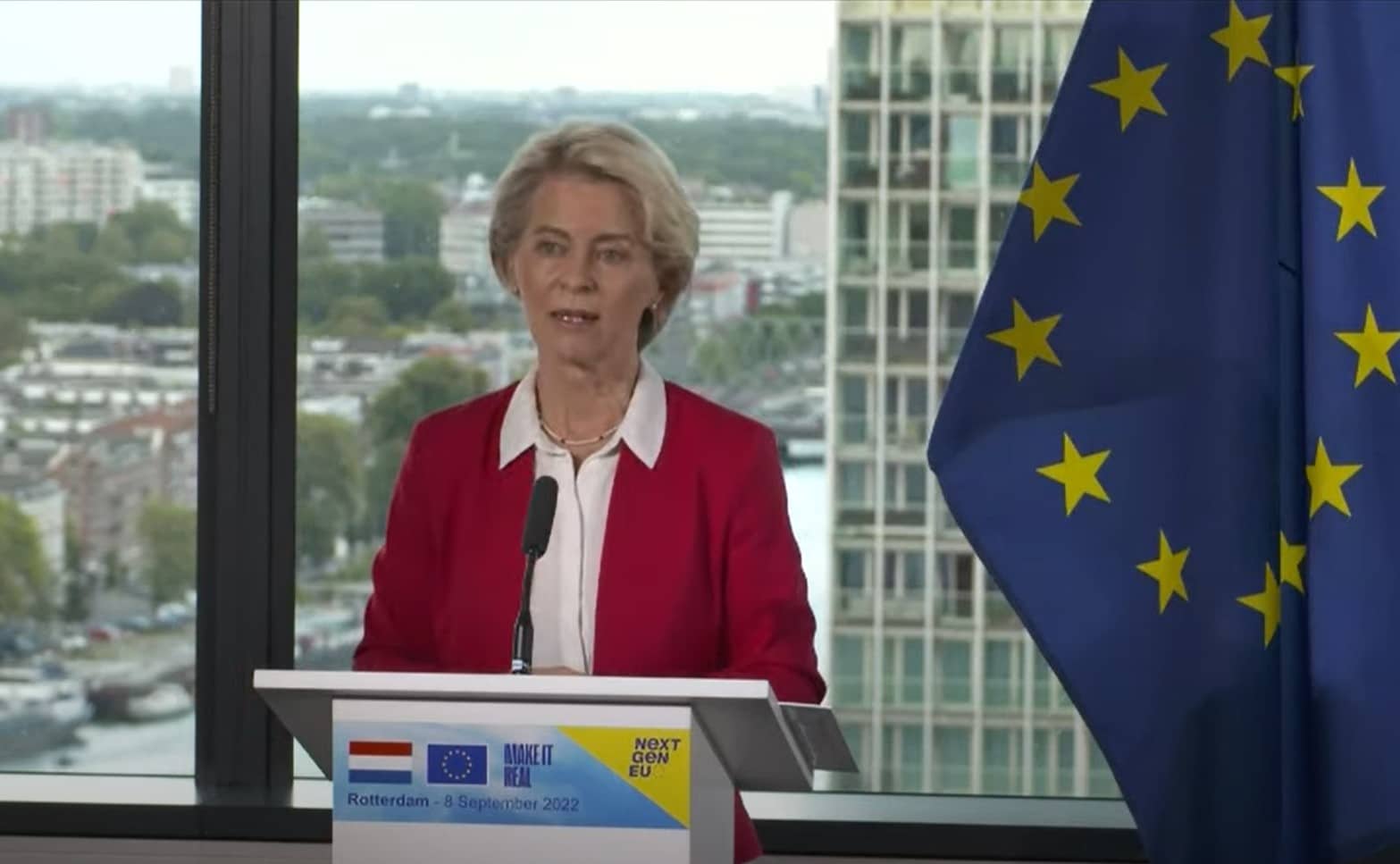
The Commission is putting a stop to the Court of Auditors' investigation into the EU budget on the third deal to buy 1.8 billion doses of Pfizer's vaccine (in which Ursula de Leyen played a leading role), by refusing to disclose the content of the personal messages exchanged between the Commission President and the CEO of the pharmaceutical multinational, which were found to have been deleted.
The moves at the summit level of the European leadership on the issue brings to mind the well-known saying that «the fish stinks from the head’, since in this case the legitimate question arises as to the role played by the Commission President in the »closing« of an agreement for which the formal procedure of the Union was not followed. On the contrary, there were also extra-institutional »understandings« at the top level against the background of the resources and health needs of millions of citizens of the Member States.
In particular, Politico reports that the EU's Budgetary Control Board has published a report accusing the Commission of refusing to disclose any details about President Ursula's personal role in the talks. The budget watchdog found that the EU head bypassed «protocol» to reach a preliminary agreement with the US drug multinational, paving the way for the signing of a third contract for up to 1.8 billion doses of coronavirus vaccine in May 2021.
One particular detail that is of concern in the whole case is that unlike the previous two agreements for Covid vaccines concluded by the EU between 2020 and 2021, in which there was a joint team consisting of officials from the Commission and seven member countries to hold exploratory talks with suppliers, this agreement came to the EU table ready for ratification. Specifically, the agreement was presented to a vaccine board consisting of representatives from all 27 EU member states that signed the agreement.
In March 2021, preliminary discussions had taken place between Ursula personally and Albert Burla, with a draft agreement subsequently emerging and being presented to the relevant Board in April. Meanwhile, a planned meeting of scientific advisers, organised to discuss the EU's 2022 vaccine strategy, never took place, the Court of Auditors points out.
The EU contract with Pfizer was significant both in terms of quantity and product price. According to leaked details, each dose cost EUR 15.50, meaning that the contract represents a maximum purchase of EUR 30 billion. «It is the largest vaccine contract for COVID-19 signed by the Commission and will dominate the EU vaccine portfolio until the end of 2023,» the Council notes. Pfizer did not respond to Politico's request for comment on the case.
In October, Bourla is due to appear before the European Parliament in the panel on COVID-19. The committee's chairwoman, Belgian Socialist MEP Kathleen van Brempt, said she also intends to ask the Court of Auditors to present its findings. Speaking to Politico, van Brebbt said she understood that, following the «train wreck» with AstraZeneca in early 2021, the Commission was under immense pressure.
«We were therefore relying on Pfizer, which had managed to market some of its deliveries in the EU. I understand that in these circumstances, it was important for Mrs von der Leyen to work directly with Mr Burla,» the MEP said.
However, he noted that the Commission President had set aside the joint negotiating teams for an agreement that would have ensured vaccines only for next year, when most Europeans had already been vaccinated. The size of the order was a problem in itself, with Eastern European countries complaining earlier this year that they had committed to buying an excessive number of doses that their populations did not need.
The lack of transparency, moreover, reinforces the perception that the EU does not serve the interests of its citizens and instead acts in the interests of multinationals, writes Politico. «Just look at the picture: you have a Commission President who personally enters into a deal with a Big Pharma CEO and who then refuses to reveal the messages that led to that deal,» said van Brebb.
One question that arises for MEPs calling for increased transparency on the vaccine negotiations is whether vaccine makers have exerted any pressure on top European politicians to block requests to remove intellectual property rights that would allow poorer countries to produce their own vaccines, Politico says.
«This is not the first time that the President of the Commission has faced problems with «disappearing» SMS. During her time as Germany's defence minister, a parliamentary investigation into «golden» deals with outside advisers found that an Ursula employee had accidentally deleted SMS messages from von der Leyen's official phone, who then also deleted the same messages from her personal device.