The dark landscapes of World War II, the Civil War and the first post-war decades form the background, but also the heart, of many of Thanasis Valtinos’ books. However, the author often sets aside the weight of politics and history, which is evident throughout his prose, in order to reclaim the desires and passions of the ego:
an ego torn by the adventures of its place and time, but also ready at any moment to embrace the joys of love or to be dominated by the futility of decay and death. This fatal coupling of love and death is the key feature in Baltinou's new work, which is released under the title «New Moon. Day One» published by the «Estia» Bookshop.
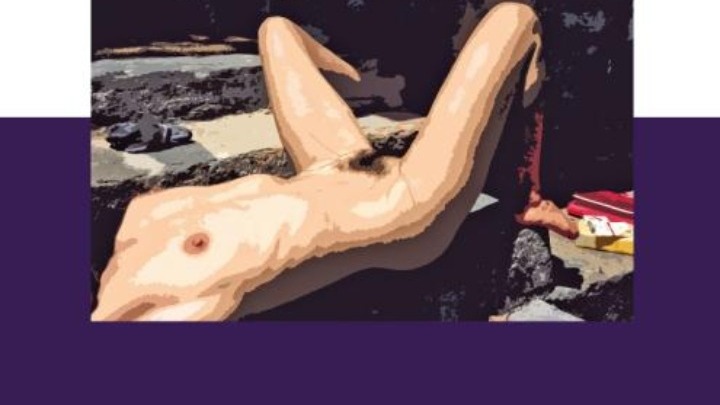
The protagonists of the book, which is presented without any kind of idiological characterization, are the members of a group of teenagers who attend the last classes of their school in Tripoli in 1948 (we are in the height of the Civil War and the city is not named, although we have all the data, all the «place names», to identify it), Beyond school, the teenagers, among whom Cosmas and John will stand out, discover, with excitement and awe, their first erotic desires and fantasies about women: Sometimes for the mothers of their classmates and for their teachers (such as their French teacher), sometimes for the girls at school, and sometimes for those who offer their professional sexual services to adults. For Baltinot, love is neither an altar of loyalty and self-sacrifice nor a sanctuary of transgression and love. It is a deep, unyielding need, a thirst that never stops scratching the throat, an imperative that allows no one to ignore it. The mania for flesh is capable of sweeping away everything, and the instinct seems willing to ignore all restrictions in order to manifest itself under the most unlikely circumstances. As is immediately apparent in «New Moon. Day One», love, the «Delta of Life», the female love triangle, will impose with its unrelenting persistence and a poetic vision of the world, a way to transform reality through its liberating imagination.
Valtinos« narrative (a kind of novel, which refers to well-known short stories or even to some unsuspected attempts that have foreshadowed it in the past) has a calendar form (it counts eleven days of the new lunar period), although it does not unfold like a calendar, and emphasizes, already from its title, the influence of the ancient Greek goddess of the moon on Cosmas» imaginary desires for the «Frenchwoman». The structure of the play is stagey, both in terms of the description of the action (like the instructions of a film script) and in terms of the dialogues (with the persons involved in them being listed by name): as in Valtinos's theatrical education book on Solomon, The Flowers of the Abyss (2008). The third-person, objective narrator participates invisibly in the passions of the children's age (he must be one of them, in a later time, apparently), and always makes sure to let the fiery breath of the Civil War in Tripoli scrape through the adolescent love affairs: National Army mobilization, guerrillas opportunistically sent out at night to conscript young men, communist trials, multiple deaths, but also ethnosaving instruction in school with penny poets who have been peddled as national capital. Here, by the way, is how Baltinus never takes the side of a civil war faction, as many claimed after the 1994 ’Stand Up«. The author was saying a decade ago to the APM about the reactions that the initial publication of his novel »Upright« provoked, in the wake of his 2012 novel »Upright«: »Historical refutations are bitter. Often bitterer than personal ones. It leads to stubbornness and denial. It is another form of tragedy. I find it natural that such foci exist, but they are rapidly dwindling and dwindling.«.
With «New Moon», Baltinos does not repeat the difficult experiments of «The Alonnisos Diary» (2017), in a narrative landscape from which myth and plot shine through their absence, and where the author gives a dominant role to the acoustic accompaniments of the events. Moreover, in this case, Baltinus does not treat the Civil War as quasi-historical material. Let us recall, for example, what he does in the polyphonic «Synaxar Andrea Cordopati. Book Two: Balkan-’22» (2000), in the deliberately fragmentary and elliptical «Diary 1936-2011» (2001) or in the novel «The Last Varlami» (2010), based on a folk song about an 18th century thief. In all three, the author, like a highly experienced craftsman, takes the genre of historical metafiction (the play between literature and history) to its limits. The current book, because of the erotic passions of the 1948 teenagers of Baltinou's generation, is, as we have already seen, closer to his short stories and primarily to his collections «Urgent Need for Mercy» (2015) and «Addiction to Nicotine» (2003) - from which a heartbreaking scene of the intertwining of love and death emerges. And let us bear in mind something else: that Baltinos is not only talking here with his own texts, but also with his own admitted adolescent readings, such as the poetry collection «Helios the First» (1943) by Odysseus Elytis and the novels «Eroica» (1938) by Cosmas Politis and «The Life and Politics of Alexis Zorbas» (1941) by Nikos Kazantzakis (cf. on this subject and the dense study by the literary editor of the «New Moon», Kostis Danopoulos, which was published a few days ago under the title «The ”New Moon” of Thanasis Valtinos», in the online magazine «The Reader», 24 April 2002).
Less experimental and technically radical, with a reduction of narrative contrivances and a certain smoothing of his narrative strategy, Baltinos writes one or many stories of love and death, which immediately win over their recipients thanks to the detached, extremely simple, but also with some evocatively embroidered poetic allusions, manner of his writing.
And let us conclude by adding that his distances do not in the least diminish either the intensity or the emotional depth of his speech.
Β. Hadjivassiliou