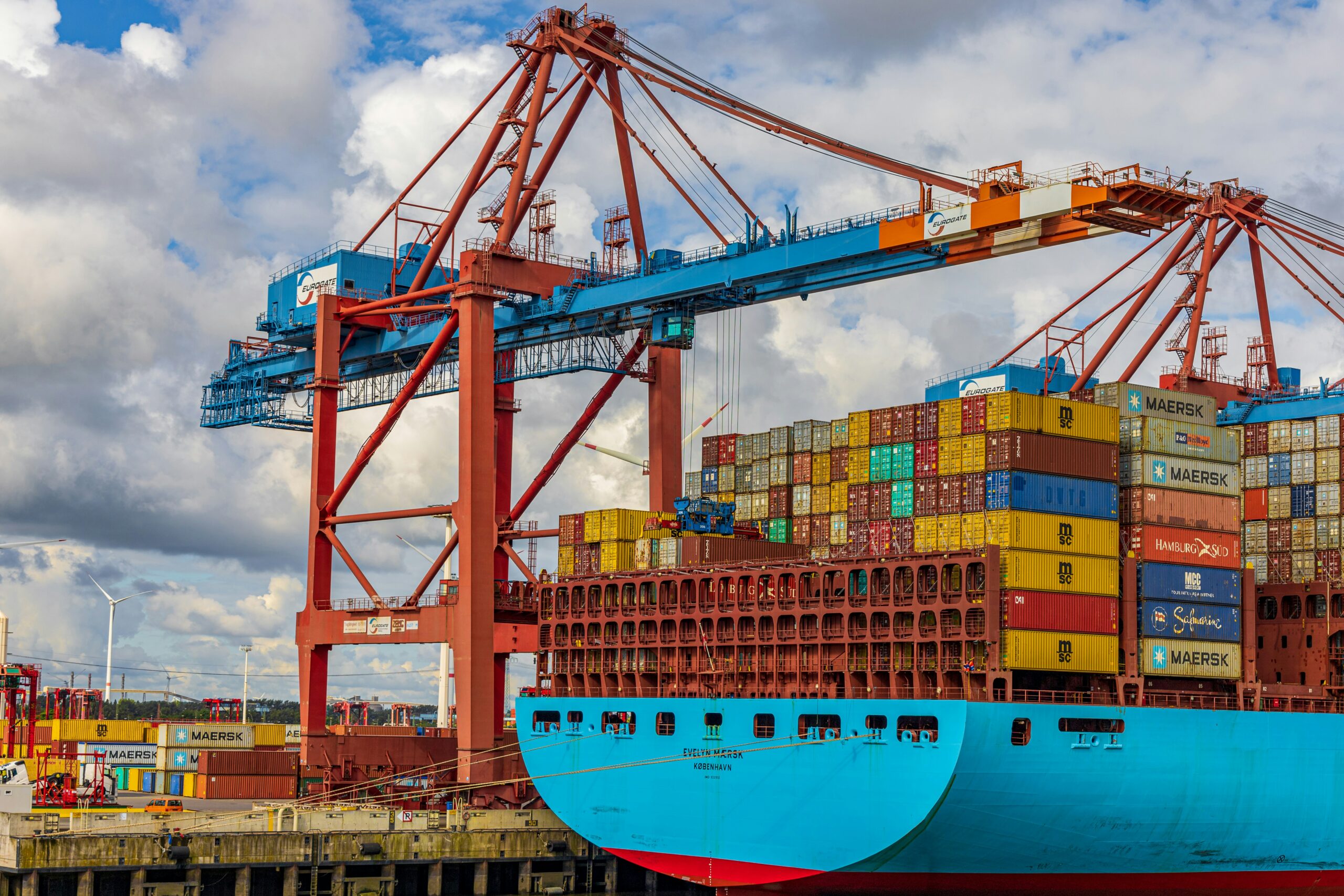
The aggressive tariff policy promoted by US President Donald Trump has caused changes in trade flows and growth in major economies before it has even begun to be implemented, according to data released in recent days.
The greatest impact was felt in the US itself, where GDP fell by 0.31% in the first quarter, for the first time since 2022, when the US economy was emerging from the pandemic crisis. The decline in GDP came as a surprise, as growth in the US had been particularly strong over the previous two years, reaching 2.31% in the fourth quarter of 2020, while analysts had expected a slowdown but by no means a negative rate.
The negative surprise is mainly due to the explosive increase in imports of products into the US by 51%, with companies rushing to build up their inventories before the tariffs were imposed in order to avoid the price increases that they would inevitably cause. The negative impact of imports on GDP was in the order of five percentage points, an unprecedented figure for the US economy, at least in recent decades.
It should be noted that the discussion on tariffs began immediately after January 20, when Trump took office, but the first measures concerning imports from Canada, Mexico, and China were imposed in late February and early March, while sweeping tariffs were announced on April 2, raising the average tariff rate in the US to over 20%, the highest level in a century.
Trump then limited tariffs to 10%, granting a 90-day suspension on the application of higher rates that had been announced for a number of countries, including European Union countries (20%) – to allow for new trade agreements to be negotiated. Since March, sectoral tariffs have also been applied – on aluminum and steel (25%) and then on cars, affecting imports from all countries.
Negatively, but to a lesser extent, the reduction in public spending by a total of 5.11% (and 1.41% at the federal level) also contributed to US GDP, as part of measures to reduce the huge deficit and debt, spearheaded by the Department of Government Efficiency (DOGE) under billionaire and richest man in the world, Elon Musk. Consumption continued to grow but at a slower pace than in previous quarters (by 1.8% compared to 4% in the previous quarter), while fixed capital investment increased by 7.8%, mainly due to the increase in capital equipment (22.5%), which probably also reflects the acceleration of purchases by companies in view of the imposition of tariffs.
Although the overall picture of GDP does not indicate a recession, at least at this stage, there is no doubt that the US economy has been negatively affected by Trump's trade policy and the uncertainty it causes for consumers and businesses. Some analysts believe that it will move into recession—technically defined as two consecutive quarters of GDP decline—in the second half of 2025.
On the other hand, rapid stockpiling of goods in the US led to an acceleration in exports from China and other key trading partners, including European Union countries. Manufacturing activity in China had increased in the first quarter as orders from the US were high, but after the imposition of tariffs, which are now at prohibitive levels (145%), orders fell significantly, according to a survey of Chinese manufacturing companies for April. This increases the pressure on the government in Beijing to escalate its measures to support the economy, although it is doubtful whether these will be enough to maintain growth rates of around 5%, as in recent years. An economist at Capital Economics noted that fiscal support is unlikely to fully offset the decline in external demand and forecasts growth to slow to 3.5% this year.
Eurozone GDP figures for the first quarter were better than expected, rising 0.41% compared to an increase of 0.21% in the fourth quarter of 2024 and 1.21% on an annual basis. Eurostat's analysis of the factors contributing to the final GDP result will be released in early June, but it is very likely that this was significantly influenced by an increase in exports that met stockpiling needs in the US.
In any case, the negative impact of US tariffs is expected to be reflected in second quarter figures, given that European exporters now face tariffs of 10% on most products and 25% on cars, aluminum, and steel. The negative demand shock will therefore also hit the eurozone, along with consumer and business uncertainty.
‘Akis Charalambidis