By Giorgos Roussos
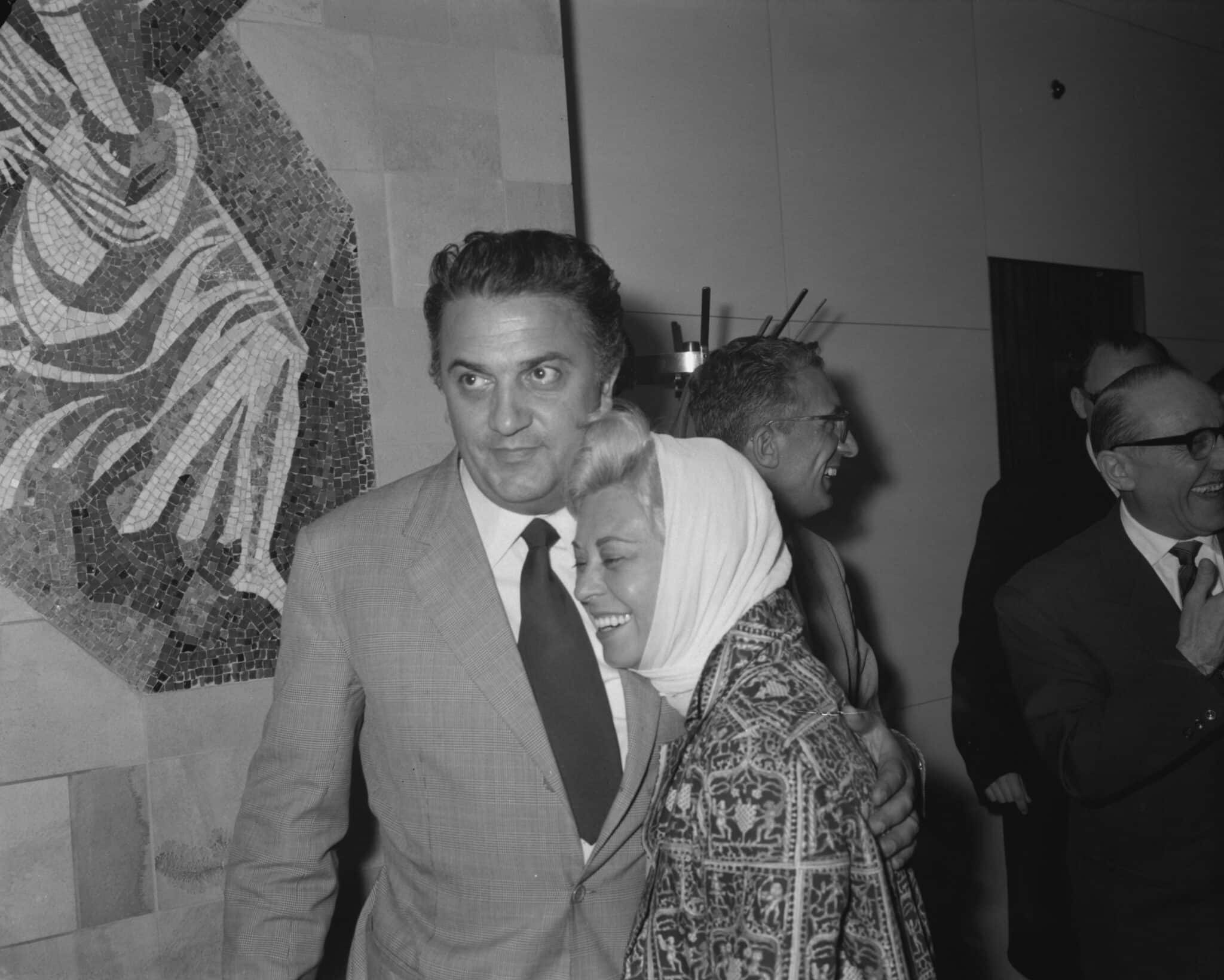
On January 20, 1920, the great Italian director was born Federico Fellini. An artist who dared to push beyond norms and rules, creating his own magical universe and forever changing the future of Seventh Art. He passed away on October 31, 1993.
«It is not my own memory that dominates my films. To say that my films are autobiographical is a rash judgment, a hasty categorization. I have invented almost everything: childhood, personality, nostalgia, dreams, memories—all for the sheer pleasure of being able to tell these stories. In the sense of a true story or a real biography, there is nothing in my films. What I do know is that I want to tell stories. Truly, storytelling is the only game worth playing. It is a game that, for me, for my imagination, for my nature, has its own necessity.» Federico Fellini
Federico Fellini was born on January 20, 1920, in Rimini, Italy. When he turned 12, he ran away from home to join a circus. Perhaps this explains his love for clowns, who frequently appear in his works.
At the age of 17, he left behind the tranquility of the provincial spa town where he was born and raised to go to Rome. There, he initially made a living as a cartoonist and later by writing jokes and skits for comedians and other artists in the field music hall. In 1943, at the age of 23, he married the actress Julietta Masina, where he lived for 50 years, until his death on October 31, 1993.
Born in Rimini of Italy, in 1920, Fellini got his first taste of the film scene of the time alongside Roberto Rossellini. He thus essentially participated as a co-screenwriter and assistant director in the creation of seminal films of postwar European cinema, such as the “Rome, Open City” of 1945, but also the “Paisà” in 1946. His acquaintance and friendship with Rossellini would have a significant influence on his future career.
In 1950, he co-directed “Variety Lights” with Alberto Lattuada” And two years later, Fellini presented the first film he directed entirely on his own. The reason for this is, “White Sheikh” (Sceicco Bianco) from 1952.
The film features a couple from the countryside, Vanda and Ivan, who arrive in Rome for their honeymoon. And while the meticulous Ivan is completely absorbed in his conformist pursuits, Vanda seizes the opportunity to search for the White Sheikh. That is, the beloved protagonist of a series of photo-novels published in a mass-market magazine.
The truth is that Federico Fellini’s directorial debut, which was anything but a success, was described as such. “Fellini’s attempt at directing is undoubtedly lacking in inspiration,” according to critics of the time, resulting in the film being pulled from nearly all theaters within just a few days. Among the reasons for its complete failure was the genuine animosity that the actor Alberto Sordi, which made quite an impression on moviegoers of that era.
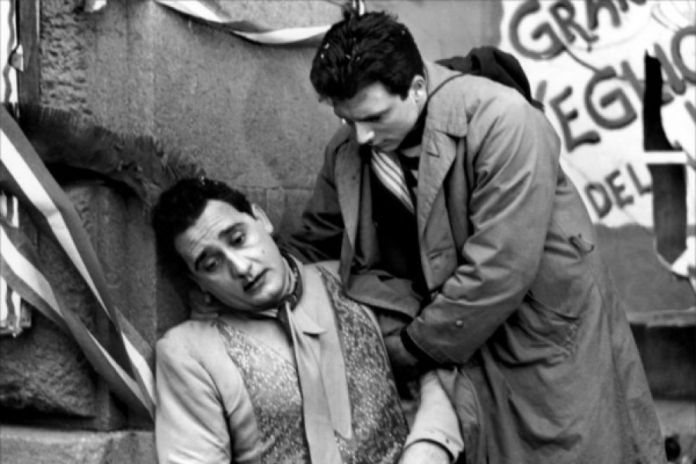
This is another reason why Fellini, wanting Sordi to star in his next film as well, “Vitelloni”, faces many difficulties in getting it off the ground. In fact, when—after numerous setbacks—the film is finally completed, Alberto Sordi’s name continues to pose a serious problem for distribution. It is therefore deemed necessary to remove his name from the program listings as well as from the first 50 copies of the film…
Fellini’s settings—streets, sun-drenched squares, dimly lit nighttime alleys, neighborhood theaters, old movie theaters, deserted beaches, they are all imbued with the spirit of the imagination. They are indefinable, ambiguous—almost as if they were haunted. The world of Fellini is a veritable wonderland.
We are in a small coastal town in Romania. Summer is coming to an end. A downpour interrupts the party, where Riccardo finally gets the chance to show off his singing skills. Amid the ensuing commotion, they discover that Sandra, Moraldo’s sister, is pregnant with Fausto’s child.
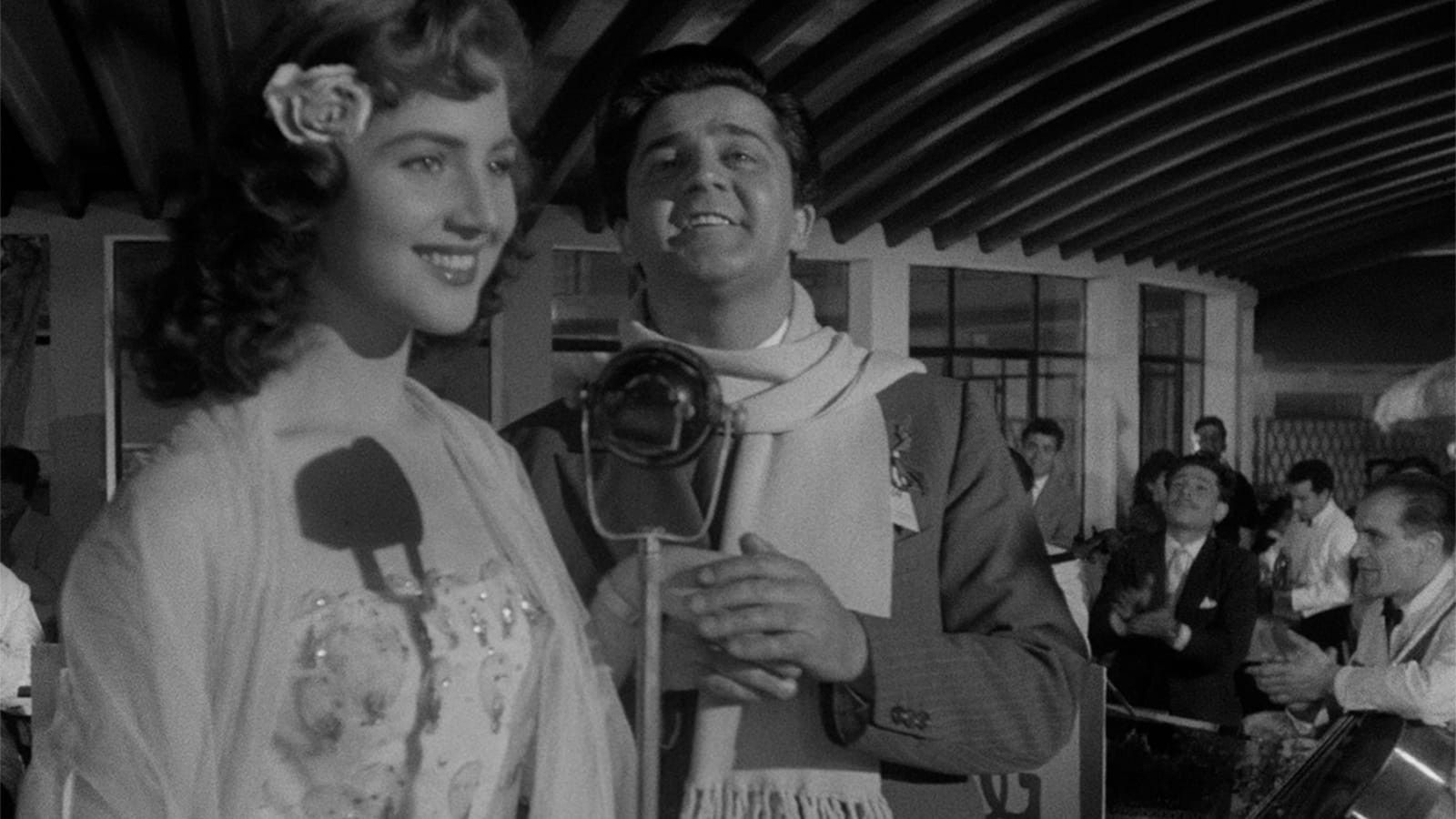
The parents agree to make amends by getting married. The small town slips back into the provincial melancholy of winter. Although they are no longer so young, Fausto’s friends spend their days aimlessly, loafing in cafés and making childish jokes while living off their families. They are “The Butter Boys” (Vitelloni)...
1952, and *I Vitelloni* premiered in Venice exactly one year after *The White Sheik*. For Fellini, this was his first true major success. But how did this award-winning film come to be?;
Well, the main story was written in about 15 days. Winter evenings, late-fall walks with the sea hidden by the fog, my friends’ silly and wild jokes, the mythical anticipation of summer—all of these are nothing more than Federico’s memories from Rimini.
Fellini was a true cinematic visionary. Through his work, he did not merely depict reality, but created, with his own hands, an imaginary world of shadows and light. Spirits and ghosts, shadows inhabited by beings that are both real and imaginary. A prime example of this is the “La Strada” (1954).
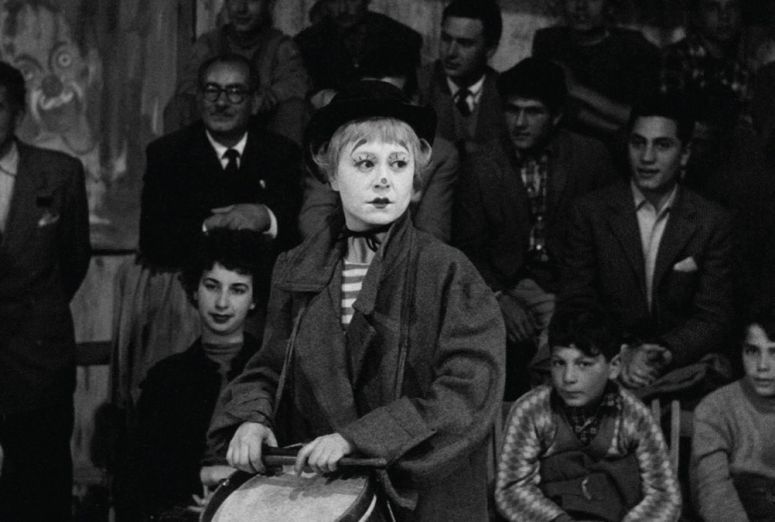
The curtain rises with Zampano (Anthony Quin), a gypsy who puts on shows in village squares. Primitive and violent, he buys the naive yet sensitive Gelsomina for a few coins (Giulietta Masina) from her poor family. Now that they are together, they will continue their nomadic life.
The film is nothing more than a vast, wandering, fantastical celebration that winds its way through the dusty streets of unimaginably lonely misery, thus taking over an indifferent and apolitical country. Unique in her role Julietta Masina simply demonstrates why she is rightly considered one of the most important actresses of her time.
The following is the 1955: “Shadows of the Underworld” (Il Bidone). Cunning and shabbily dressed con artists make their appearance here. But they almost always carry out their schemes without spilling blood, due to cowardice. A portrait of despicable criminals, *Shadows of the Underworld* is a “genre” film, the kind that the Italian director always enjoys making.
This brings us to the “Nights of Cabiria” (“Le Notti di Cabiria”), 1957. Federico had been working on the script for this film for a long time. The initial idea dates back to ’47, when he had suggested to Rossellini that they film the story of a prostitute.
To write the screenplay, Fellini conducted research in the locations that the film would depict, while also inviting the Pier Paolo Pasolini to write the dialogue. Kampiria is a poor prostitute, innocent and fragile, who has never had any luck in her life.
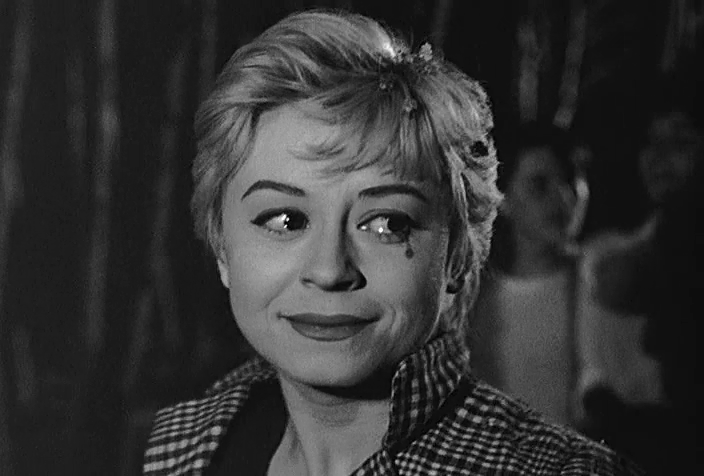
A friend of hers tried to kill her to get her hands on her money. Her coworkers make fun of her. A famous actor humiliates her after deceiving her with the legendary vanity of his success. Meanwhile, during a hysterical religious ceremony, Kampira prays for a miracle to change her fate and set everything back on track.
The final cut of the film was screened in March 1957 at the Cannes Film Festival, where it was a huge success, with Giulietta Masina winning the award for Best Actress. The following year, At the Oscars, the film will also win the award for Best Foreign Language Film.
Ο Marcello Rubini He is a journalist and writes for a tabloid, even though he hopes to be able to write more serious pieces someday. For seven days and just as many nights, he becomes the guide on a journey of a lifetime in Rome. “La Dolce Vita” premiered in Italian theaters in February 1960.
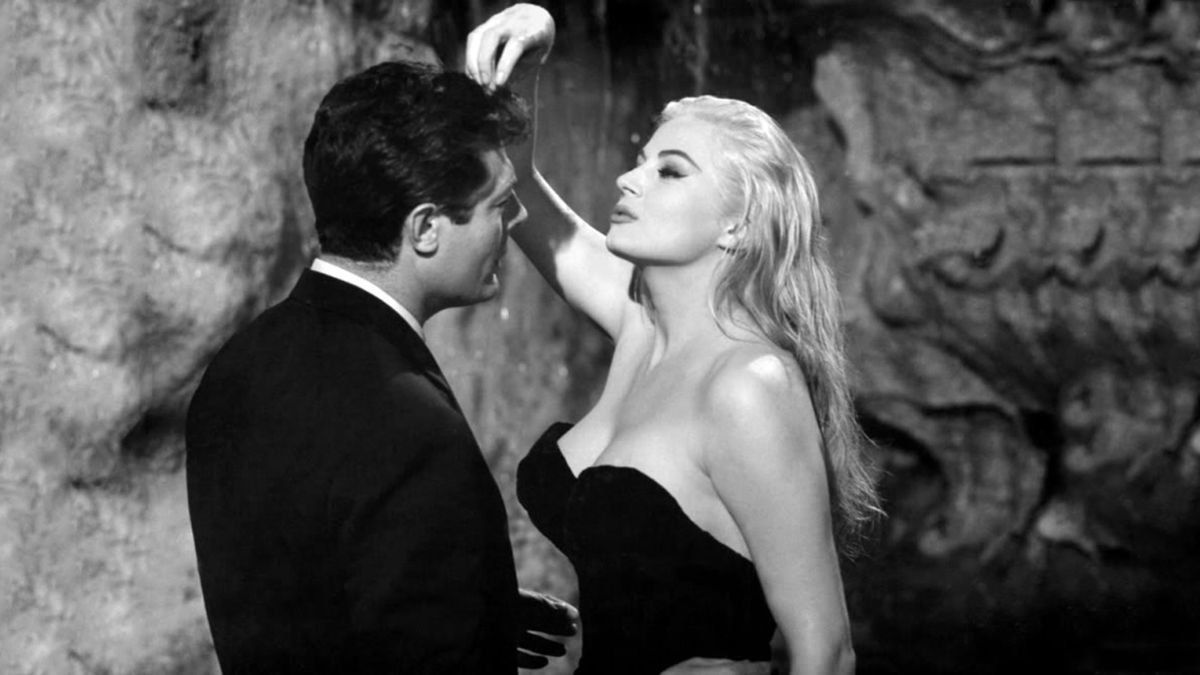
Its success with audiences went hand in hand with its controversies. At its premiere, the film was booed, and some heckled Fellini, who (unfortunately for him) was in the theater. The accusations leveled against him, relate to the immorality they believe the film in question promotes.
The film was criticized by the official authorities of the Catholic Church, and the matter even reached the parliament. Nevertheless, the uproar caused by the war contributes to the film’s enormous commercial success, but it prevents a clear critical analysis—at least at that particular moment in time.
Neologisms, which still persist, show just how much the director was influenced by—and in turn influenced—postwar Italian customs. Nobles, sad and isolated in their ruined towers; secret appearances; intellectual gatherings; and so on. It is essentially the entire Italy in the 1950s which is being recalled, here.
With her innocent desire for life, with the affected lightheartedness that now seems like a fairy tale to us, with her taste for fine clothing, the pleasure that a clean outfit brings, an evening drive, and daydreaming under the café’s glowing lamps. Fellini didn't invent any of this; he just remembered it…
”A deeply creative reflection on the impossibility of creation” are the first comments accompanying Federico Fellini’s next film. Meanwhile, the choice of the title remains a defining feature. On the card where the Italian director keeps his notes, amidst his usual sketches, he had scribbled a large “8½,” because that particular sketch was his eighth and a half film, and so it ultimately became the title.
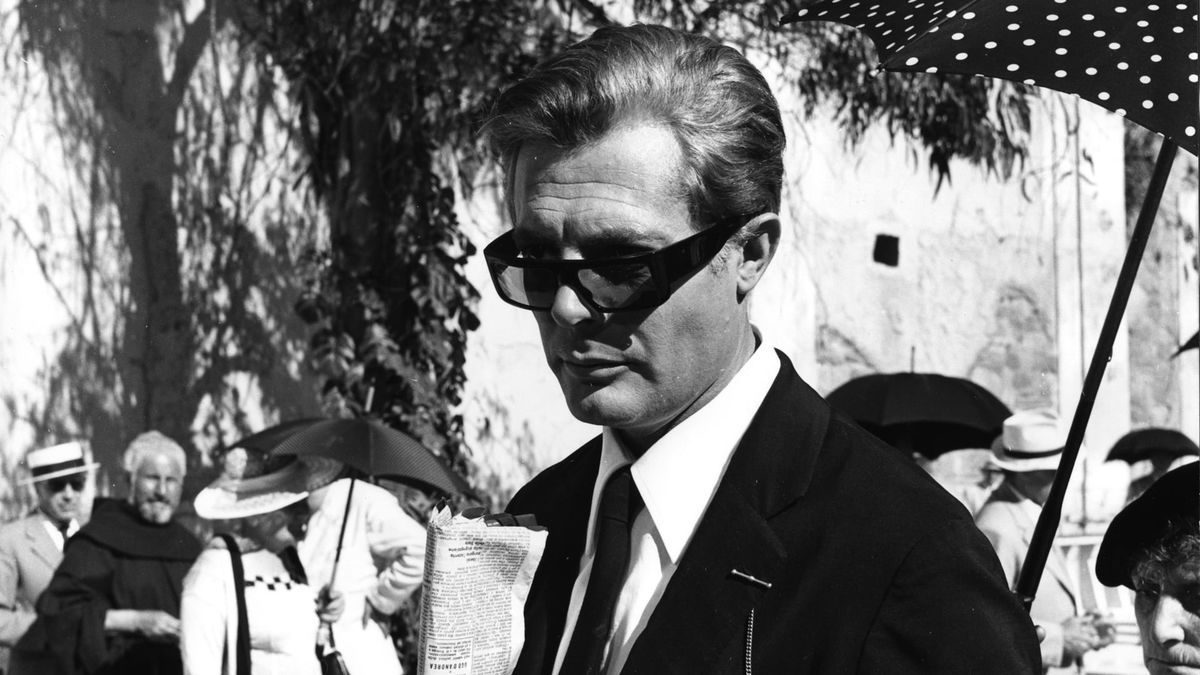
Guido Anselmi is a well-known director who is undergoing treatment at a spa. His dreams are filled with nightmares, childhood memories, and feelings of guilt stemming from a Catholic upbringing. He is preparing a new film, and as is natural in such cases, all sorts of people who might be connected to it are swirling around him. “8 ½” was released in February 1963.
Behind all of this, of course, are his dreamlike compositions Nino Rota whom we *should*, if nothing else, at least remember here. Because the score he composed for ‘8 ½“ remains one of the most monumental.
Ο Nino Rota, composer of the music for all of Fellini’s films—from the days of *Sceicco Bianco* (“The White Sheik”) through “Prova d’Orchestra” (“Orchestra Rehearsal’), also composed the musical ”commentaries“ for many other directors, such as ”Notti Bianche“ (”White Nights“), ”Rocco e i Suoi Fratelli” (“Rocco and His Brothers”), as well as Luchino Visconti’s “Gattopardo’ (”The Leopard“).
It is certain, however, that his name remains inextricably linked to that of Fellini, as he composed some of the most famous themes, from ’La Strada“ to ”8 ½.“. Melodies that suddenly bring back—like a note that slips away silently—a world full of clowns, short-tempered nuns, restless extras, dilapidated circus tents, and everything else one can imagine, all within Federico Fellini’s multifaceted universe.