A very interesting story is shared on her blog by Eleni Charou from the time when the Kythera was under English occupation and the Tsirigot inhabitants of the Smyrna enjoyed special privileges because of the status of appointments.
In the article entitled, «Tsirigotiko anecdote», we read:
«As we know, before the Asia Minor catastrophe, there was a flourishing Kythera community in Smyrna and its suburbs. The Kytherians, like all the 7nesians, enjoyed English protection, because they all had English passports.
According to the status of appointments (international conventions), those citizens of European states living on Turkish territory had extraordinary privileges. Their house and shop were inviolable sanctuary and a Turkish gendarme could not enter, except with the accompaniment of the consulate's kawashi. Still, they were not tried by a Turkish court, but by a consular court, which usually acquitted them.
The Kytherians, therefore, having the privilege of the diomoloios, prospered and progressed. And after the Union, as Greek subjects, they enjoyed the same privileges, because Greece was in the appointments.
Smyrna and its surroundings such as Koukloutzas, Burnova etc. were «the major Kythera»
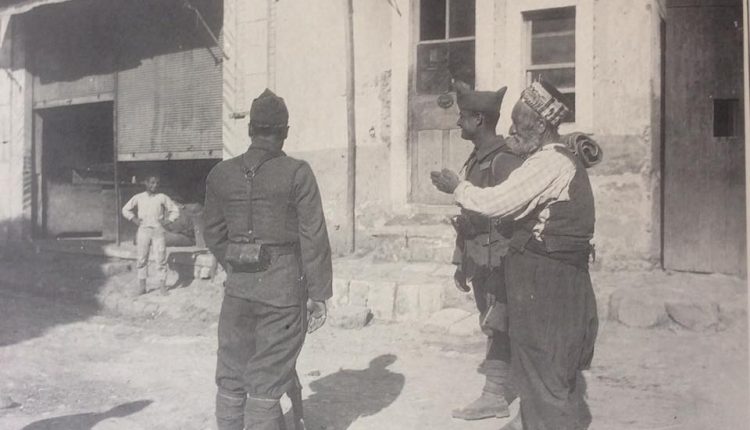
Once in Koukloutzas, a Turkish gendarme (jandarma) attempted to arrest a Tsirigotis, who refused to follow him. They came to blows and the Turk pulled the kubura, which became unbearable, so Tsirigotis took the opportunity to grab the kubura and break his head. The Turkish gendarme reported the incident to the English Consulate and the Consul made a judgment as follows: He suggested that Tsirigotis should load the gun, aim it at the Turk, and if he was also suffering from ignorance this time, the Turk should seize it and break his head in return for an equal share. The poor Turk, when he heard the consular decision, resigned and even offered friendship to Tsirigotis and they gave «pass» to support each other.
(I read this story in the book “MEMORIES AND STORIES FROM MYRNA” by the journalist Nikolaos Fotinos of Tsirigotosmyrna)»