Klavaria the fragile*
Fragile clavaria Holmsk.
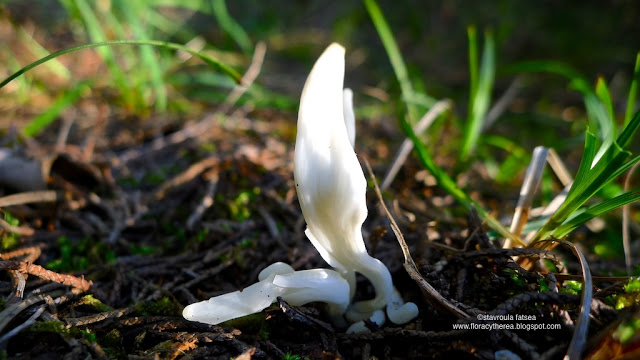
In the darkest corners of the forest, the fragile white coral suddenly appears before me. The white club-shaped basidiocarps of the club fungus can reach 10 cm. This is the typical species of the genus. clavaria easy to spot when growing in low vegetation. There are records of its occurrence throughout Europe, and it is also reported in Africa, Asia, Australia, and North America.
It was first described by Danish mycologist Johan Theodor Holmskjold (1731-1793), who gave it its current scientific name. The name Clavaria flagilis It was later accepted by the great Swedish mycologist Elias Magnus Fries in his historic publication Systema Mycologicum in 1821.
The name of the genus comes from the Latin clava = club, while the characteristic adjective of the genus comes from the Latin fragilis -e, meaning fragile, a reference to the flesh of the club, which shatters at the slightest touch.
Beyond its important role in the ecological balance of forests, according to recent research, this mushroom appears to have significant antimicrobial and antioxidant properties, like many other species of the genus. clavaria. (Sharma & Gautam, 2017)
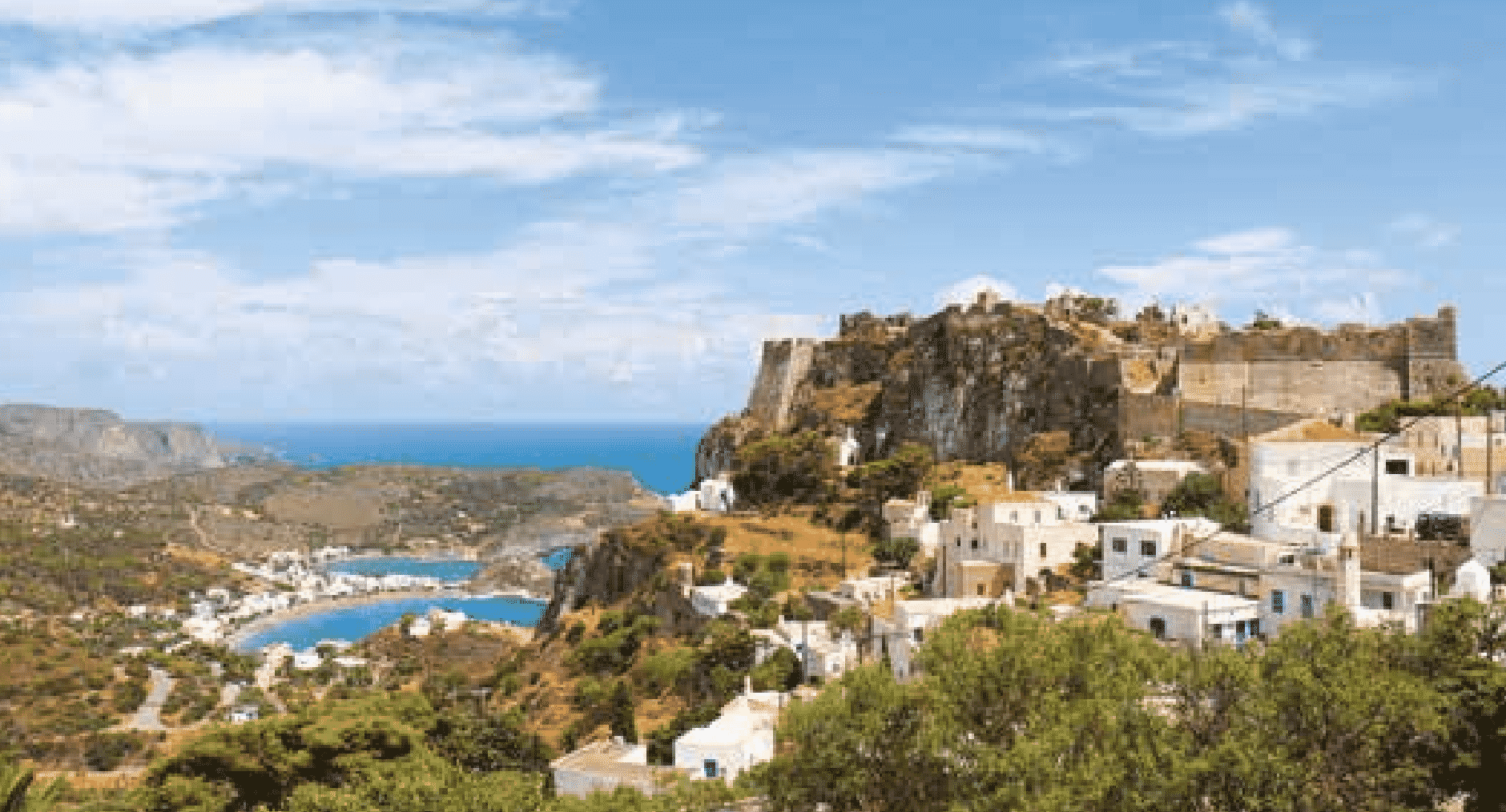
In Kythira, I found it in the center of the island in a cypress forest. This mushroom is considered edible, but due to its size and rarity, it is not collected.
In any case, collecting wild mushrooms is not a good idea, in my opinion, in places such as Kythira, where mushrooms are rare and hard to find.
*In Greek literature, it is referred to as Ropalia, which is accurate but somewhat awkward translation. For this reason, I preferred to keep the word klavaria untranslated.