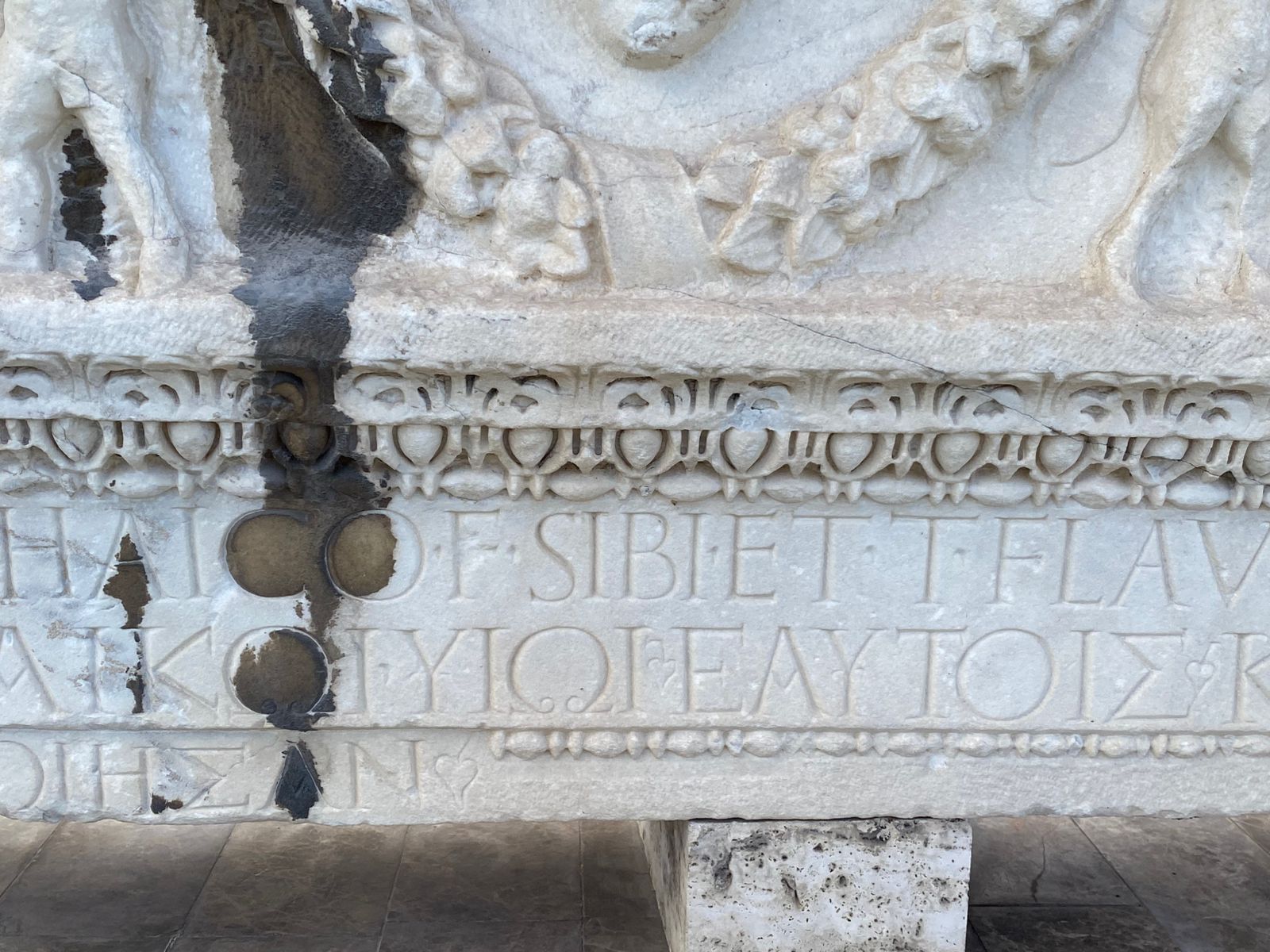
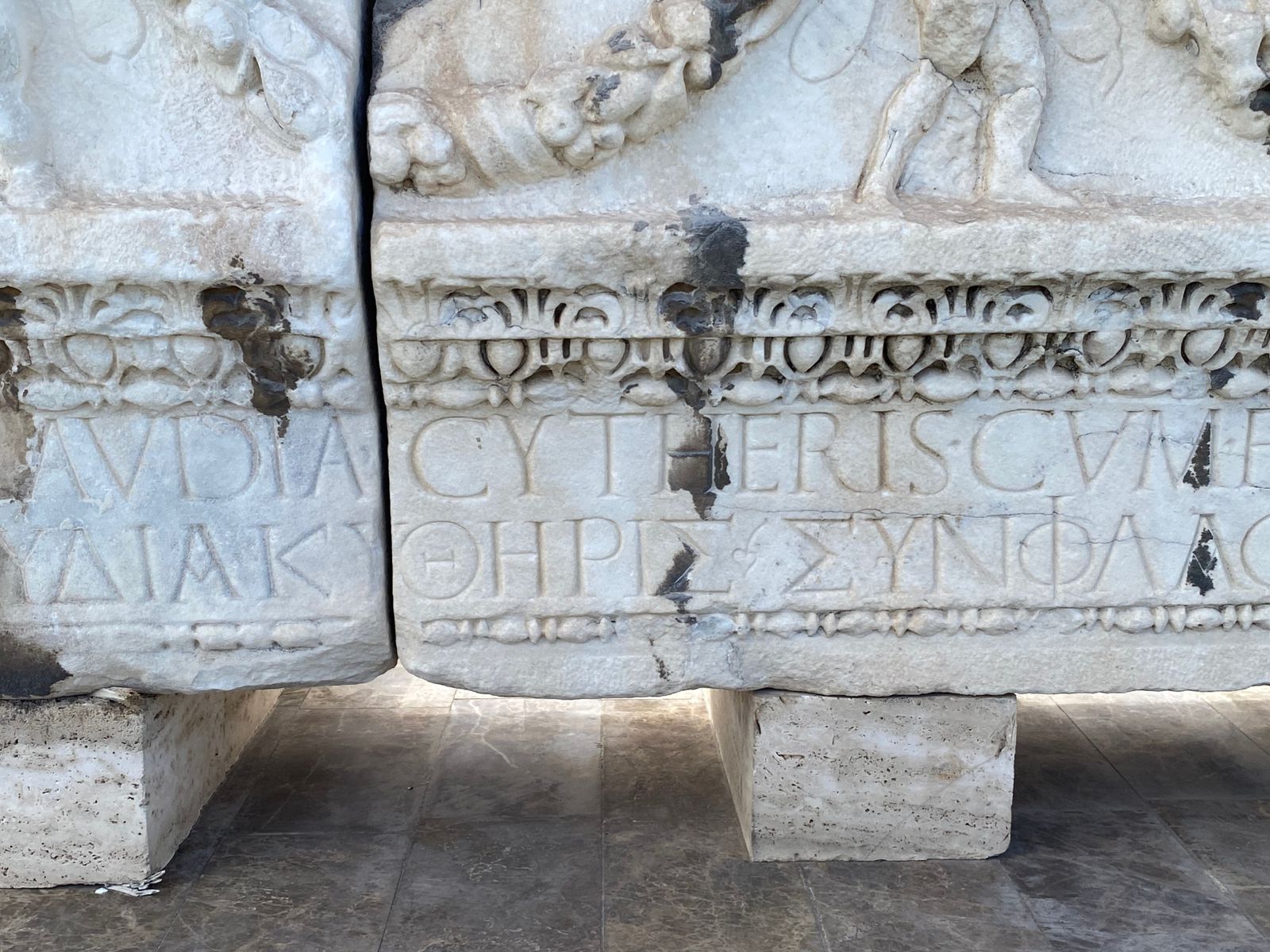
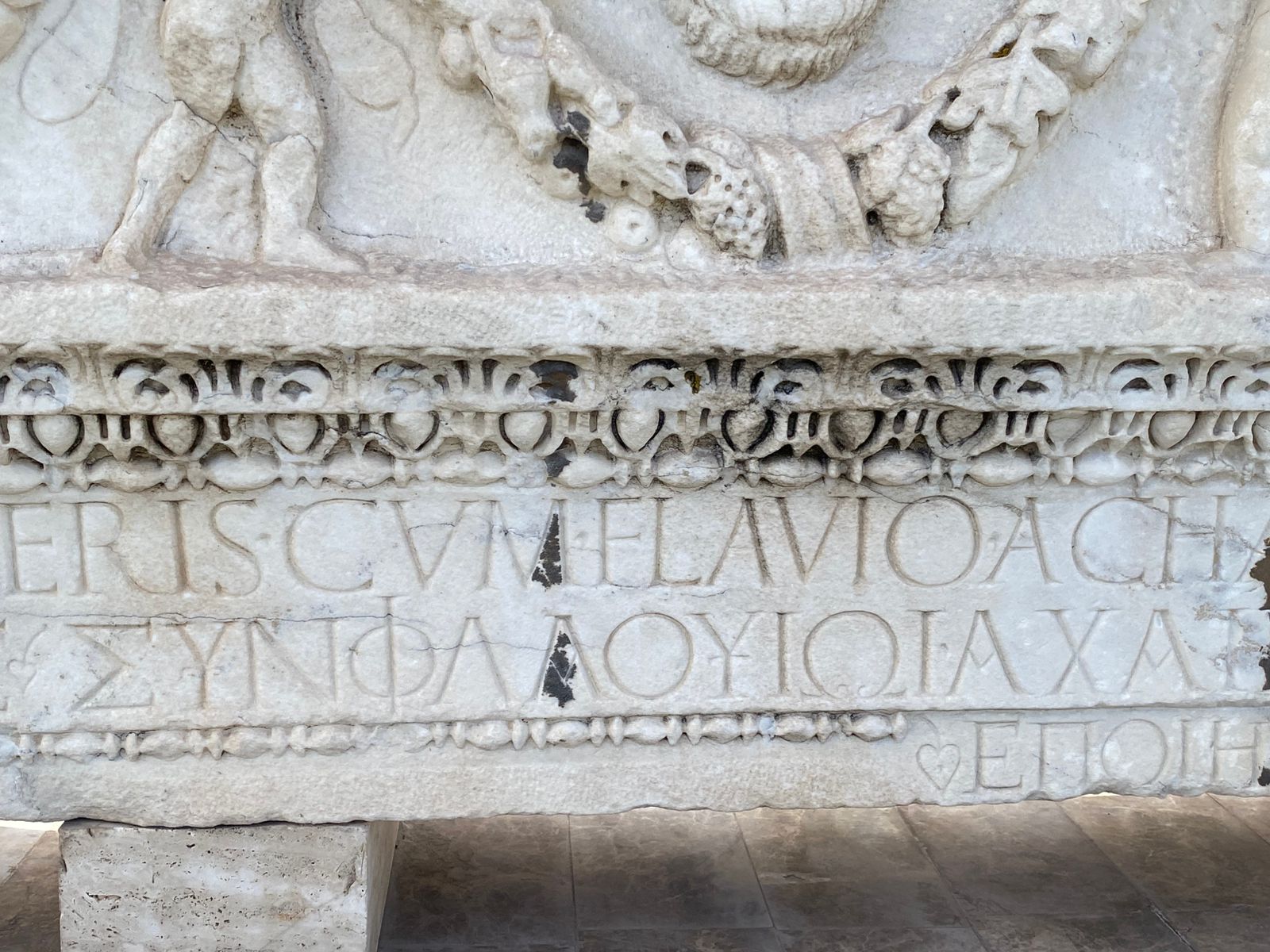
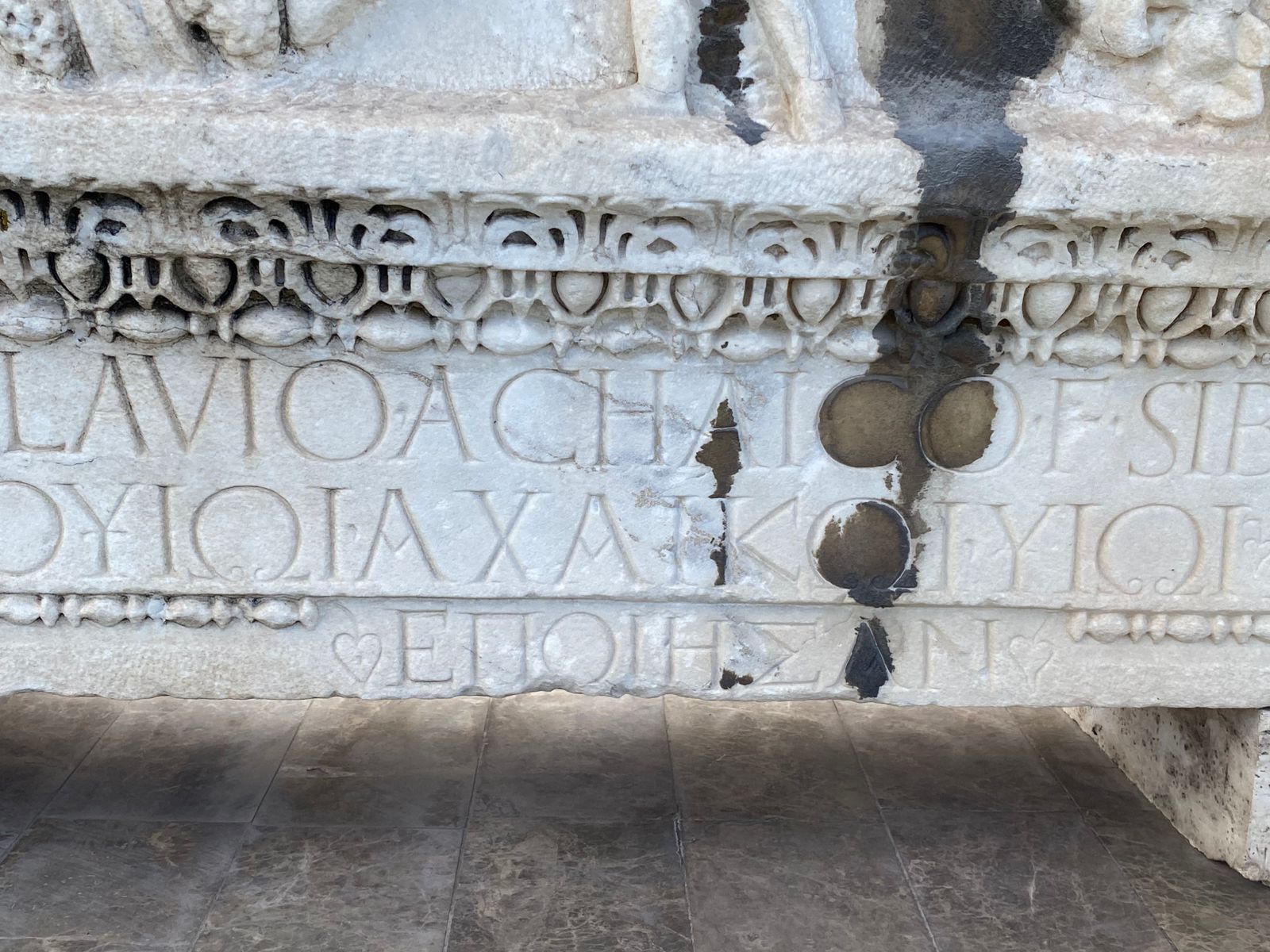
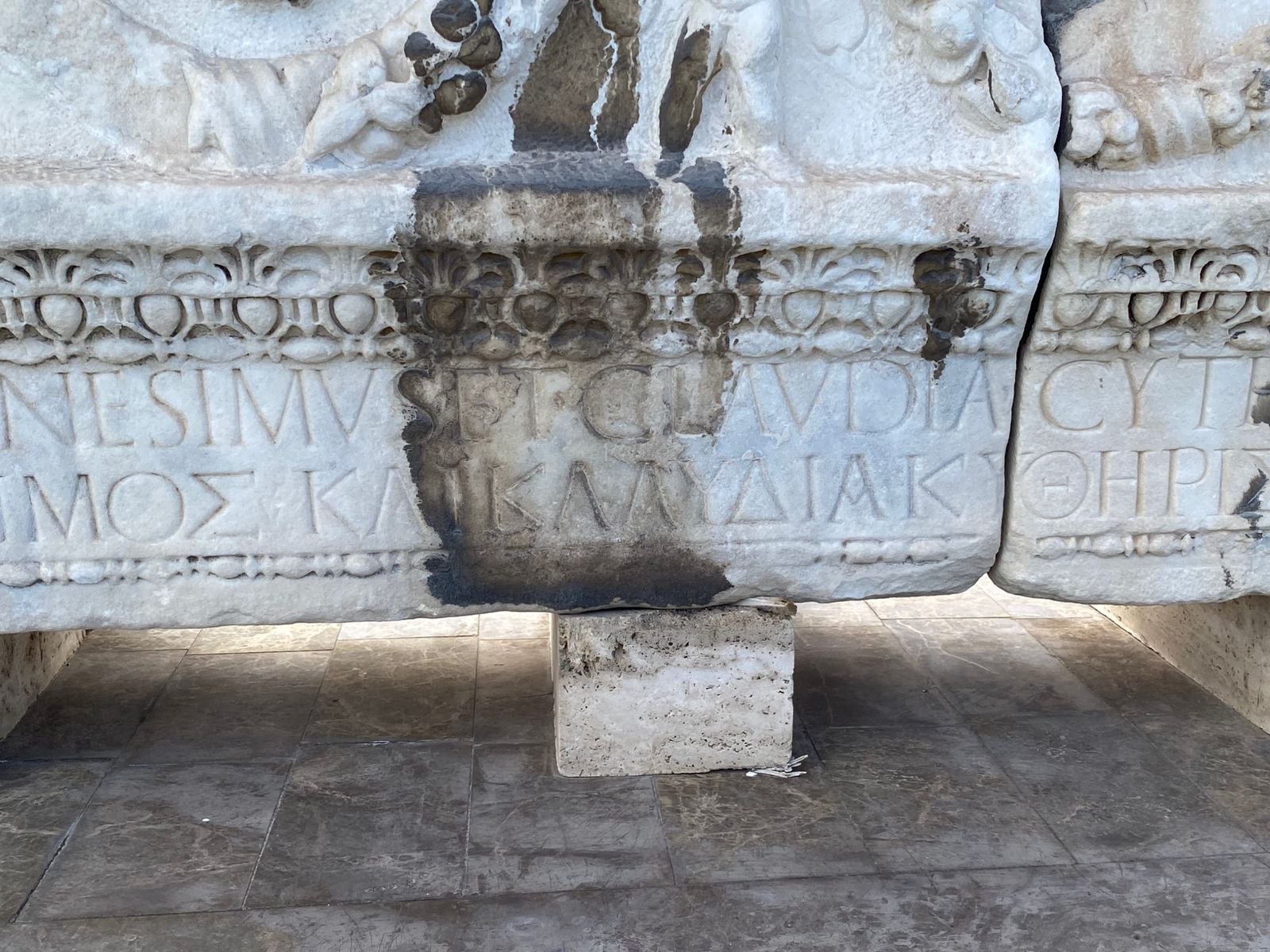
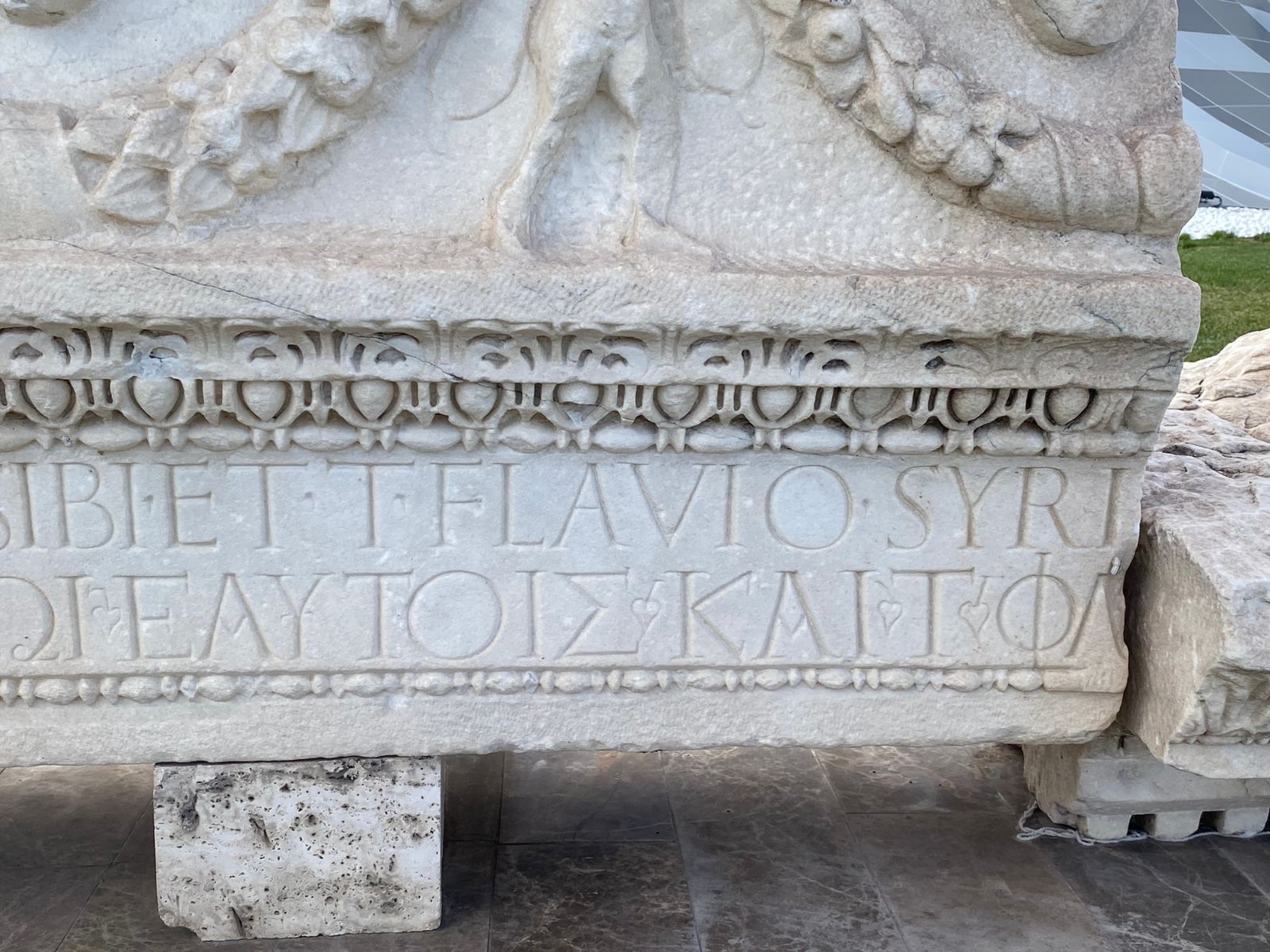
At the Archaeological Museum of Afyon Karahisar, we photographed an impressive bilingual (Latin–Greek) inscription on marble. Among the names, the following stands out clearly: KYTHIRIS: a female form with a Roman nomen (Claudia/Flavia) and a Greek nickname that refers to Kythera—the Aphrodite of Kythira.
The text, as preserved, mentions three persons (e.g., Nisimos, Claudia Kythiris, Flavius Ach.../Syros) and concludes with the standard formula «they did to themselves and their own»—a dedication/construction inscription found on public or sacred buildings from the Roman era.

Such inscriptions from the Roman East shed light on:
- the spread of the spiritual essence of Aphrodite (as Kytheria) beyond Kythira,
- the role of wealthy families in sponsoring sacred buildings,
- and physics bilingual daily life in Greek-speaking cities under Roman rule.
Translation–summary of the surviving part (paraphrased):
«Nisimos and Claudia Kythiris, together with Flavius Syros, built it for themselves and their own people.»
Aphion's «Kythira» stands as a precious gem linking Kythira with the East: a small but eloquent testimony to the spread of the divinity of Kytherea (Heavenly) Aphrodite throughout the Roman world.
October 2025.
Learn more about the Afyon Karahisar Archaeological Museum here:
https://www.muze.gov.tr/muze-detay?sectionId=AFM02&distId=MRK