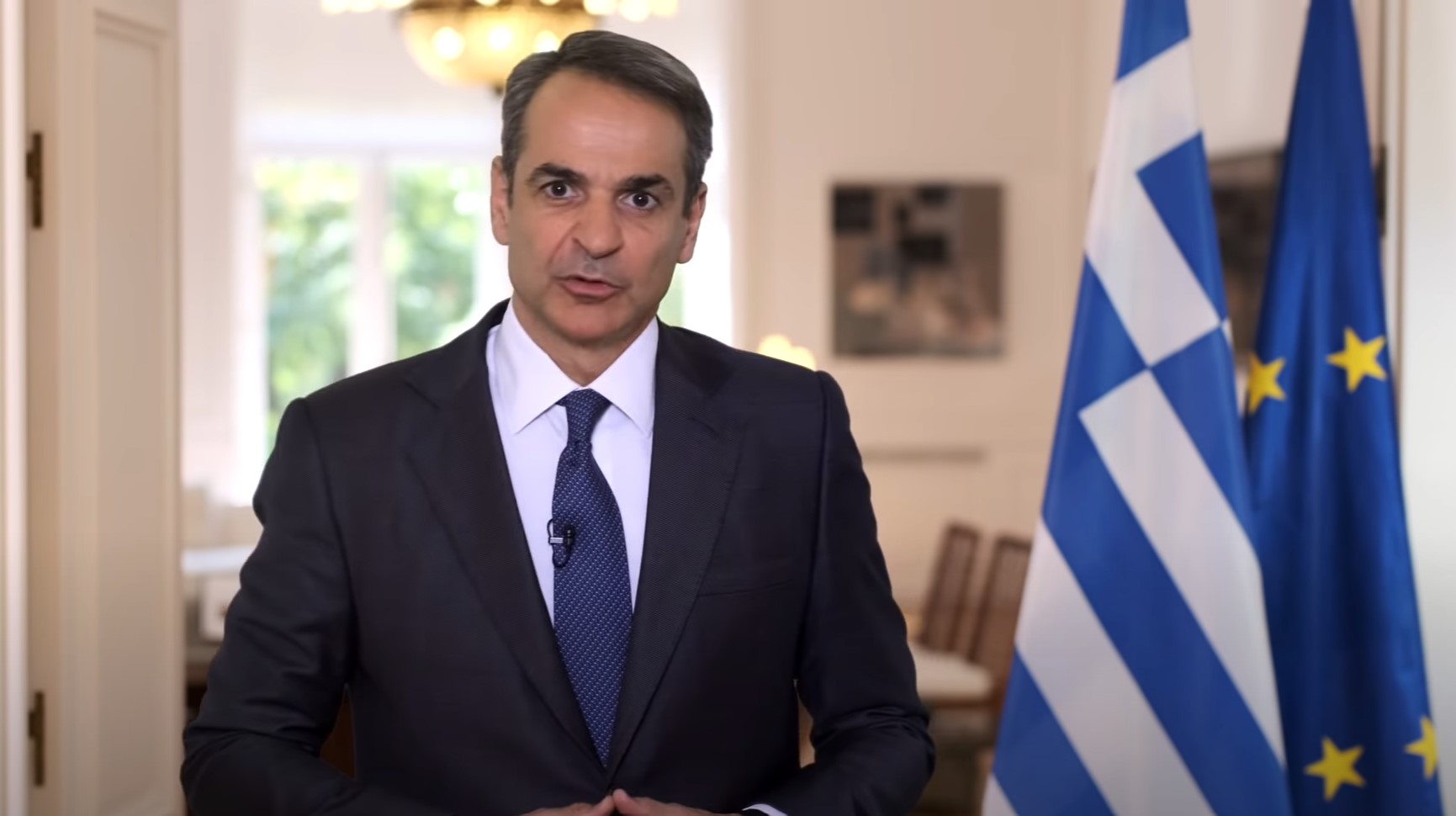
«Our regular meeting is taking place in the midst of a two-sided current affairs,» Prime Minister Kyriakos Mitsotakis said during his introductory remarks at the Cabinet meeting. «Fortunately, the summer continues to be extremely promising for our tourism, but also for our exports and public revenues. The same is true in terms of dealing with the fires but also in terms of de-escalating unemployment. But the international environment is unfortunately shrouded in dark clouds that portend an extremely difficult winter,» he said.
He said that the war in Ukraine has already completed six months, «Russia is now attacking Europe as a whole, using gas as a weapon», pointing out that gas prices have risen by 1,000 percent, and are ten times higher than they were before the crisis started, pushing up the cost of electricity but also fuelling unprecedented inflationary pressures. He called it a ’strategic threat« because everything indicates that Moscow is seeking to use economic pressure to create social unrest and political instability within the countries that oppose its plans. »It is the cost that the front of freedom, international law and democracy is bearing,« he stressed.
He said that «those who doubt it have only to look at how organised Russian energy blackmail is and how precision is being used as a catalyst to magnify individual issues and challenge, sometimes altogether, national governments. Where? In those states which, in the name of Ukraine, have defended and are defending peace, inviolability of borders and democratic normality on our continent. Mr Putin is not hiding it, but neither is Mr Erdogan, who has publicly stated that he would like another government in Athens.
He said that as far as Greece is concerned, we should add to the general challenges the aggression of our neighbours and of course the migration issue. «We are saving people, we are guarding our borders and let the other side look at its own unguarded borders,» he said, referring to the tactics that the Greek side is following and will continue to follow.
He pointed out that the time has come at European level to implement what he had proposed seven months ago, namely a common European response to the crisis.
He added that at the national level, «the government has proven and knows and can raise mounds on increases, it has said and done so and is doing so on electricity bills, it says and will continue to do so where and as needed. But beware that the resources are not inexhaustible,» he said.
He warned that the measures will be measured without temporary needs mines the national needs and stressed that the state must show boldness and sensitivity and society must show responsibility in terms of the need to find ways to save electricity.
He concluded his introductory statement by referring to the words of French President Macron that in an unstable environment «only stable states are strong states». He said «the message has been sent both within and outside the borders: Greece is not turning back, nor is it changing its historical choices. Greece remains firmly on the path of Europe and liberal democracy, with a government that responds to the challenges of the situation, with society as its ally, without succumbing to pressure or its own weaknesses.
«I am the first to neither tolerate nor accept our mistakes,» the Prime Minister also said.
In his introductory statement, Mr Mitsotakis said:
Our regular meeting is taking place in the midst of a two-sided news story: The summer continues, fortunately, to be extremely promising for our tourism, but also for our exports and public revenues. The same applies to the response to the fires, but also to the reduction in unemployment.
But the international environment is unfortunately shrouded in dark clouds, foreshadowing an extremely difficult winter. The war in Ukraine has already been going on for six months, and Russia is now attacking Europe as a whole, using gas as a weapon. Its prices have risen by 1000%, ten times higher than they were before the crisis began, pushing up the cost of electricity, and feeding unprecedented inflationary pressures.
It is therefore an unprecedented threat to the entire West. I would even say that it is a strategic threat, because everything now shows that Moscow is seeking, through economic pressure, to create social unrest and political instability within the countries that oppose its plans. It is the cost that is being borne on the front of freedom, international law and democracy.
And those who doubt it need only look at how organised Russian blackmail in energy is and how precision attempts to become a catalyst to magnify individual issues and to challenge, sometimes altogether, national governments. Where? In those states which, in the name of Ukraine, have defended and are defending peace, inviolability of borders and democratic normality on our continent. Mr Putin is not hiding it, but neither is Mr Erdogan, who has publicly stated that he would like another government in Athens.
Now, as far as Greece is concerned, to the general challenges we should certainly add the aggression of our neighbours and of course the migration issue. In fact, there will be a briefing of the relevant Committee today by the two Ministers responsible.
The migration issue, which instead of the massive waves we faced two and a half years ago, now appears in the guise of so-called «humanitarian invasions» by groups that are moving in a coordinated manner. However, no new tactics by the traffickers and no manoeuvring by Turkey will change our position. We are saving innocent people, guarding our borders and let the other side look at its own unmarked borders.
I am making this introduction in order to describe the international environment and the consequences, economic and political, that it can have on each state, because only in this way will we be able to formulate our responses, both at European and national level.
On the first, the European one, there is no doubt that the time has come to implement what I proposed to my counterparts exactly seven months ago: A cap on gas prices, the decoupling of gas prices from electricity prices, in other words, at last, a common European response to the crisis.
I am sorry, but I was one of the first to warn about the crisis we are now facing. At the time, I even spoke, causing some reactions in Brussels, about Europe's cumbersome «ocean liner» that is usually slow to change course.
Now, following yesterday's statements by the President of the European Commission, but also the activation of the Czech Presidency, I will say «better late than never». I will insist, however, that every day that goes by without a unified response to the energy crisis will increase the problems for all Europeans.
Now, at the national level, I think the government has shown that it both knows how and can put up barriers to increases. It has said it and it has done it and it's doing it on electricity bills. It says it and will continue to do it where and how it needs to.
But be careful, the resources are not inexhaustible and we should not forget that if the state today is able to support households and businesses with more than 2 billion per month for their electricity bills, it is also due to a prudent policy that has increased public wealth so that it can be returned to the citizens.
Therefore, our measures will always be measured and without temporary needs minimising national necessities. I say this because I hear or read - and this always happens, you know, before the Thessaloniki International Fair - about a tsunami of imminent benefits, which often create false expectations.
In an environment of rising interest rates, public debate is best based on realism and real inflation is not beaten by false inflationary promises. And if, so far, we have succeeded in supporting society effectively, to the extent possible, it is precisely because we are exhausting fiscal space, but without removing it.
So be patient until the Thessaloniki International Fair, because there I will be able to present our plan for the critical winter ahead, but also for our second term of government and for Greece in 2030.
But in the meantime, our work is ongoing and today we will be considering a number of important bills. The issue of backlinks is already the responsibility of the House and the judiciary. Our absolute priority therefore becomes the energy crisis and how to deal with it, which looks set to seal the next few months. And as I said, on this front we are moving both at home and in Europe, but we must not hide from the citizens the dimension of this particular threat. It is a threat of a different kind. I would say that it has a lot in common with the pandemic that we faced two and a half years ago.
It is global, it is asymmetric, it has many unknown parameters, and it has parallel effects in many different areas: from the course of national economies and the wallet of each household, to social cohesion and the daily life of each place. That is precisely why our defence must be proportionate. This means that the State and citizens must once again join forces. State measures, of which there are many, must also be combined with changes in individual and family behaviour. And collective provisions must be accompanied by adjustments to our personal habits that work in the same direction.
In other words, once again the state must show courage and sensitivity and society must in turn show responsibility. We are already adapting our plan for the energy needs ahead, not only to help the weakest, but also to reduce, to reduce overall energy consumption, and to reward smart consumption. We will need, Minister, a broad information campaign on this issue, so that everyone can be informed of the most effective ways of saving electricity, alongside the general clauses that are already in place for the operation of the public sector.
That's all for now and to give us an idea of the broader context, which President Macron called «the great upheaval, the end of certainties», an unstable environment, in which the strong states are only the stable states, a position that I believe all Greeks agree with, and it would be good for those who are betting on international difficulties, in order to construct supposedly domestic crises, to understand it. I have spoken about this in Parliament, I do not need to expand on it. The message, moreover, has been sent both within and outside the borders: Greece is not turning back, nor is it changing its historical choices. It remains firmly on the path of Europe and liberal democracy, with a government that responds to the challenges of the situation, with society as its ally, without succumbing either to pressure or to its own weaknesses.
I assure you that I am the first one who neither tolerates nor tolerates the submissive, nor does he accept our mistakes. That, after all, is our great strength: truth, trust in the citizen and working for the present and the future we want. So that is how we continue. And now we can start our agenda for today.
Mr. J.