Sea fennel L
Pangrati the beach
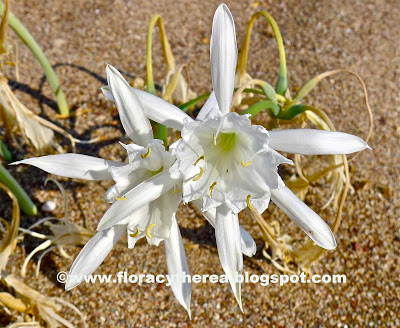
A perennial, bulbous plant of the Mediterranean coast. Its bulb, buried deep in the sand, blooms in late August. The pure white flowers have a wonderful sweet aroma. Its seeds are jet black and light as charcoal, holding the precious tiny bulb in their center and traveling with the winter waves until they find the right beach to sprout after years.
In ancient times, it was considered a sacred plant and is depicted in the magnificent frescoes of the palaces of Knossos (Evans 1896) and Thera (Marinatos, 1970s). There are also references to its use in initiation ceremonies as far back as the Mycenaean period. Bushmen in Africa still use it today in religious ceremonies. .
The name comes from the compound Greek word παν +κρατώ > παγκρατής = almighty, referring to the plant's ability to survive in the extreme conditions of the hot sand of the Mediterranean summer.
According to another version, the name is due to its powerful medicinal properties. The adjective maritimum = marine, coastal.
There are about 15 species in the genus, and almost all are considered toxic since the bulbs contain more than 20 alkaloids.
Theophrastus mentions it as a suitable antidote to poisoning and as a cardiotonic, while also noting that its fibers are used in the manufacture of shoes and clothing. Dioscorides considers it a powerful medicine against spleen disorders and dropsy.
“They also call this plant skyllan. The root is similar to a large bulb, reddish, bitter and pungent in taste, with leaves similar to those of the lily, but longer. It has the same potency as the skilla, and is used in the same way and dosage, treating the same ailments; but its power is milder than that of garlic; Therefore, when crushed and mixed with wheat flour and kneaded into dough, it is given with honey to those suffering from dropsy and edema, with beneficial results.”
Dioscorides, On Medical Matter, Book II
Beyond its beauty, the plant has special ecological value as its deep roots (1.5 m) can
They hold together loose sandy soils, making them resistant to wind erosion and creating a suitable environment for other plants to grow. The plant has been classified as endangered, mainly due to tourism development, which degrades its natural habitats.
On all the sandy beaches of the island of Kythira at the edge of winter
wave, the beautiful white lilies adorn the landscape. Unfortunately for us, every
Over time, its populations are declining as the “development” of the canteen and the
sun loungers have been steadily promoted in recent years on our island.
Admire it and Protect it!!!