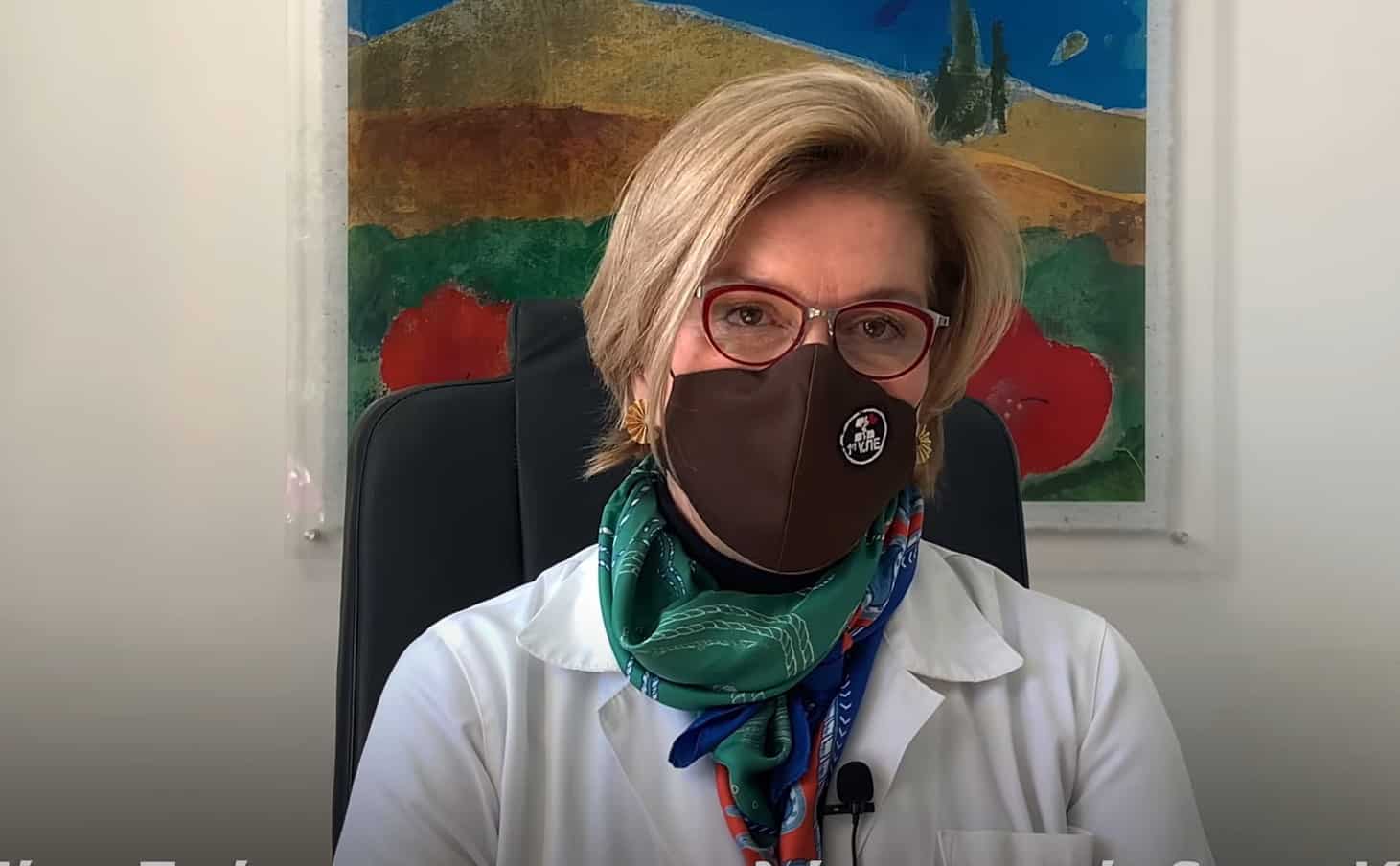
The Ministry of Health's strategy for the management of pandemic of coronavirus this winter, but also the next steps for the strengthening of the health care system, analyses in «THEMA» Mina Ganga, Deputy Minister for Health.
The availability of monoclonal antibodies within the next 10 days for patients with COVID-19 infection is crucial but does not eliminate the need for vaccination, the minister stresses, calling on citizens to invest in dialogue with experts and not in polarization. As a doctor who has served the NHS for many years, Ms Ganga announces changes in medical specialties, in the field service, and a package of incentives to fill vacancies in remote and border areas.
– The pandemic, it seems, will test the resilience of the NHS this winter. How is this winter different from last winter and how does this affect the epidemic management strategy (in the community and in health structures)?;
“The resilience of the NHS has been tested for almost two years, since the beginning of the COVID-19 pandemic. We are again at a point in time where daily cases are elevated to levels much higher than last year, and there is also an upward trend in hospital admissions, but at rates lower in proportion to the cases, thanks to vaccination. Vaccination coverage among citizens over 12 years of age is 66.7%, but is not uniform. We would like to see a higher vaccination coverage rate, especially in some regions such as northern Greece.
Where the proportion of vaccinated citizens is satisfactory, this can contribute to an «easier» winter. In any case, throughout Greece we continue to take care and observe the necessary measures, while further strengthening the system by introducing better financial incentives for both the health professionals already staffing the system and those working outside the NHS to assist where needed.”.
- Operation Freedom has been stagnant for some time. How do you explain that? How can this campaign be continued in order to achieve its objective of vaccinating a high percentage of the population?;
“The vaccination campaign has progressed well to date, with over 12.5 million vaccinations and over 6.3 million complete vaccinations already. We can of course do better and we will achieve this if we proceed calmly, without polarisation and if we all decide that vaccination and compliance is the only way out of this health and social crisis. Our aim is to persuade, not to coerce.
We want dialogue, not pressure solutions. The four-digit number of EODY and the chat platform on the Agency's website will help in this direction.”.
- In the field of pharmaceutical preparations for the management of COVID-19, it has already been announced that Greece will purchase monoclonal antibodies through the European Union. What stage are we at?;
“Within the next 10-15 days we will have received 2,000 monoclonal antibodies, which, as you know, according to the therapeutic algorithm, will be administered according to specific medical criteria by hospitals throughout the country. The aim of this treatment is to prevent the disease from worsening, with all that this entails in terms of the need for mechanical ventilation and hospitalisation in the intensive care unit. However, the availability of good and effective drugs, as well as the antiviral pills that we also expect at the beginning of the year, do not eliminate the necessity of vaccination.”.
– Good, innovative medicines also exist for diseases for which we unfortunately cannot be vaccinated, such as many cancers. However, patients complain about the delayed access to these treatments. Is the Greek framework slower than in other countries?;
“We try to be quick in introducing new treatments, through institutionalised procedures followed by the EMEA and other stakeholders. In some cases we are even faster than many other European countries, such as pemetrexed, a lung cancer drug that patients in our country received much earlier than those in the UK. In any case, the treatment protocols ensure that every patient who really needs it gets the drugs they need, while preventing the unnecessary waste of resources that we all pay for.”.
- From «Salvation» to the Ministry of Health, what are the urgent problems that you have identified as a health professional in the NHS and are ready to address from the position of Deputy Minister?;
“We have started and we continue to visit hospitals and Health Centres all over the country, seeking an open dialogue with NHS staff not only on the issues related to COVID-19 cases but also on the overall functioning of the system and the care of all patients. We are working to optimise services so that they meet the basic needs of patients in their place of residence and ensure easy access to more specialist care when it is needed.”.
- The advertisement of permanent posts to fill vacancies in the NHS has been launched several times. However, there seems to be no interest from doctors and nurses. What incentives can be considered attractive to fill the posts?;
“We are considering a comprehensive plan to provide financial and scientific incentives, in consultation with all regional governors of the country, to fill vacancies in health structures in remote and border areas. At the same time, we are studying ways of upgrading the allowance for doctors serving in «arid regions». In addition, we have drawn up a number of «intangible» incentives for health professionals serving in the periphery, such as digital scientific interconnection with central hospitals and continuing medical education.”.
- The strengthening of Primary Health Care (PHC) has been left behind by the pandemic. At this stage, what can be implemented that will have an immediate and tangible impact?;
“The primary role of PHC is to provide quality services accessible to all. To this end, we are developing structures that will serve citizens with scientific excellence, speed, without inconvenience, while limiting the burden on tertiary hospitals. In this context, and in line with European standards, we are launching the strengthening of primary health care with more general practitioners, a specialty that unfortunately has not attracted interest in our country until recently.
This is just one aspect of a wider effort to reorganise the map of medical specialities. As is the case throughout Europe, the number of medical specialties should be matched to the needs of the country's health system in order to gradually eliminate the phenomenon of overcapacity in some specialties and shortages in others.
Also, in cooperation with the KESY, we are changing the way of training young doctors as well as the procedure of field service (Rural): we are promoting a 6-month training of medical graduates in clinics of the Pathology Sector, in basic medical operations and in the management of emergency trauma and other cases. This training will serve as a preparation for the Rural, so that the new doctors will start their tenure better equipped”.
- The Ministry of Health has already announced cooperation with the private sector in three regions (Thessaloniki, Volos, Larissa) for the needs of the pandemic. Are you considering similar partnerships in other regions?;
“The cooperation with the private sector is continuing in the best possible way and will continue during this winter if needed. No patient whether suffering from COVID or not will be left uncovered.”.
- Can public-private partnership in the face of the pandemic be the basis for a permanent and stable partnership for the health of citizens?;
“The private health sector has a strong presence in Greece over time, stronger than in other European countries. The pandemic has shown that we can all work together to serve a common goal.
We are therefore open to any synergy, as long as it creates conditions for better care, without additional financial burden for citizens. We are already evaluating requests from regional hospitals for medical equipment that could be covered more quickly through a partnership with a private party and serve citizens within the NHS.”.