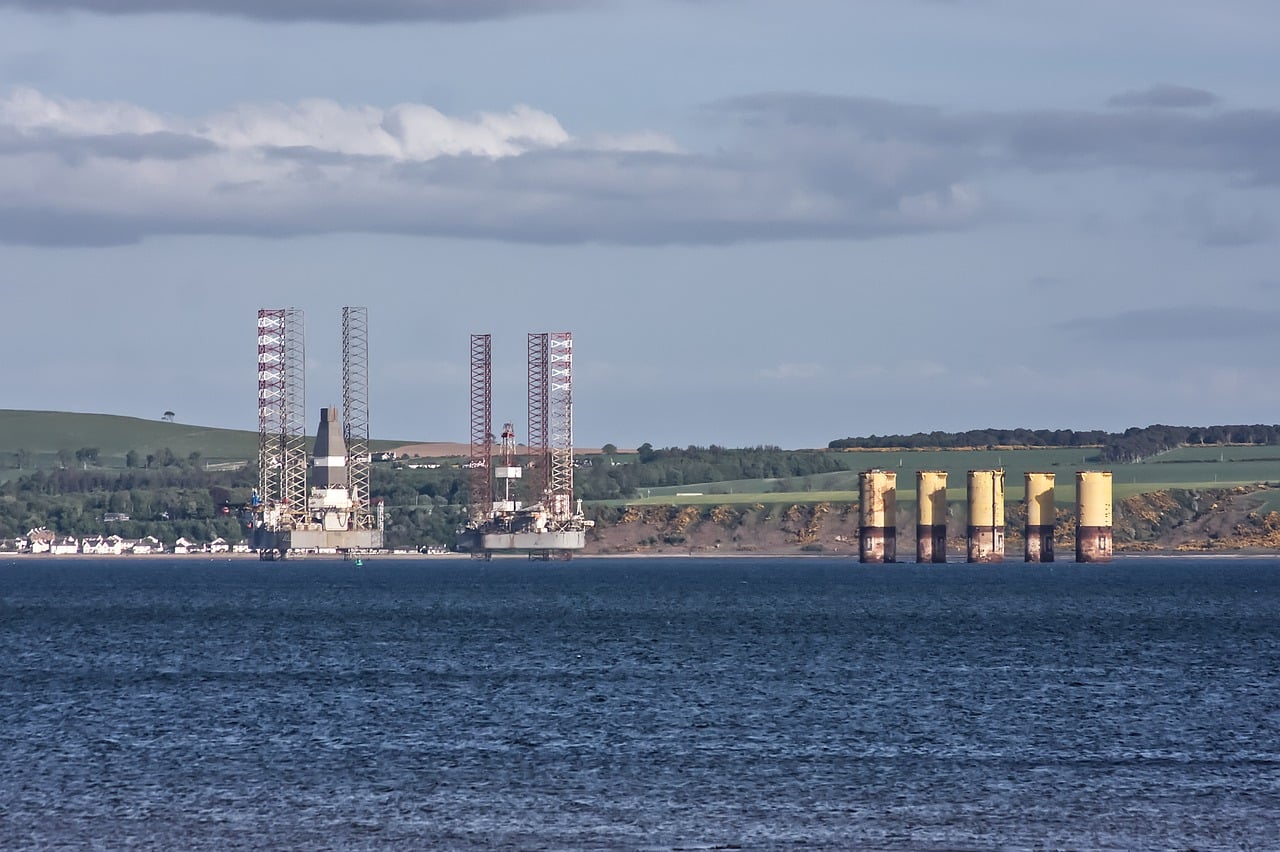
On June 2, 2020, the tanker Ice Hawk is anchored off the coast of Rhodes. During the eight hours he remained there, he pumped 6,000 tons of fuel oil into the power station in Soroni.
Rhodes is an extremely popular tourist destination. Nikos Passalis owns a hotel near the station. «Visitors arrive at the hotel and the first thing they see are the chimneys. On the beach, they see the chimneys and the black smoke, hear the generator, and smell the fuel.» He made these statements to Thodoris Hondrogiannis and Nikolaos Leontopoulos in a related investigation they conducted and published in Investigate Europe.
Close to the station is the Valley of the Butterflies, one of Rhodes' main natural attractions, and at the same time Natura 2000 protected area. In addition, the second power station in the southern part of the island is located in the middle of another nature reserve. This means that Tankers drop anchor in front of a unique and fragile ecosystem., which, at least in theory, is protected by law, as pointed out in the study.
Billions wasted?;
Rhodes is not the only case. Today, 29 autonomous electricity grids supply 47 islands with electricity generated by burning diesel and fuel oil, one of the most polluting fuels, with a high sulfur content.. The process of electrifying the islands progressed during the post-war period, as the country rushed to modernize. The fact that Greece has hundreds of small islands, far from the mainland, made independent electricity production the only practical option at the time.
Between 1960 and 1980, some islands were connected to the mainland grid. However, this was not the case for the Cyclades, the Dodecanese, and Crete. The Public Power Corporation (PPC) concluded that connecting Crete to the mainland was economically viable as early as 1981. Today, according to the study, politicians and experts estimate that The planned Athens-Crete connection will cost €1 billion.. The Greek Ministry of Environment estimates that it will save 400 million annually.
Greece is on track to reduce the islands' dependence on fuel oil and diesel for electricity generation., However, as the two researchers point out, this will not happen before the end of the decade. According to the National Energy and Climate Plan, Crete is expected to be connected to the national electricity grid by 2023, the Cyclades islands by 2025, the Dodecanese by 2028, and the North Aegean islands by 2029.
But if this has been possible for decades, why has it taken so long? A former senior government official spoke to Investigate Europe and Reporters United about this: «There is a lot of money involved in this case, but also interests related to the domestic oil industry.», adding that «Governments turned a blind eye to the costs borne by consumers and wasted billions.. This benefited the oil industry, the shipping companies that transport fuel, but also the people at the Public Power Corporation who had some influence on power stations and local communities. Everyone was satisfied, except for the citizens, who were paying billions.
Fuel suppliers and shipping companies emerge as winners
Every year, PPC receives bids for the supply and transport of fuel oil and diesel. In 2017, it appears to have spent 310 million on fuel oil and 280 million on diesel. In 2018, the cost was 330 and 240 million respectively, while the projected cost for 2019 was 318 million for fuel oil and 295 million for diesel, as highlighted in the study.
Reporters United analyzed the available data on PPC auctions for fuel contracts from its electronic database. It appears that Two domestic oil companies, ELPE (Hellenic Petroleum) and Motor Oil, are emerging as the largest fuel suppliers to PPC for the islands., along with some foreign companies (e.g., Petroineos, Vitol, Shell, and Trading Rotterdam). The data covers the period from 2014 onwards. However, according to PPC reports, contracts for diesel for the period 2010-2013 were shared between ELPE and Motor Oil.
HELPE, controlled by the Latsis family, has received €1.4 billion since 2014 for supplying fuel to the islands. Motor Oil, a company belonging to the Vardinoyannis Group, has secured contracts worth €400 million for the islands, of which €360 million relate to fuel for power stations. The Vardinoyannis Group is considered one of the largest industrial groups in Greece, with holdings in oil and energy, shipping, the hotel sector, and the media, and it also owns two of the country's largest private television stations.
In addition, three foreign suppliers, Petroineos, Vitol, and Shell Trading, were awarded contracts totaling €1.3 billion. In July 2021, the Chairman and CEO of PPC, George Stassis, told a parliamentary committee that contracts for fuel oil in 2021 were awarded to Petroineos and Coral Energy PTE, both international oil companies, for 210 million and 120 million respectively.
In addition to fuel for the generators, PPC also pays for the chartering of tankers used to transport it, as well as for transport fuel.
Between 2014 and 2021, PPC paid €32 million and €3.5 million, respectively, for leasing and fuel to SEKAVIN and SEKAVAR, both companies belonging to the Vardinoyannis Group. Also, since 2014, companies owned by Dimitris Melissanidis have received approximately €77 million for supplying electricity to the islands.
The questions
According to the investigation, a specific pattern is followed, whereby a handful of companies dominate fuel supply for a long period of time. In other words, an oligopoly that operates at the expense of consumers.
«The delay in building interconnections has benefited the oil industry, as it has had a captive market for its products for decades,» commented Takis Gregoriou of Greenpeace. «This is even more so when we talk about fuel oil, which would be difficult to sell elsewhere due to its low quality.» Furthermore, questions have even been raised in Parliament about the supplies, either about specific allegations of corruption or the lack of competitiveness and impartiality of the overall process.
Historically, fuel transportation was not subject to a separate tender, but was provided by the fuel suppliers themselves, an arrangement that the president of PPC-PPC, Manolis Panagiotakis, recognized at the time as «limited competition.» This changed in 2014, resulting in savings of €3.2 million just nine months after the new arrangement.
The lost Greek islands
Leaving the islands cut off from the main electricity grid leads to higher electricity costs.. According to the regulatory authority RAE, a kilowatt hour that costs €80 to produce in mainland Greece costs €714 in Anafi, €1,297 in Antikythira, and €2,239 in Agathonisi.
In order to avoid disproportionate burden on island residents, the additional costs are distributed among all electricity consumers through a mechanism known as «public utility services». In other words, the surcharge is added to customers' electricity bills.
Furthermore, supplying the islands with oil generators is also harmful to health. Research conducted by Greenpeace in 2013 on the health effects of oil-fired power stations on island residents linked their operation to 68 premature deaths each year.
What is responsible for the delays?
«Lack of public resources, poor planning, weak institutional framework, objections from local communities—many factors are responsible for the delays.», said Nikos Mantzaris of Green Tank. «The only certainty is that these delays were detrimental to the environment, the climate, consumers» electricity bills, and the quality of life of many islanders. The only winner was the oil industry.".
However, oil companies seem to be gradually turning their attention to other areas. «Oil companies are no longer interested in selling oil to the islands,» a well-informed industry source told Investigate Europe and Reporters United. «They know there are no more profits to be made there. Now their main concern is to gain access to renewable energy sources and natural gas.».