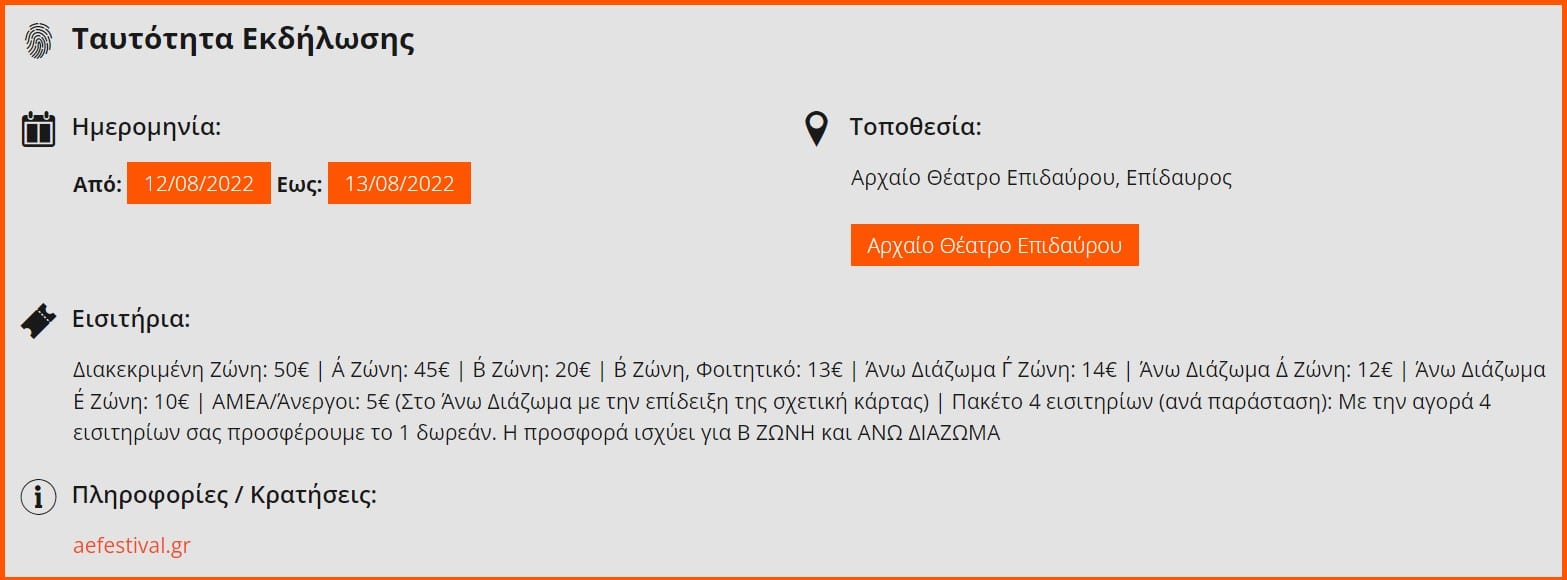
Η«Eleni» of Euripides It will also be presented in several cities across Greece as part of a limited tour, the stops on which will be announced shortly.
The play, translated by Pantelis Boukalas It is a colorful celebration of peace, filled with emotion and humor, and it demonstrates the futility of war, since its consequences over time are equally devastating for both the victors and the vanquished.
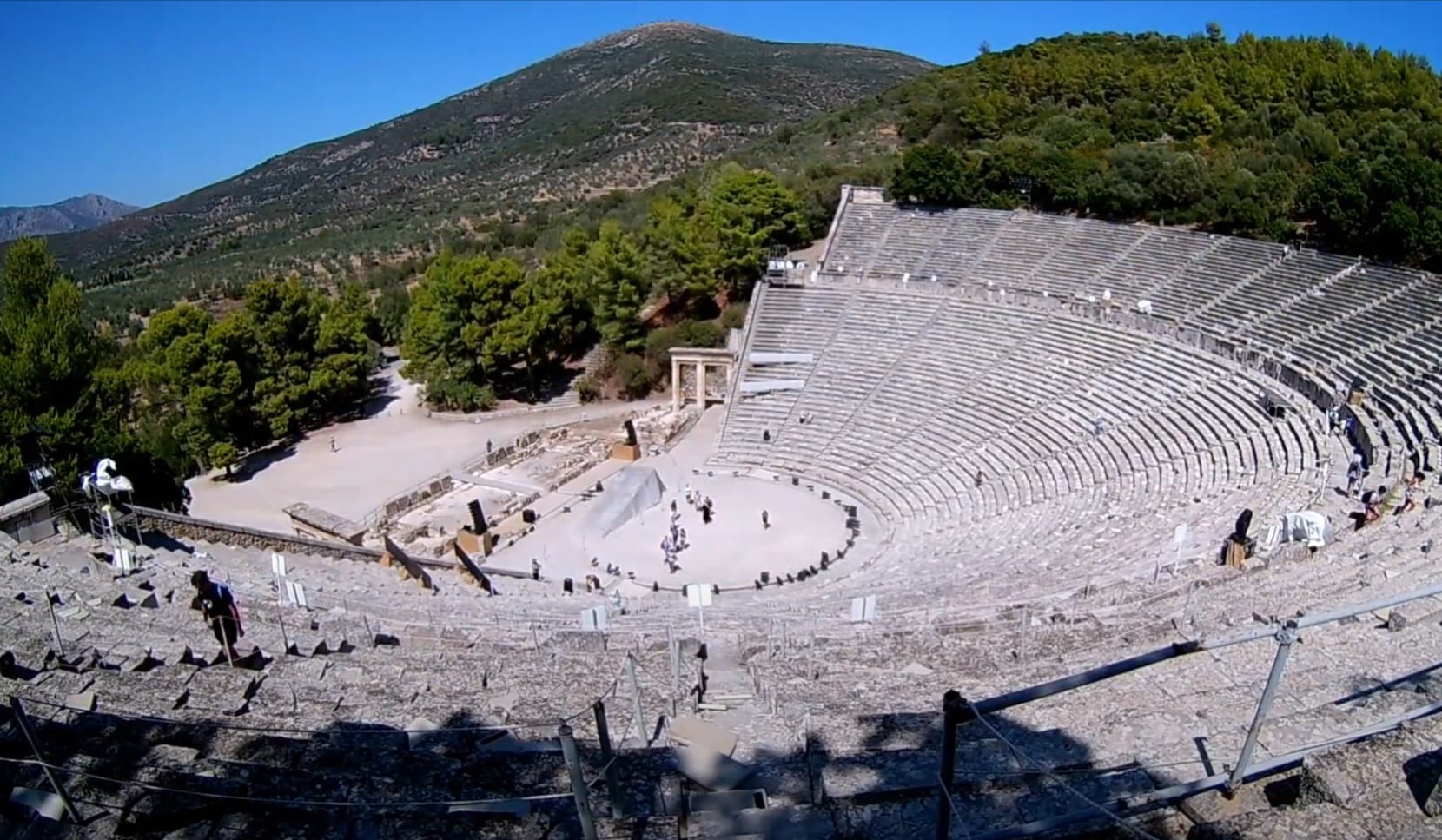
The production received rave reviews last summer wherever it was staged, while its scheduled performances at the Ancient Theatre of Epidaurus were canceled due to the devastating wildfires that had shaken the country.
«Eleni» sets the tone for his new repertoire KTHB which is currently being drafted and is fully aligned with the prevailing global conditions, sending a strong message of unity and solidarity.
«It’s a happy coincidence, and I’m moved to have found this particular production as my «dowry.» Our repertoire has a specific vision and goal, and *Helen* is part of our artistic vision.«, emphasizes Asteris Peltekis, Artistic Director of the National Theater of Northern Greece.
Case
Herodotus, in recounting the story of Helen, claims that she did indeed go to Troy and that Homer says the same thing; in the Odyssey, Homer depicts Helen offering Telemachus the potion of forgetfulness; Polydamna, the wife of Thoas, had given it to her—though not under the circumstances described by Euripides.
Herodotus and Homer claim that after the fall of Troy, Helen wandered with Menelaus, and when they reached Egypt, she obtained the potion. Euripides, on the other hand, maintains that the real Helen never went to Troy. Only her image went there. For Hermes stole her, acting on Hera’s orders, and handed her over to Proteus, the king of Egypt, to protect her. And when Proteus died, his son Theoclymenus sought to marry her, but Helen went and stood as a supplicant beside Proteus’s tomb. There she was approached by Menelaus, who had lost his ships at sea and was trying to save the few companions he had left, whom he had hidden in a cave. The two of them consulted, devised a plan, and deceived Theoclymenus.
They then boarded a ship, ostensibly to offer a sacrifice at sea in memory of Menelaus, and thus they were saved and returned to their homeland.
Director's Note
«The 5th century B.C. is drawing to a close. The «golden age» of the «city of Kleon» is coming to an end. Athens is concluding a journey that led it from its founding triumphs at Marathon and Salamis against the Persians and the splendor of the Periclean era to the Peloponnesian War, the deadly plague, and the devastation in Sicily—all consequences of Alcibiades’s charm.
These three periods correspond to the three major tragic poets: Aeschylus, Sophocles, and Euripides. While the first is part of and inspired by the first period—which spans from the glory of the triumphs to the consolidation of the democratic regime as a form of government— the second moves in step with Pericles and the glorious achievements of his era. And the third? Euripides? He is a witness to and chronicler of an era that is experiencing the relativization of all values. If you will, he is the tragic partner of the Sophistic Revolution.
He writes *Helen*, an anti-tragic tragedy—a tragicomedy, if you will—in the aftermath of the catastrophe in Sicily. It is no coincidence that a few years earlier, the Sicilian sophist Gorgias had left the Athenian audience speechless with his text «In Praise of Helen.» He is the third—and most scathing—after Stesichorus and Herodotus, to document in his own way that the Greeks, that is, their union, were born from the image of a woman; that the Greeks were united thanks to «an empty shirt,» as our contemporary poet puts it, to «a certain Helen.’.
«It wasn’t me who went to Troy—only my name,» says Helen. All wars need the embellishment of a pretext to be ignited. Whether the object of contention is called Troy or Sicily, the machine of conquest always needs «an empty shirt,» «a Helen» to get it going—a name that is christened a motive. The results are inevitably tragicomic.
Helen, then. Another one. After the one and only one Homer gives us. Then came the others, from the aforementioned poets, historians, and orators, as well as later figures such as Isocrates, Ronsard, Goethe, Offenbach, Girondot, Ritsos, and others—countless others. And the list goes on.’.
Vasilis Papavasileiou
Contributors
Translation: Pantelis Boukalas, Directed by: Vasilis Papavasileiou, Associate Director—Dramaturgy: Nikoleta Filosoglou, Set Design and Costumes: Angelos Mentis, Music: Angelos Triantafyllou, Choreography: Dimitris Sotiriou, Lights: Lefteris Pavlopoulos, Orchestration – Music Education: George Dousos, Music Education: Chrysa Toumanidou, Assistant Choreographer: Sofia Papanikandrou, Assistant director: Anna-Maria Iakovou, Assistant Set Designer/Costume Designer: Elli Nalbanti, Production Organization: Athanasia Androni, Stage Directors: Yiannis Palamiotis, Marina Hatzioannou
They play: Emily Kolliandri (Eleni), Themis Panou (Menelaus), Agoritsa Oikonomou (Theonoe), George Kaukas (Theoclymenus), Efi Stamouli (Elder), Dimitris Kolovos (Herald A), Angelos Bouras (Messenger II), Dimitris Morfakidis (Tefcros), Panagiotis Papaioannou (Therapon), Nikolas Maragopoulos, Orestis Paliadelis (Dioscuri)
Dance: Nefeli Anthopoulou, Stavroula Arabatzoglou, Loukia Vassiliou, Momo Vlachou, Eleni Giannousi, Electra Goniadou, Natasha Daliaka, Chrysa Zafeiriadou, Sofia Kalemkeridou, Aigli Katsiki, Anna Kyriakidou, Katerina Plexida, Marianna Pourega, Fotini Timotheou, Chrysa Toumanidou
Musicians on stage: George Dousos (flute, clarinet, saxophone, kaval), Danis Koumartzis (double bass), Thomas Kostoulas (percussion), Paul Metsios (trumpet, electric guitar), Haris Papathanasiou (violin), Manolis Stamatidis (piano, accordion).