Lately, in some Greek media outlets (radio stations, TV stations, websites), Tunisia has been in the spotlight, serving as the «scapegoat» blamed for the plunge in producer prices. The drop in prices—according to them—is due to massive imports into the European Union of cheap Tunisian (and Turkish) olive oils that prevent prices from rising. So, again, according to them, the solution is very simple: ban imports.
For very attentive readers who have a good memory and keep records, this sudden interest in Tunisia often stems from those agricultural union leaders and agricultural journalists who, in variousways have prevented—and continue to prevent—olive oil producers from selling their olive oil. A trend that began last year, in 2024, with prices as high as 10 euros, and continues to this day, with prices having fallen below 5 euros. Meanwhile, all these «friends» of the producers (with or without quotation marks) insist, “Don’t sell—the price of olive oil will go up.” As a result, the storage tanks are still nearly full, especially in Crete. And who is to blame for this loss of many tens of euros? In their opinion, Tunisia is to blame because it is allowed to export to the EU. So, what kind of country is this?;
We've lost tourism; we're replacing it with our other source of wealth, olive oil
Tunisia, with a population of eight million, is a small Mediterranean country located in the Maghreb region of North Africa. A former French colony, it relied on tourism as its main source of income until the wave of terrorism that struck the country led to a major decision: we’ve lost tourism, so we’re replacing it with our other source of wealth—olive oil.
Tunisia had taken timely precautions to «prepare a meal before getting hungry.» When, about 60 years ago, the Tunisian government negotiated with the then EEC/EU and succeeded in implementing a regulation that provided for 35,000 metric tons of annual olive oil exports from Tunisia, free of duties and taxes (quota), at that time, the major international «players» in the olive oil industry—primarily Italian and Tunisian exporters—were the ones who actually benefited for many years from Tunisia’s success. Later, during the golden decade of the 1980s, when the international market was beginning to change, Greece was in a deep slumber, preoccupied with the Delors “golden packages,” engaged in power struggles within the party-controlled administrations of the cooperatives, and living in a charming, blissful phase. In contrast, Italian, Spanish, Portuguese, and Tunisian exporters were expanding and growing, while the international market was slipping away from us.
Tunisia also succeeded in establishing a central system, the ONI, a funded organization with a unique character and mode of operation—something between a National Council and a central cooperative—which for many years played a role in regulating olive oil exports. ONI was not a panacea, but it succeeded in protecting the reputation of Tunisian olive oil in terms of quality and integrity during export, perhaps creating difficulties for small exporters, but preventing dishonest and problematic behavior by Tunisian exporters. As a result, reputable and ethical exporters have gradually established their reputation for both quality and sound business practices, to the point where they are now considered trustworthy. Even some commercial missteps over the past 50 to 60 years may be forgiven in light of the overall management of the olive oil sector, especially in such a poor country with a standard of living and level of education that are certainly lower than those in Greece.
The ONI lost its influence in 2012 during the major olive oil crisis of that time, which nearly brought down many Tunisian banks, but it managed to remain in the management of organic olive oils and facilitate the growth of private exporters who today supply the largest olive oil bottling companies in Italy, Spain, the United States, etc.
Tunisia is perhaps the only country that offers nearly all of its production as pesticide-free extra virgin olive oil
Today, we see that Tunisia is perhaps the only country that offers nearly all of its production as pesticide-free extra virgin olive oil, we see foreign buyers purchasing Tunisian olive oil as the foundation of their organoleptic profiles, we see Tunisia consistently and strongly represented on the Olive Oil Council, fighting for every possible advantage and succeeding in achieving it, we see it increasing its production and improving its quality; we see an improving consistency in the provision of services. We see that during certain difficult years of overproduction for the country, the Tunisian government has secured quotas of up to 80,000 metric tons, resulting in years that propelled Tunisian olive oils to prominence and drew traditional Italian olive oil buyers to Tunisia. These buyers never returned to Greece.
The original question that remains is: Does Greece see no example to follow? Is no one interested in strengthening Greece’s presence in the International Olive Council and the international market? Are we to assume that in the 1970s and 1980s they didn’t know… and that they haven’t learned anything today? Has no one noticed that the fourfold increase in olive oil consumption in the United States over the past 20 years includes only a minimal amount of Greek olive oil? Doesn’t anyone see that soon even unstable Turkey will be boosting its exports and plantings and trying to align itself with international markets?;
This year, with Spain’s production expected to return to its previous high levels, will there be someone in charge—someone in charge—to reflect on what has happened over the years so that Greece can cope with such a resurgence and propose some concrete measures, rather than just the usual empty rhetoric?;
Olive oil didn’t make the Tunisians fabulously wealthy overnight, but they live with dignity, free from the negative economic effects and the vagaries of tourism, producing a valuable product and making progress
Olive oil didn’t make the Tunisians fabulously wealthy overnight, but they live with dignity, free from the negative economic effects and the vagaries of tourism, producing a valuable product and making progress. It would be worthwhile for our universities and the shapers of Greek olive oil policy to study the Tunisian model, which shares many common elements with the Spanish one (increased production, low costs, competitive prices, exports, institutional organization).
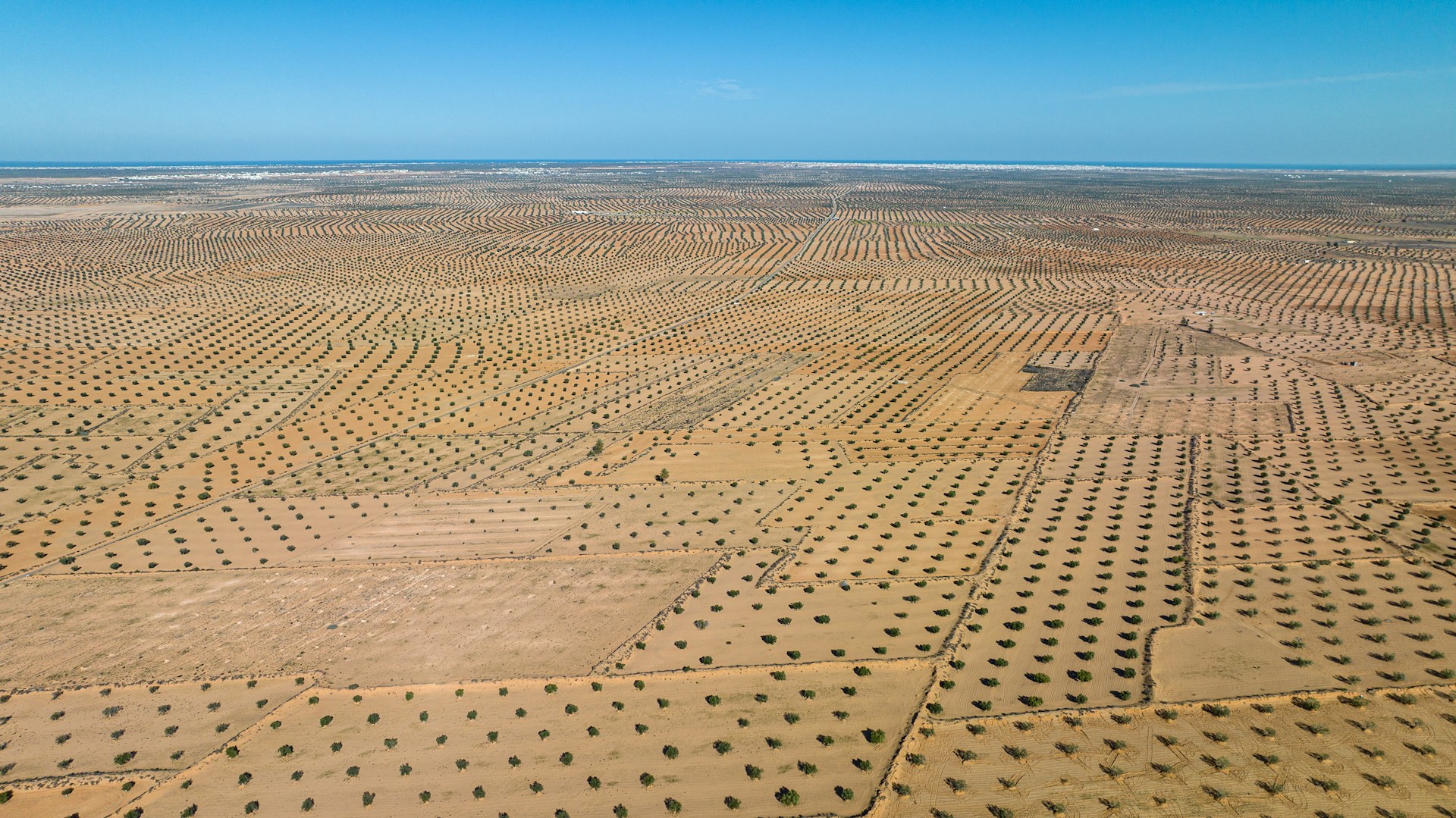
This small, otherwise poor country has managed, under very adverse conditions (olives in the arid desert, without the billions in EU subsidies), to establish within just a few years an olive oil industry that is now the third-largest in the world, behind Spain and Italy.
The fact is that this small, otherwise poor country has managed, under extremely adverse conditions (olives in the arid desert, without the billions in EU subsidies), to establish within just a few years an olive oil industry that is now the world’s third-largest, behind Spain and Italy. Tunisia’s secrets were (and are) hard work, institutional organization, and an outward-looking approach, which operates in two directions. First, commercially, with significant export shares to the Americas and Europe; and second, institutionally, by playing a leading role in the International Olive Council (IOC). A prime example is Habib Esed, a former executive director at the COI, who, upon his return, became prime minister of his country, while a few years later, another executive director, Abdelatif Gedira, completed two very successful terms.
Retail prices of Tunisian olive oil (in €/kg)
In the table below, compiled by olivenews.gr based on recent data published by the website oleorevista.com, the prices at which Tunisian olive oil is sold are shown, in euros (based on the current exchange rate of 30 euro cents to one dinar). These are realistic, fair, and profitable prices.
| 2023/24 | 2024/25 | |
| Extra Virgin Standard | 8.33 | 6.83 |
| Extra virgin olive oil, in bulk | 7.73 | 4.05 |
| Lambade | 8.32 | 3.22 |
| Standardized (mean value) | 8.29 | 6.84 |
| In bulk (average price) | 7.70 | 4.00 |
Source: oleorevista.com
Tunisian olive oil continues to be exported mainly in bulk, accounting for 89.6%, while packaged olive oil accounts for only 10.4%. The volume of standardized product exports remains unchanged compared to the previous season.
In terms of the quality of exported olive oil, the extra virgin category dominates by a wide margin, accounting for 83.5% of total sales volume in international markets.
The European Union remains the main destination for Tunisian olive oil, accounting for 60.3% of exports. North America accounts for 22.8%, while the African continent accounts for only 10.5% of the total volume.
Italy remains the largest importer, accounting for 33.8% of Tunisia’s exports, followed by Spain (22.7%) and the United States (17.2%).
P.S. For anyone who is interested in learning more, it is worth reading the relevant chapter in the “Encyclopedia of Olive Oil Production: Olive Oil” Written by Ms. Dimitra Alieos.