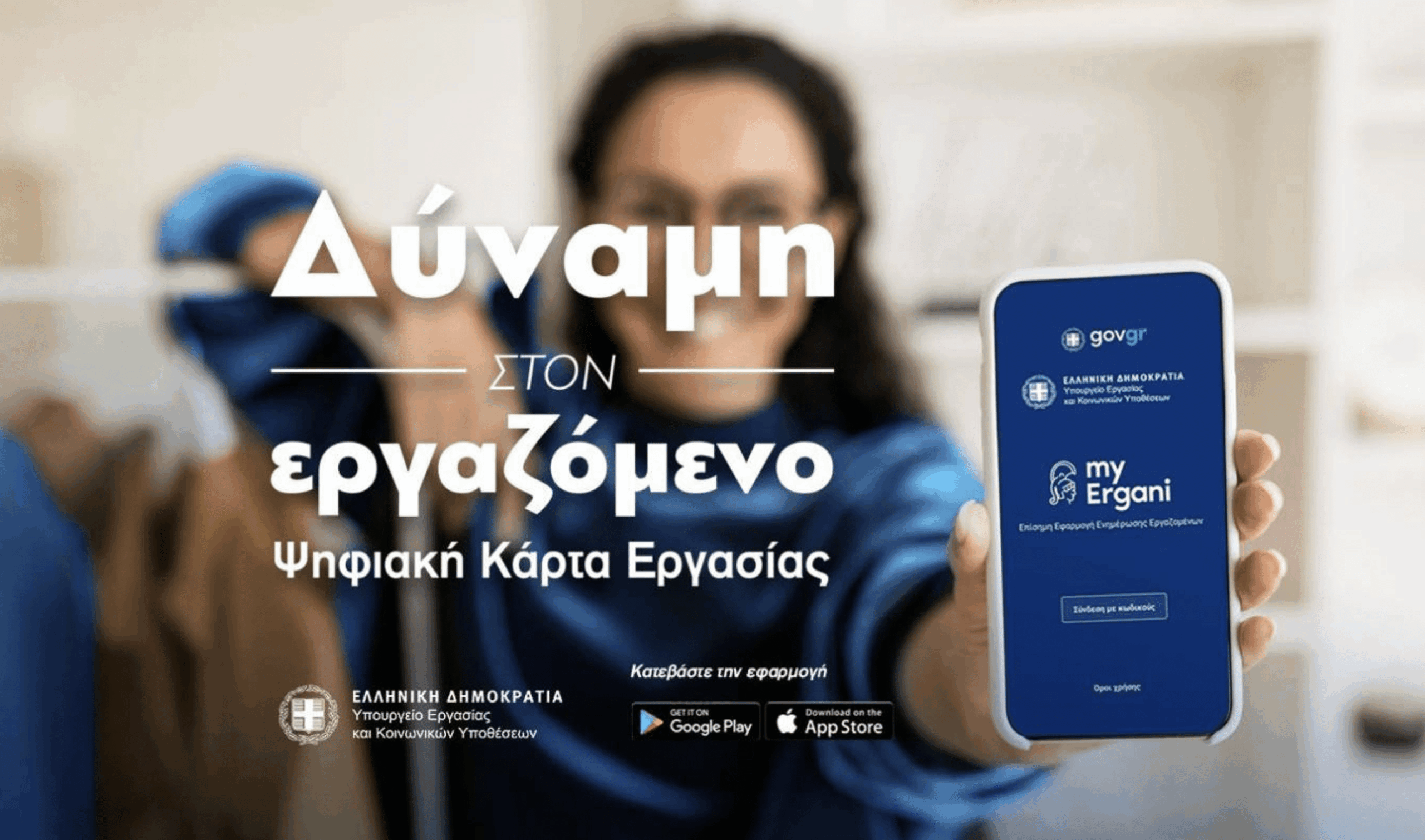
The digital job card is being piloted in the tourism and catering sector, including hotels, accommodation, campsites, catering establishments, cafés and restaurants. This new measure, as announced by the Minister of Labour and Social Security, Niki Kerameos, aims to protect the rights of workers by recording the actual time they work, so that they are paid fairly for the hours they work.
Objective and details of the measure
The digital time card is a tool to ensure transparency in the calculation of working hours. As Ms Kerameos said in an interview with the SKAI TV station, the card is an important measure to protect workers, as it ensures that the employer will accurately record their working time. At the same time, the measure facilitates the avoidance of undeclared work and strengthens the enforcement of labour rights.
The pilot phase of the implementation gives businesses and employees the opportunity to familiarise themselves with the new system and to identify any problems or adjustments needed. The first phase involves businesses from the tourism and hospitality sectors, such as hotels, accommodation, restaurants, cafes, and other venues, with the full implementation expected to come into force on 1 March 2025.
Preparation and adaptation
During the pilot phase, sufficient time will be given to allow businesses to adapt to the new data and record any issues. This will allow the measure to be improved and fully adapted before its final implementation. Businesses will have sufficient time to adapt their systems, while employees will be able to better understand the benefits and functions of the digital card.
Expansion and prospects
To date, the digital card has already been applied to 750,000 employees working in banks, supermarkets, insurance companies, security companies and other large enterprises, covering around 73,000 businesses. With the extension to tourism and catering, the number of employees covered by the measure is expected to reach 1.5 million.
The digital job card is expected to become a key tool to ensure labour justice and transparency, offering greater security for workers and better monitoring of labour data by the state.
Unemployment benefit and changes
Along with the extension of the digital job card, Kerameos announced changes to the unemployment benefit. Under the new philosophy, the benefit will become fairer, taking into account the individual's insurance history, while the first months after unemployment will be accompanied by higher support which will then be gradually reduced.
The government aims to create more incentives for the unemployed to find work more quickly. This philosophy strengthens the link between unemployment benefit and actual job search, while providing increased support for vulnerable groups.
Prospects and social benefit
The digital job card measure, together with other regulations in the labour and social security system, such as the reduction of social security contributions and the increase of the minimum wage, aims to improve working conditions in the country and boost employment. The government argues that the reduction in contributions and the increase in the minimum wage will help create new jobs, with unemployment already falling below 10% for the first time in 15 years.
The ultimate benefit is expected to be improved living conditions for workers and their families, through higher wages, job creation and enhanced social protection.