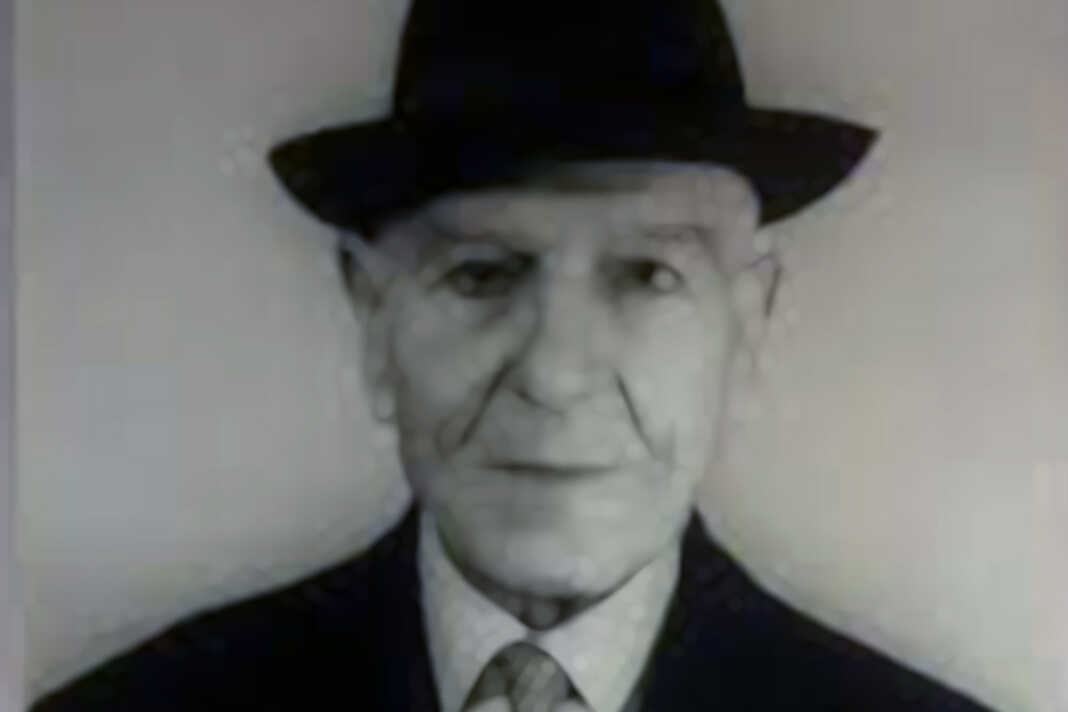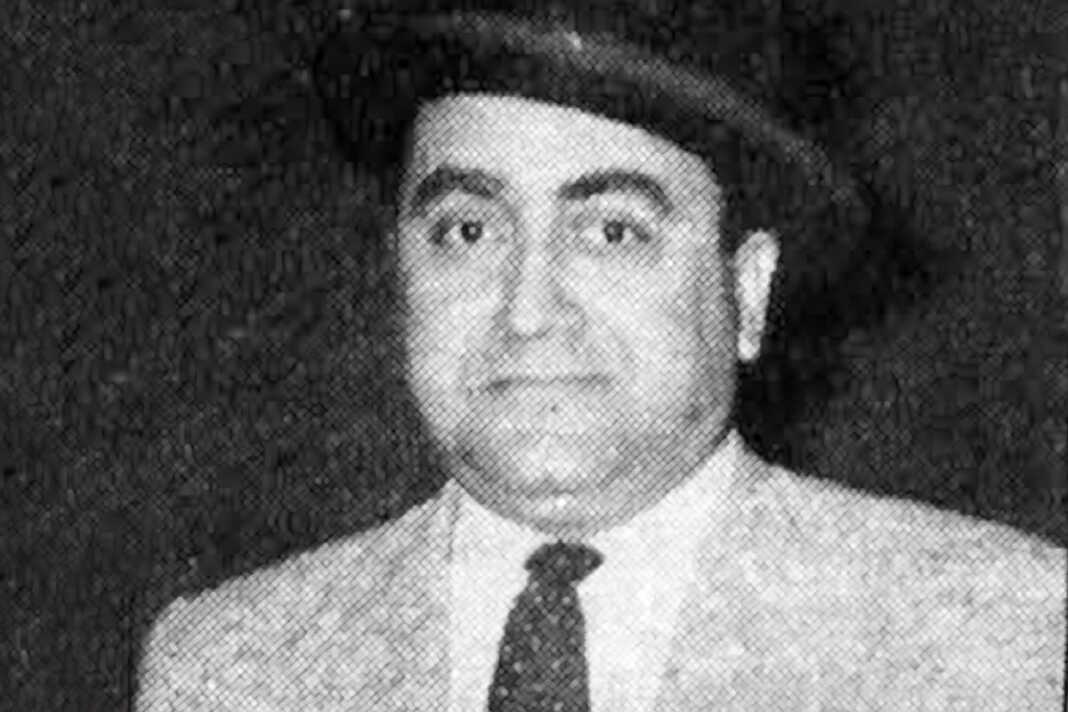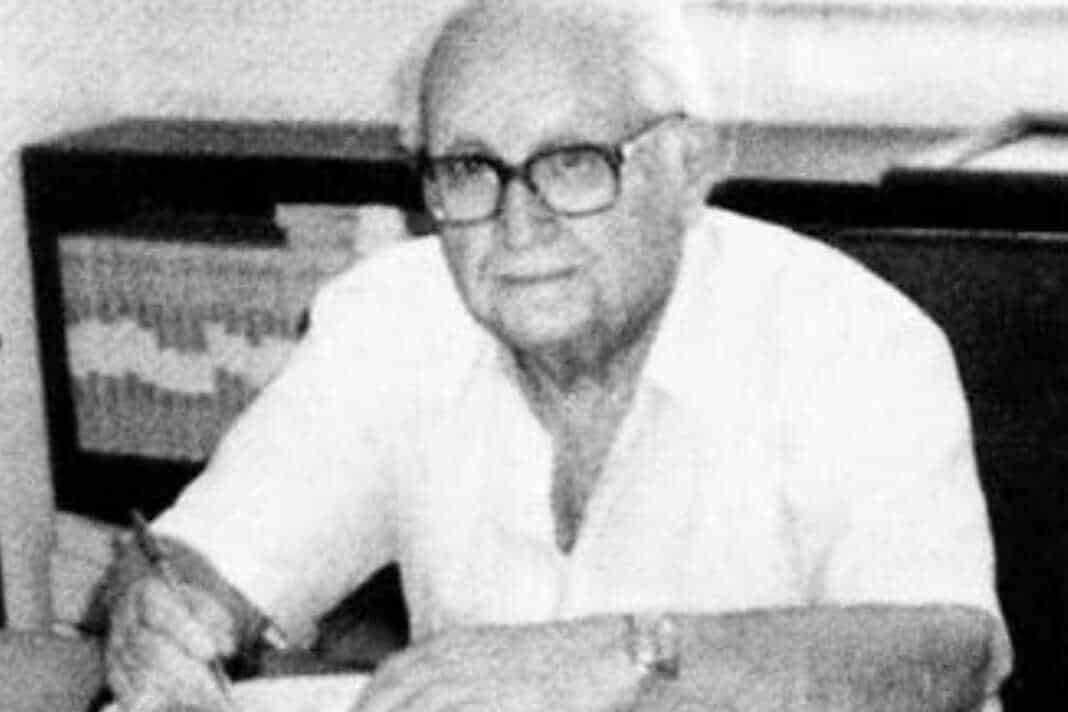
Dimitrios Komis was born in 1912 in Potamos. His father was from Sifnos and worked as a potter. He married Maria Psalida from Potamos. Two years after Dimitrios Komis was born, his father died. These were difficult years for the young boy, who was left an orphan with his mother as his sole support. He attended elementary school and then the Potamos School. He later continued his studies at the Kythira Junior High School in Chora. During his high school years, he lived in a house in the Varipatianika neighborhood of Chora with his childhood friend and classmate, the poet Panos Fyllis. From 1931 to 1936, he studied at the Law School of the University of Athens. At the same time, he worked at the law office of Ioannis Kontoleontos of Kythira, who had also served as a member of parliament for the People’s Party.
From 1936 to 1940, he served as a correspondent in Athens for the Australian Greek newspaper *Panellinios Kerykas*. Later, in 1940, he was hired by the Agricultural Bank of Greece. However, in October 1940, with the outbreak of the Greco-Italian War, he was drafted and fought on the Albanian front, where he was wounded. Upon returning from the front, he married Tasia Kovaiou in October 1941, with whom he had been in a relationship since his college days. They had two sons, Loukas in 1943 and Michalis in 1953. In 1941, he returned to the Agricultural Bank of Greece and worked in the Agricultural Cooperatives Division. His contribution to the reorganization and operation of many cooperatives across the country was decisive. Later, he worked as a cooperative inspector in various cities. At the same time, he played a significant role in the development of the agricultural cooperatives on Kythira. He rose to the administrative rank of First-Class Section Chief. He was never promoted to the next rank, that of director, because in 1970, disagreeing with the junta regime, he refused to compromise and resigned from the Agricultural Bank.
From 1973, as secretary-general of the Kythira Association of Athens, he worked to promote the expansion of the Kythira airport. Furthermore, through his own initiatives and many years of effort, the scope of the Stai Scholarships for students from Kythira was expanded. Equally significant is the interest Dimitrios Komis showed in the preservation and maintenance of the Kythira Historical Archive, one of the richest in archival material in Greece. His efforts resolved the Kythira Association’s housing problem, after the Trifyllio Foundation provided an office on its premises at 5 Themistokleous Street. He promoted the creation of a library, the publication of books, and the collection, archiving, and preservation of Kythirian periodicals, among other initiatives. In 1982, together with professors Georgios Kasimatis, Georgios Leontsinis, and Ilias Marselo, as well as the poet Panos Fyllis and others, he founded the Society for Kythirian Studies. He subsequently served as president of the Society for Kythirian Studies and as general secretary of the Trifyllio Foundation.
He has published more than ten books on Kythira-related studies, the most significant of which is the Kythirian Dictionary, for which he was honored by the Academy of Athens in 1996. His involvement in Kythira’s community life, in Kythirian associations such as the Kythirian Association, the Society for Kythirian Studies, as well as his participation in the administration of the Trifyllio Foundation, establish Dimitrios Komis as the most significant figure in the modern history of Kythira. He was selfless, unassuming, and hardworking. Dimitrios Komis served as the linchpin and guiding force behind the progress of Kythira’s modern culture. He passed away on April 5, 2003, at his home in Voula.