Apitherapy and COVID-19. According to data from the Johns Hopkins University Data Center, the global number of confirmed COVID-19 cases exceeded 2 million on April 15. I am a doctor and participated in the prevention and control of the coronavirus in China.
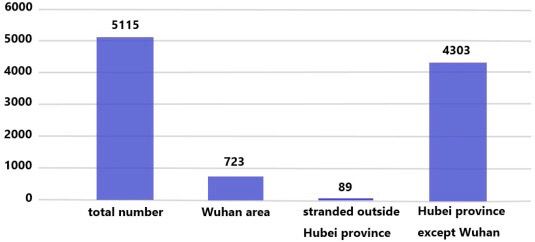
There is a discovery we would like to mention here. It reminds us of the story of the discovery of the cowpox virus (Cattle Smallpox) and humanity’s ultimate victory over this disease (Bennett and Baxby, 1996). In Hubei Province, the epicenter of the COVID-19 outbreak in China, the local beekeepers’ association conducted a survey among its members (Fig. 1).
A total of 5,115 beekeepers were surveyed from February 23 to March 8, including 723 in the Wuhan, the epicenter of Hubei. None of these beekeepers developed symptoms associated with COVID-19, and they were in perfectly good health. Following this, we interviewed five apitherapists in Wuhan and monitored 121 patients at their apitherapy clinic.
None of these beekeepers developed symptoms associated with COVID-19
These patients received apitherapy from October 2019 through December 2019. All five apitherapists also practice …self-apitherapy for their own health care (apitherapy refers to the use of bee venom to treat or prevent certain diseases). Without protective measures, two of the five practitioners were exposed to suspected cases of COVID-19, and several others were exposed to confirmed cases of COVID-19, but none of them ultimately became infected.
None of the 121 patients were infected with SARS-CoV-2, and three of them had close contact with immediate family members who had confirmed SARS-CoV-2 infections. One might argue that beekeepers are less likely to be exposed to SARS-CoV-2 because they live in less densely populated rural areas. However, the five therapists and their patients are from densely populated areas in Wuhan. These people have one thing in common: they have developed a tolerance to bee stings.
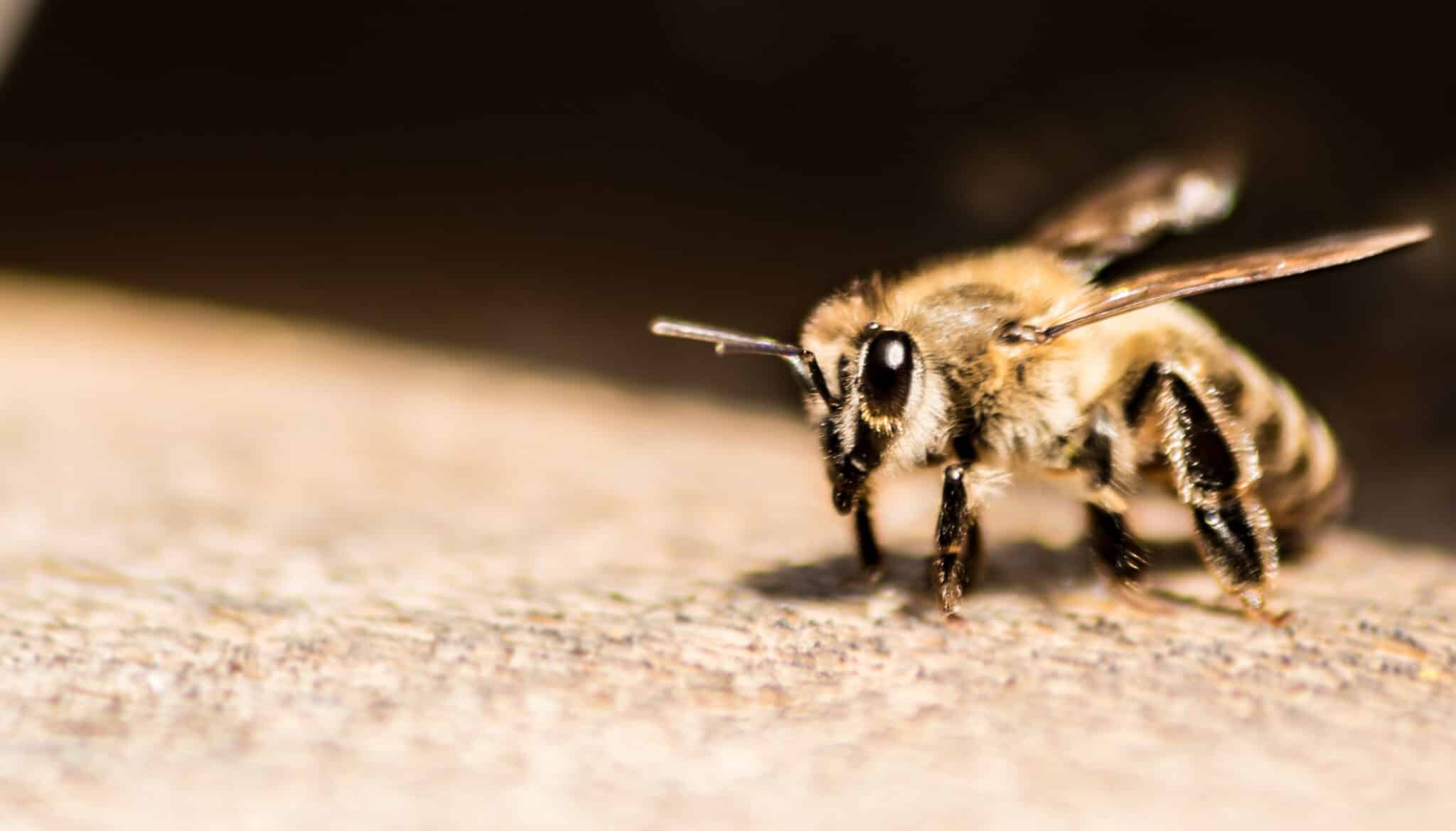
A bee sting can cause allergic reactions (Park and Lee, 2016) and can even lead to death because they can “shock” the immune system (Vazquez-Revuelta and Madrigal-Burgaleta, 2018).
Bee venom can affect the body’s immune system (Cherniack and Govorushko, 2018) and enhance the differentiation of human regulatory T cells (Caramalho et al., 2015), which play an important role in controlling SARS-CoV infection (Chen et al., 2010). Could the stimulation of the immune system caused by bee venom reduce susceptibility to SARS-CoV-2?;
A bee sting can cause allergic reactions, but…
To determine this, animal experiments are needed. Monkeys may be suitable for this study. The monkeys could be divided into two experimental groups of the same sex and age. One group could be made tolerant to bee venom after a period of daily stings, while the other group would receive no intervention.
They could then be exposed to the same SARS-CoV-2-contaminated environment, and multiple tests could be conducted to determine whether they were infected with SARS-CoV-2.
Our purpose in writing this letter is to ask researchers with the appropriate research conditions to test this hypothesis. In the absence of a SARS-CoV-2 vaccine, if this method works, it could offer hope for defeating COVID-19.
Apitherapy and COVID-19
Source: ncbi
Wei Yang*
Oncology Department, Hangzhou Red Cross Hospital, 208 Huancheng East Road,
Hangzhou, 310003, Zhejiang, China
Fu-liang Hu
College of Animal Science, Zhejiang University, 886 Yuhangtang Road,
Hangzhou, 310058, Zhejiang, China
Xiao-feng Xu
Oncology Department, Hangzhou Red Cross Hospital, 208 Huancheng East Road,
Hangzhou, 310003, Zhejiang, China
References
Bennett, M., Baxby, D., September 1996. Cowpox. J Med Microbiol. 45 (3), 157–158.
Caramalho, I., Melo, A., Pedro, E., Barbosa, M.M., Victorino, R.M., Pereira Santos, M.C.,
Sousa, A.E., Oct. 2015. Bee venom enhances the differentiation of human regulatory
T cells. Allergy 70 (10), 1340–1345.6.
Chen, J., Lau, Y.F., Lamirande, E.W., Paddock, C.D., Bartlett, J.H., Zaki, S.R.,
Subbarao, K., February 2010. Cellular immune responses to severe acute respiratory
Coronavirus (SARS-CoV) infection in aged BALB/c mice: CD4- T cells
are important in controlling SARS-CoV infection. J. Virol. 84 (3), 1289–1301.
Cherniack, E.P., Govorushko, S., Nov. 2018. To bee or not to bee: the potential efficacy
and the safety of bee venom acupuncture in humans. *Toxicon* 154, 74–78.
Park, H.S., Lee, J.H., Aug. 11, 2016. Granulomatous inflammation induced by a bee sting.
JAMA Ophthalmol 134 (8), e161024.
Vazquez-Revuelta, P., Madrigal-Burgaleta, R., 2018. Death due to live bee acupuncture
Apitherapy. J. Investig. Allergol. Clin. Immunol. 28 (1), 45–46.