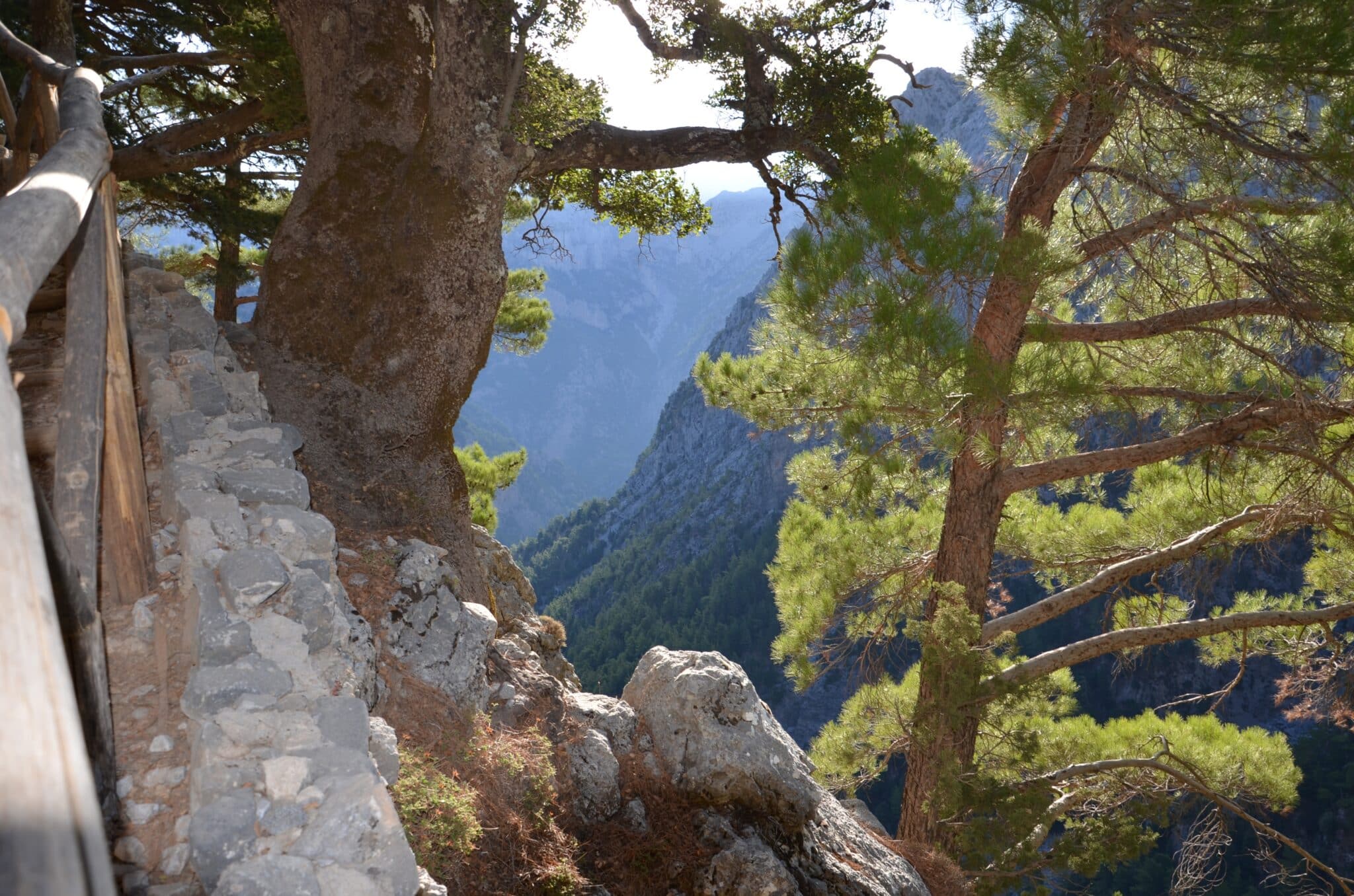
The Samaria Gorge in Chania has been named the «ambassador» of nature tourism in Crete, as according to research by the Tourism Observatory, it is a major attraction for visitors, as well as being an area of outstanding natural beauty, and contributes to the tourist and, by extension, economic development of both the wider region and the entire Regional Unit of Chania.
Five years with record visitor numbers
It is noteworthy that between 2018 and 2022, 634,285 people visited the Samaria Gorge, and if it weren't for the pandemic restrictions, especially in 2020, that number would have been much higher.
In fact, in 2022, visitor numbers reached a five-year high, with 168,593 people visiting the gorge.
The numbers
According to data from the Tourism Observatory, 155,396 people visited the Samaria Gorge in 2018, 159,051 visitors in 2019, and 56,287 in 2020 due to the pandemic restrictions and prohibitions.
In 2021, 94,985 people visited the gorge, and in 2022, the highest number of visitors in five years was recorded, with 168,593 people.
Seasonal but powerful destination
The official operating period of the gorge each year is from May to October. The gorge is closed in cases where there is a risk to visitor safety, such as heat waves and extreme weather conditions.
They choose Crete for the gorge
Analysis of data from the Tourism Observatory showed that 21.81% of visitors were greatly or decisively influenced by the existence of the Samaria Gorge when choosing to visit Crete. This shows once again that the site is an asset for the Cretan economy, as it is an important reason for some visitors to choose Crete for their holidays. The majority of visitors are in the 20 to 50 age range, with six out of ten belonging to this age group, the ratio of male to female visitors is 50-50, and six out of ten are graduates of higher education. 62% of visitors report an income of between €10,000 and €45,000.
First encounter with the gorge
The majority of visitors appeared to be informed about Samaria before their trip. The information came mainly from the internet (50.11%) and from friends and relatives who had visited it in the past (40.11%). However, the majority (58.31%) were unaware that the Samaria Gorge has been declared a UNESCO Biosphere Reserve, while 53.91% were aware of the park's protected species.
67.31% of tourists who visited Samaria this year did so for the first time, while 32.71% had visited the park in the past, with most expressing satisfaction with the price of the entrance ticket.
Satisfaction and «pilot» for mountaineering tourism
Samaria received positive reviews in almost all areas, with visitors clearly satisfied. The majority of visitors responded that they would recommend a visit to the national park to relatives and friends, but it also appears that a portion of visitors were motivated after their visit to Samaria and would like to follow other mountaineering routes either within the park's core area or in its wider boundaries.core of the park or its wider boundaries.
As MAICh director George Baourakis points out to APE-MPE, «the research data shows that the gorge can serve as a hub for the development of the inland region, with alternative forms of tourism that can counterbalance mass tourism in the northern axis, breathing life into the inland region.
«They »shield" the gorge
As part of its protection, the Mediterranean Agronomic Institute of Chania, in collaboration with the Technical University of Crete, is participating in the TREEADS research project, which is funded by the European HORIZON 2020 program. The aim of the project is to study the possibility of fire within the core of the park. Taking into account the specific characteristics of the area, simulations will be carried out and scenarios will be proposed for the best possible prevention and response using new technologies and unmanned aerial vehicles to minimize the risk to both visitors and the park itself.
Visitor numbers to the Samaria Gorge have been studied by the Tourism Observatory of the Mediterranean Agricultural Institute of Chania, in collaboration with the Technical University of Crete, the Chania Forestry Directorate, and the Samaria National Park Management Agency, which was incorporated into OFY.PEKA and has been operating as the Samaria National Park Management Unit since 2013.
The data was evaluated by MAIC Director George Baourakis, Professor Kostas Zopounidis of the Technical University of Crete, and MAIC researcher George Fakotakis.