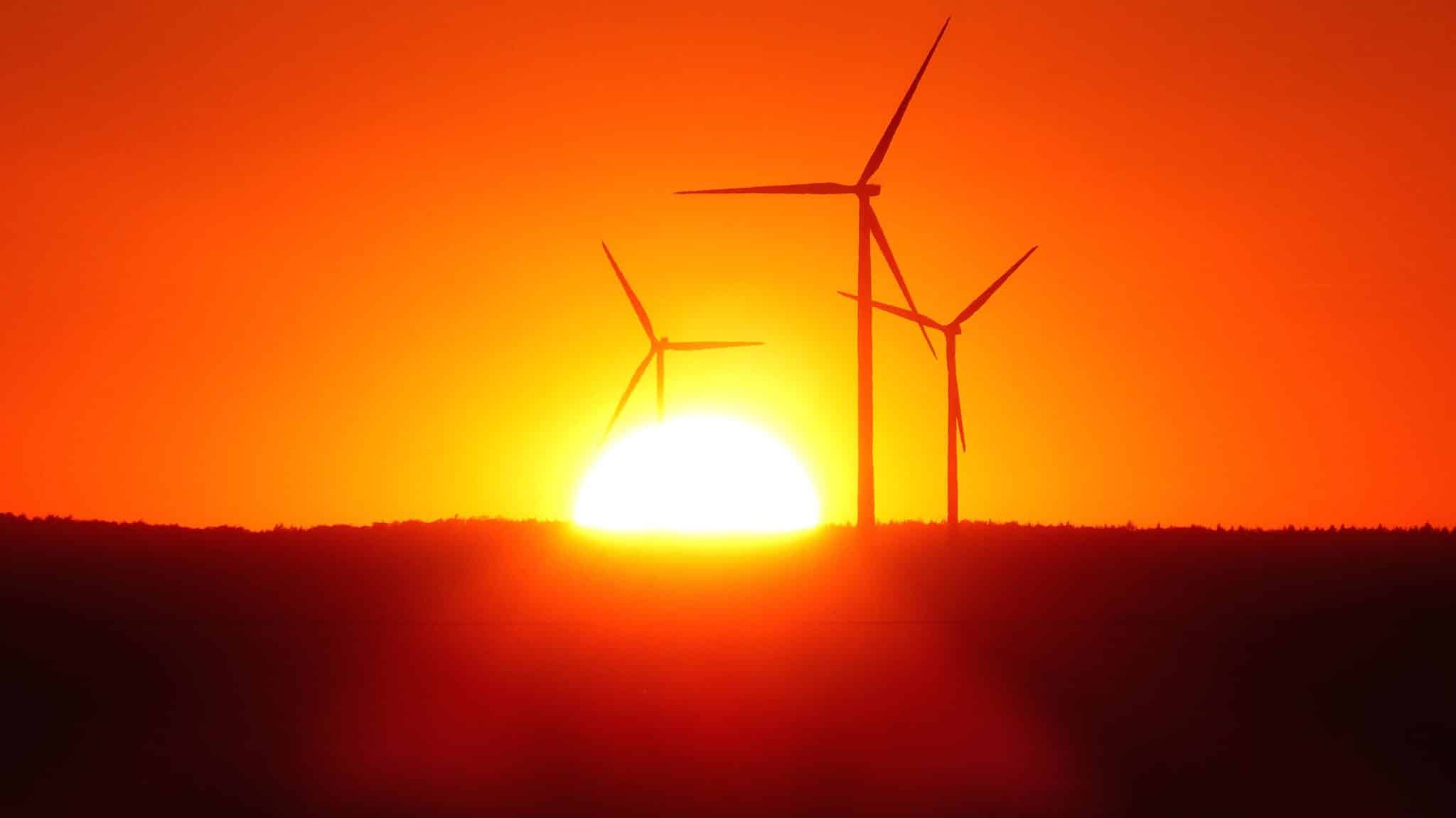
The article titled “Wind farms are anti-environmental, and science agrees”, based on the study “The biodiversity-wind energy-land use nexus in a global biodiversity hotspot” by Vassiliki Kati a,⁎, Christina Kassara a, Zoi Vrontisi b, Aristides Moustakas.
Nowhere does the article say what the misleading title suggests. On the contrary, it proposes, correctly in my opinion, the integration of biodiversity protection into the design of wind energy projects (it refers only to wind energy).
The title of the article (taken out of context) is unfortunate, to say the least. If I were a coal production company, I would be rubbing my hands with glee.
I have a few comments on the study itself:
A. The research starts from the logical observation that the reckless expansion of projects (and in this specific case, renewable energy infrastructure) endangers the environment and, in particular, biodiversity. There is no doubt that any human intervention has an impact on the environment.. Most likely, however, the greatest impact is caused by residential development and infrastructure such as roads, ports, bridges, etc. In comparison, renewable energy infrastructure is much smaller.
B. Improving life (quality of life, life expectancy, etc.) requires human intervention in nature. If these things did not exist, life expectancy would be where it was 100 years ago (and so would quality of life). I, at least, do not want that. I lived through the era when we used donkeys to go to our fields, and when we didn't have electricity in my house in Potamos (we got electricity in 1964). But some people haven't experienced these things.
C. The study proposes integrating biodiversity conservation into the strategy for developing renewable energy sources, which is correct. However, in my opinion, it arbitrarily chooses to exclude a large part of the country. Specifically, it proposes excluding the following areas Natura but which cover more than 27% of the country. Ultimately, it proposes that RES should only be allowed on 41% of the country. It ultimately concludes that only around 10 GW of wind turbines should be allowed, stating that the target of ESEK is 7.05 GW. The study implies that we do not need more power. But is that really the case?;
According to the ESEK, the country is estimated to need approximately 19 GW for electricity generation alone in 2030. The rest will be covered by photovoltaics (which, incidentally, also require space) at 7.66 GW and natural gas at 6.97 GW. So, in the plan, which of course has a horizon of 2030, fossil fuels are still present. However The EU has set a target of becoming carbon neutral by 2050, which means that even more power will be needed from renewable energy sources.
Even so, however, The total contribution of RES to the overall energy balance is estimated at approximately 35%. . The rest is fossil fuels, which must change dramatically by 2050.
The ESEK targets refer only to electricity generation, based on certain scenarios for the speed of transition to electrification of sectors that currently rely on fossil fuels. However Technology is advancing rapidly, enabling the use of electricity (which can be generated from RES) in a range of new areas. For example, the use of large vehicles (trucks, etc.), ships, and even aircraft powered by fuel cell electric motors fueled by hydrogen that can be produced by electrolysis powered by renewable energy (green hydrogen). Meanwhile, The energy density of batteries is constantly increasing, which will allow for even greater penetration of battery-powered electric vehicles for small vehicles.
A number of other uses also involve electricity (e.g., the use of heat pumps for heating and hot water in new (and not only) buildings and in Kythera).
In conclusion, it is reasonable to plan for much greater «electrification» of the final energy mix and RES penetration in its production in the long term than what is currently predicted by the NECP, e.g., by 2050. This, in turn, makes the restrictions proposed by the study at least risky.
D. The map produced by the study is interesting. It is clearly based on a complete ignorance of the reality of the island, relying solely on cold data. For example, it excludes the entire (uninhabited) western side of Kythira and allows the inhabited southern and northeastern sides.
E. I have serious reservations about the logic of completely excluding all activity in the areas. Natura. Especially since It is not clear to me how these were selected as such, what the contribution of local communities was, and to what extent it was clear what the designation meant. In any case, my opinion is that there is a way for the mix of energy projects to be on a scale that affects the environment of the areas to an acceptable level (scale of projects, number of units, etc.). At the same time, it will have a dramatically positive impact on the wider environment and protect against climate change.
Finally, I would like to note that the tendency to demonize renewable energy sources is dangerous, to say the least. This is true both on a general level and on the level of Kythira. The anti-scientific views that are being expressed are unbelievable and, in some cases, can only be compared to vaccine denialism.
What I think should be done (especially for Kythira)
A comprehensive plan is needed for energy production (and consumption) in Kythira. A Kythira Energy Efficiency Plan.
In this context, and in conjunction with the government's upcoming zoning plan, the Municipality (and especially through Domestic Property) to make more specific zoning in Kythira. Both on the island and at sea (for potential offshore units). This siting should be based on scientific, well-documented studies that will balance and limit the inevitable impact on the environment with the benefits. And why not also provide for actions to improve the environment as «compensation,» e.g., large-scale reforestation projects.
Let's move forward in the formation of at least one Energy Community with the contribution of the Municipality / Domestic Property and private individuals. This will enable us to better control growth.
We should integrate local electricity generation into a broader development plan for Kythira, investing the relevant benefits (rent, reciprocal fees, production profits in the case of the Energy Community) in infrastructure, support, and more generally. improving life on the island.
Finally, on this basis, let's put Kythira on the map as an attractive place to live and work, and revitalize the island with young and skilled people.