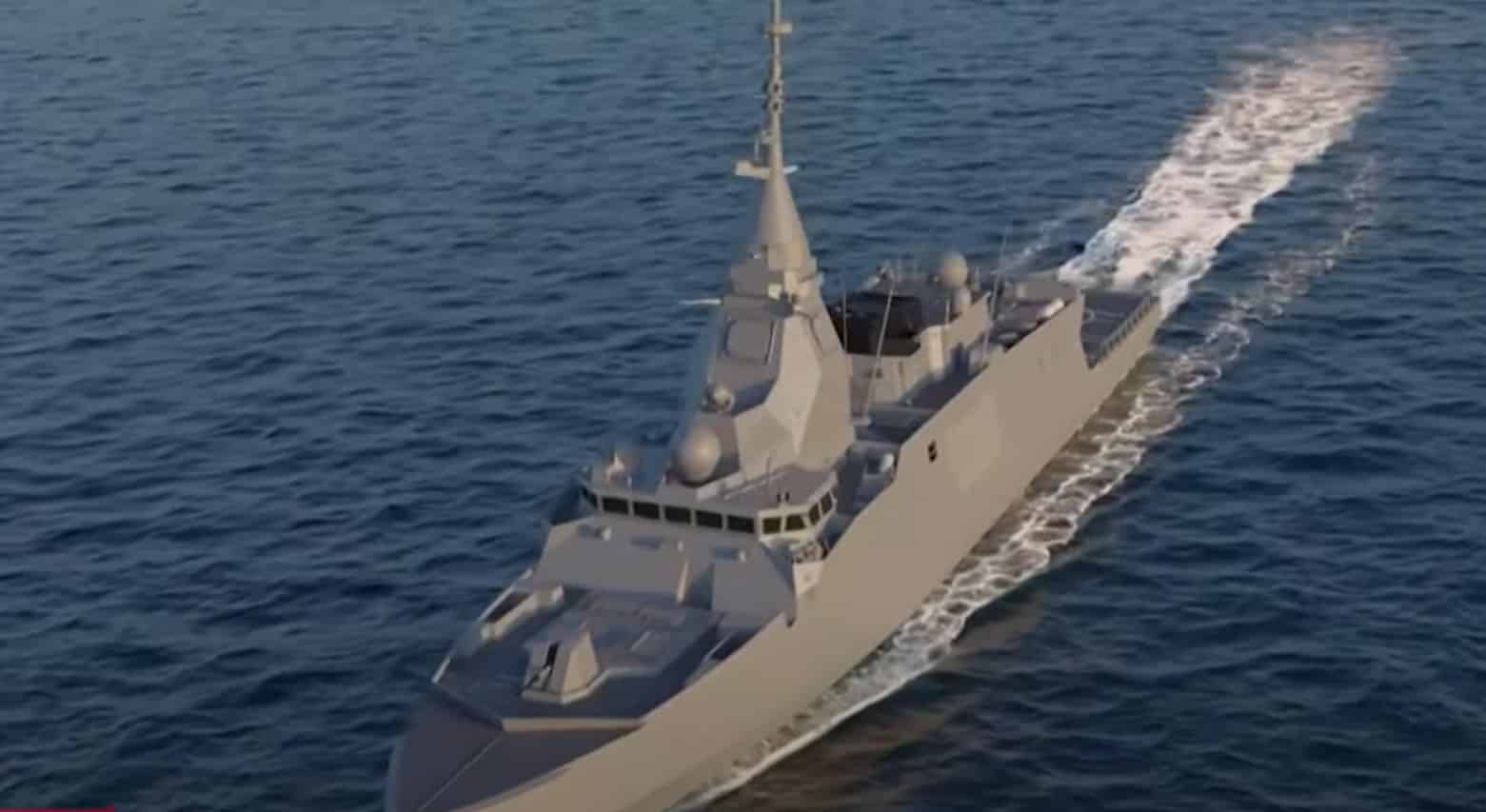
The signing of the Greek-French agreement led to:
1) the “shifting” of the centre of gravity of US attention to the Indian-Pacific Ocean region.
2) the competition between the US and Germany for economic dominance in Europe and control of the European part of the New Silk Road.
3) US dissatisfaction with the informal alliance between Germany and China.
4) Germany's ambition to play an important role in the Eurasian and Middle Eastern region.
5) Turkey's orientation towards Eurasia, which has been finalised.
6) Germany's close alliance with Turkey and their common aspirations, which create problems for US foreign policy. Turkey has gladly accepted the role of “conveyor belt” of Germany's ambitions towards the East, which also serves its own interests.
7) the fact that powerful centres of power in the US have understood the above.
8) France's ambition to play a dominant role in Europe, the Mediterranean region and the countries surrounding it, in principle.
9) France's long-standing alliance with the USA.
10) the objective identification of French and Greek interests.
11) France's strong opposition to the AUKUS process made it easier for the US to show “tolerance” to the signing of the Greek-French agreement, which the Greek government had thwarted in July 2020 in a way that insulted France and ridiculed Greece!
The debate in Parliament on the ratification of the - very good - agreement between Greece and France was sad. The spirit of parity in which this agreement operates seems to alienate the political world, which is used to seeking not alliances on the basis of a community of interests and equal rights and obligations, but patrons who will solve the country's problems (or theirs, I wonder?) in a way that is quite “fair” and generally “acceptable”. The result of this mentality is the triumphalism on the part of the coalition, which tries to convince us that the French will send - sort of - a new Charles Martello to Greece to stop the expansion of Islam!
A consequence of this mentality is also the criticism of the opposition that the new “protector” is not good, that he asks a lot of money for his ships (how much do two or three islands cost with their population?) and that he will send Greek children to be killed in some vast region of the world for his own interests.
In fact, both the opposition and the opposition have shown that they have not understood or perhaps do not want to understand the meaning and importance of this agreement and do not see beyond thirty centimetres, i.e. as far as the printed paper that they signed and the others read in haste.
It is a great shame for the political system and for some intellectuals that the French Foreign Minister had to explain that «This Agreement...concerns the ENVIRONMENT of the two states»...». As it seems the French Foreign Minister is well aware that he is dealing with political infants, according to the mild version!
The hasty signing of the Greek-French agreement at a time when, according to many reports, Maximos had almost decided to buy the very expensive American aluminium buckets MMSC, leads us to two possible versions:
a) the Greek political system or part of it suddenly became aware of the global geopolitical rearrangements and the imposed change in the geostrategies of all serious states. Therefore, it decided to join the reality and adopt an active strategy aimed at consolidating the country's security and at making significant geopolitical gains in the future.
b) the “shifting” of the centre of gravity of US interest towards the Indian and Pacific, the political loss of Merkel and the blurred political landscape in Germany, combined with the increase of aggressive actions by Turkey, caused fear in the Greek political system. Fear not for the security of the homeland - it was never among its priorities - but for the security of its armchair.
The creation of AUKUS imposed and the strong reaction of France contributed to the “tolerance” - or was it the mandate? - of the US to sign an agreement,
Let the reader judge which version is more likely.
The Greek-French agreement is an excellent agreement, which gives Greece a great advantage and supremacy in the Aegean and the Eastern Mediterranean, especially if we take into account the possibility of cooperation between the Belaras and the Rafals. It also gives the possibility of extending the projection of political and military power beyond our borders.
Unfortunately, the lack of SCALP NAVAL missiles does not classify French frigates as sub-strategic weapons. It deprives Greece of the capability of devastating strikes against military and civilian targets in the depths of enemy territory, while the Rafal SCALPs do not fill the gap in terms of either range or destructive capability.
In times of conflict this shortage will play a major role in the enemy's military and economic situation, and his morale. The need for an overwhelming blow to the enemy's depths has been universally understood since the Second World War, when mass bombing of the territory of the opposing states was implemented.
The striking of wounds in the depths of enemy territory, as well as the striking of a pre-emptive blow, although they are offensive moves, are within the defensive character of a war, if a country decides to give it such a character.
The lack of an interim solution is another serious gap in the agreement. Until the delivery of the Belaras, the balance of power between the war fleets in the Aegean Sea does not change.
The Greek-French agreement will become a dead letter if Greece does not prove that it honours it. If Greece wants to have the French military assistance and all the other benefits provided for in the agreement, as well as the path it paves for significant medium- and long-term geopolitical gains, it will have to prove to the Act that it is a reliable ally and that it has the will and ability to defend and promote its national interests with its own forces. However, the Prime Minister's statement about mutual concessions by Greece and Turkey, the continued tolerance of violations of national airspace by Turkish planes, the continued tolerance of violations of territorial waters by Turkish fishing boats, the absence of Greek warships escorting the harassed Nautical Geo, which was forced to return to Larnaca, in other words, the continued policy of fear and intransigence is not consistent with the agreement.
If the Greek political system is looking for international suckers who will give but not take, the French are not available. In such a case, because their interest in containing Turkey is objective, they will implement parts of the agreement at will and intervene if they want, as they want, when they want and where they want. They will make the present equal allied relationship an element of Greece's submission to their power and the agreement a means of political blackmail. If they act in this way because the Greek political system has once again demonstrated its folly, it will not be their fault!
The part of the Greek political system that wants to escape from the situation of the “beggar who has no right to demand”(*) should ensure that:
1) the immediate creation of working groups which, in cooperation with their French counterparts, will elaborate, clarify where necessary and specify points of the agreement.
2) an immediate end to the reverence with the nationalists of Skopje and Albania.
3) to immediately start informing all international organizations and international public opinion about Turkey's aggression, the illegal and irrational nature of its claims and the genocidal and murderous nature of this state.
4) to immediately start a similar information on the treatment of the Greek element living in Turkey, as well as on the oppression of the Greeks of Northern Epirus by the Albanian state, in violation of the Treaty of Lausanne.
5) to set as an immediate goal for implementation the liberation of the northern part of the Republic of Cyprus from Turkish occupation. To revive the Unified Defence Doctrine.
6) set as an immediate goal for implementation the abolition of the illegal and legally perforated Prespa agreement.
7) immediately close the bays, establish straight baselines and extend the national territorial waters to 12 miles.
8) immediately declare the Greek EEZ and delimit it jointly with the Republic of Cyprus.
9) to immediately delimit the continental shelf. Invite Turkey immediately to a dialogue with a view to delimiting the continental shelf according to the median line principle on the eastern side of the East Aegean islands. If Turkey refuses or delays, Greece should refer the matter to the Court of Justice of the European Union. Hamburg.
10) immediately implement the EU decision that defines the fishing zone of each state as 24 miles and expel from any point in the Aegean foreign fishing vessels that violate it.
11) to put an immediate end to the clown theatre of violations of national airspace and the continental shelf. Greece should act in accordance with Article 51 of the UN Charter on legitimate defence.
12) to close the Turkish Consulate in Komotini.
At the same time, a National Security Council must be created immediately with the aim of developing a long-term National Strategy, staffed with people who have a national vision and similar skills.
If these things happen, Greece will be free of the major threats it faces, it will become a credible country not only in the minds of France but of the whole world, and this great agreement will take shape. Otherwise, it will prove to be worthy only of the role of international buffoon. When kings were bored of clowns, they cut off their heads.
In the medium and long term, the Greek-French agreement gives Greece the opportunity to undertake, together with France, major and solid initiatives to create a security subsystem, including friendly countries from the Eastern Mediterranean region to India, and to ensure the continuity of its existence, its security and the creation of conditions for its prosperity in the context of the new geopolitical world that is being created.
(*)beggars can't be choosers: english proverb. Phrase by Robert Palm, former military attaché at the American embassy, addressed to Greek politicians.
By Prokopis Bichta