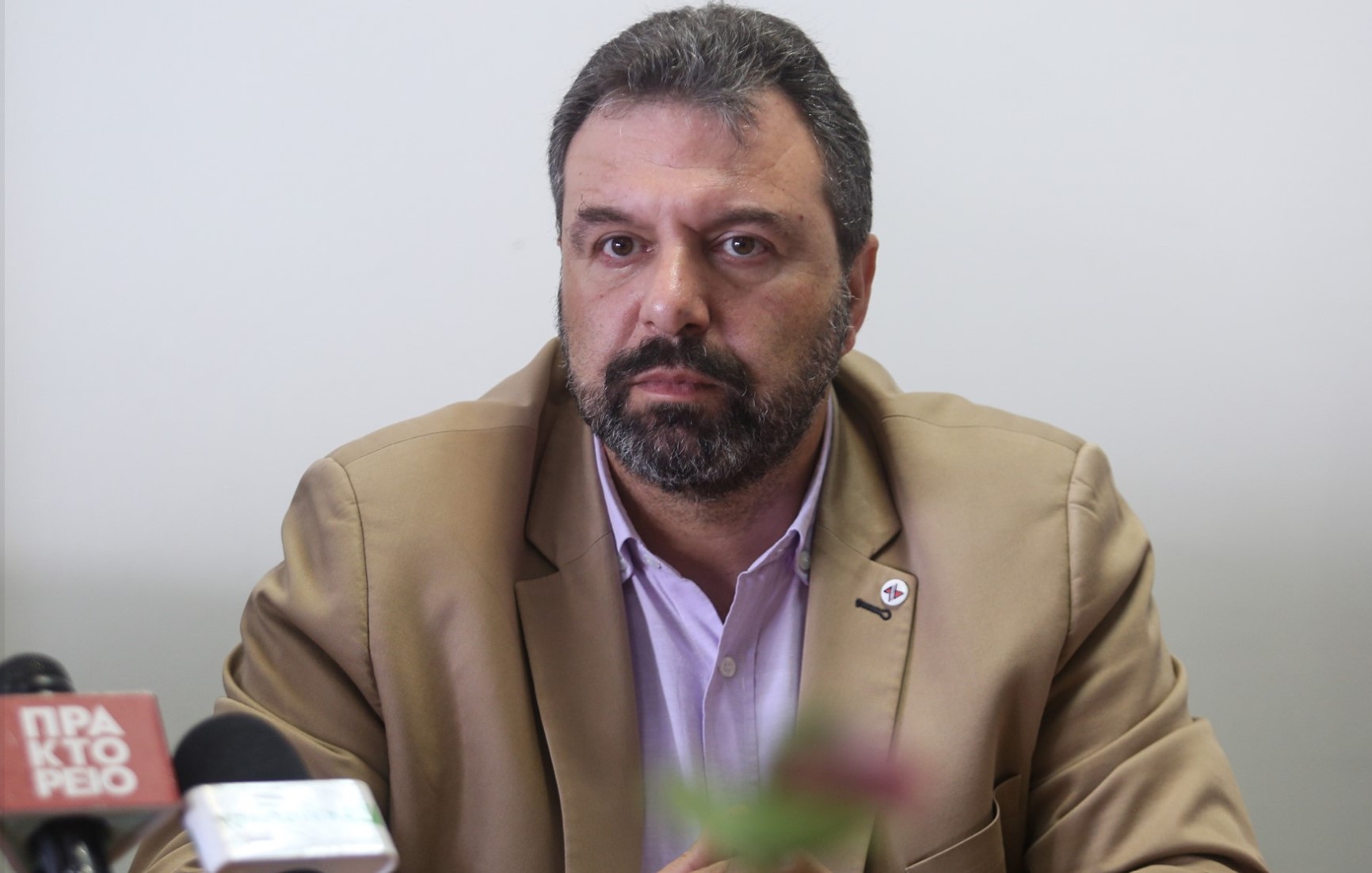
The official admission of the Ministry of Shipping, that indeed within the Gulf of Laconia there are more than often «transfusions» of oil cargoes from tankers, was caused by the Question of Stavros Arachovitis and Nektarios Santoriniou submitted to the competent Minister on May 19, 2022, highlighting the environmental risk that the marine area of Laconia is at risk.
In comparison, the two Sectoral Councillors asked for answers on what kind of activities are carried out by tankers entering the Gulf of Laconia, which agency controls the type, legality and safety of these activities and how safe these activities are for the ecosystem of the Gulf of Laconia. At the same time, they conveyed the concerns of the local community about the fact that, according to witnesses, the tankers in question are observed to be carrying out transhipment operations much closer than 6 nautical miles.
Unfortunately, however, the Ministry's response, apart from admitting the situation we all suspected, does not reassure anyone. On the contrary, it raises more questions and fears.
More specifically, the Ministry of Shipping admits in its Response (No. Prot.:1500.1/42085/2022/163 of 15-6-22) that «the transhipment of oil cargoes between tankers (Ship to Ship/STS Transfer) is a common practice internationally» and that in the maritime area of Laconia these take place beyond 6 nautical miles, i.e. in international waters. However, it avoids answering directly whether the information given by the residents of the prefecture, namely the presence of these ships at a distance of less than 6 nautical miles, is accurate and whether the local port authorities have recorded the above-described incidents and what sanctions, if any, they have taken.
At the same time, the Ministry leaves unanswered the questions about who will have the final responsibility in case of a spill of oil products in the sea area of Laconia, a possibility that is not small, given the frequency of transfusions, the volume of cargoes and the risk that this process involves by its nature.
The Minister should know that relying on the IMO's outlined terms and practices, according to which transfusion procedures are carried out in international waters, does not reassure the local community and does not guarantee environmental protection.
The Coast Guard, as it has proven in the past, is operationally capable of dealing with environmental crises and oil spills at sea. So why have the local Port Authorities not been instructed to carry out continuous and permanent close monitoring of the procedures, so that any spill is immediately detected and dealt with swiftly?;
The fact that the Ministry states in its reply that the Navy is content to observe the transhipment process from AIS, a program that records the movements of ships (!), without having a full picture on the spot, is a clear proof of the how low on the agenda of the South West is the protection of the environment and the sustainability of local communities and economies. All the more so when the nearest suitable cleaning vessel of the LNG to deal with marine pollution from oil spills is hundreds of miles away, in the port of Patras or Piraeus.