The Minister of Environment and Energy, Kostas Skrekas, will announce the amount of electricity consumption subsidies for next month (September).
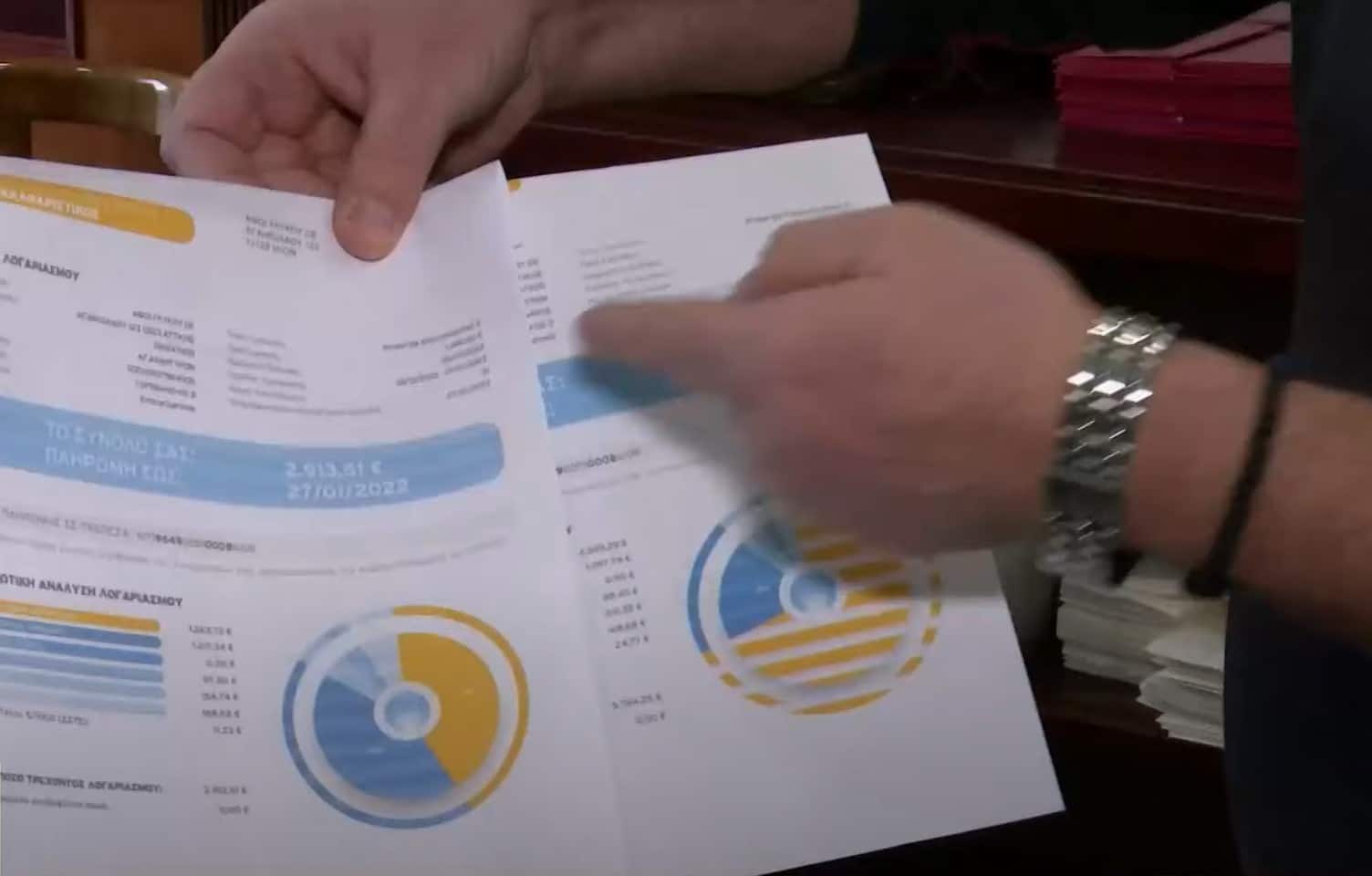
The subsidy per megawatt-hour (as well as the total amount of aid) is expected to be significantly higher than in August, in order to offset, to some extent, the increase in electricity rates announced by suppliers over the weekend.
Meanwhile, as Finance Minister Christos Staikouras stated while speaking on Real FM 97.7, state aid for September—intended to support households and businesses with their electricity bills—will amount to 2 billion euros.
It should be noted that a new record high for the price of electricity was set on the Exchange’s day-ahead market, while prices in most European markets are similarly high.
Specifically, the spot price of electricity in Greece stands at 616.38 euros per megawatt-hour today, with a peak of 794.95 euros. Demand is primarily met (46.2%) by natural gas-fired power plants, followed by lignite (22.7%), renewables (15.4%), hydropower (5.6%), and imports (3.9%). Demand is expected to be lower due to low temperatures (323 gigawatt-hours compared to 351 today).
The price today, Tuesday, stands at over 600 euros per megawatt-hour in Austria, Belgium, Bulgaria, Croatia, the Czech Republic, France, Germany, the United Kingdom, Hungary, Italy, the Netherlands, Romania, Serbia, Slovakia, Slovenia, and Switzerland, where the highest price (624 euros per megawatt-hour) is being recorded. The price of natural gas on the Dutch Exchange yesterday jumped 18% compared to the day before yesterday and settled above 290 euros per megawatt-hour.