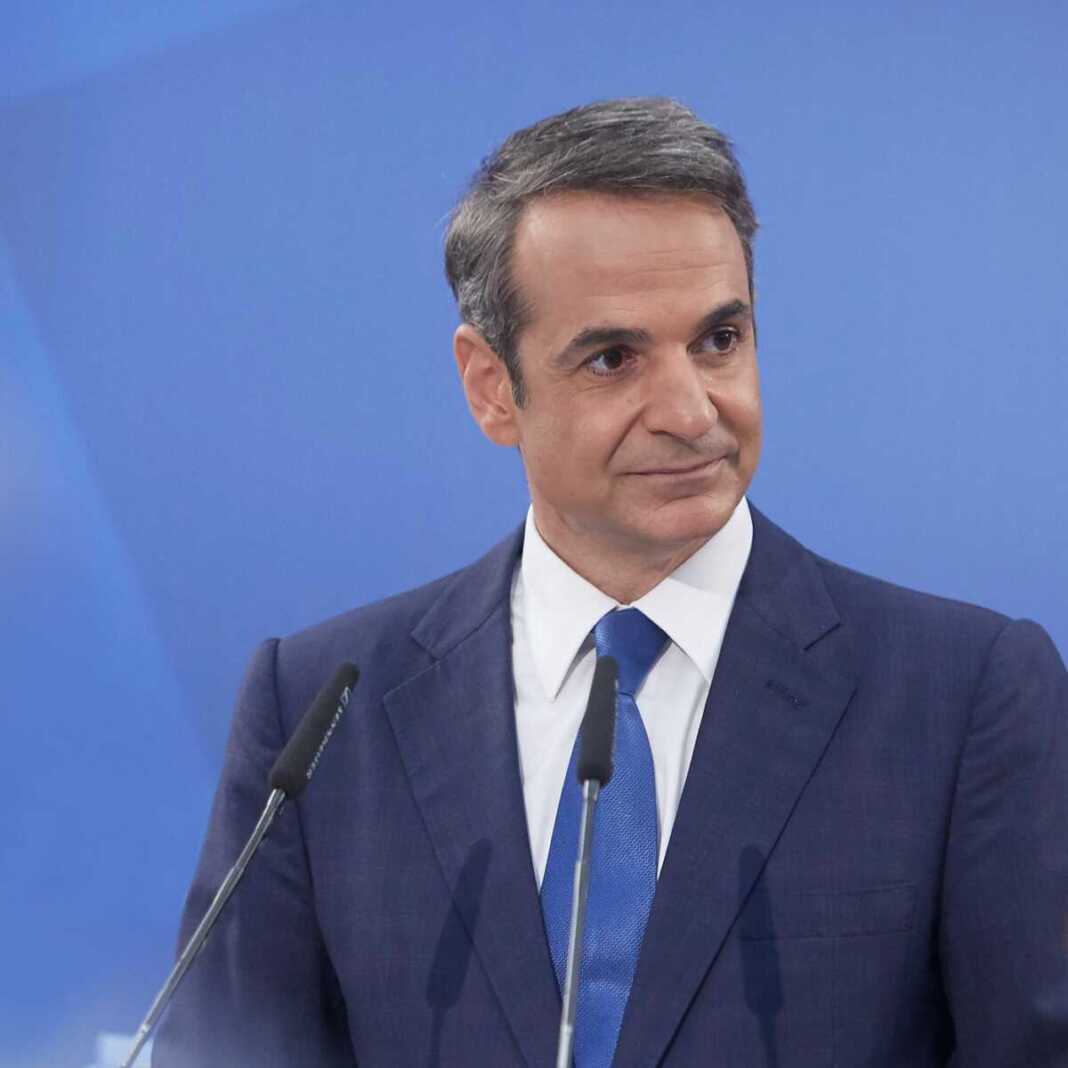
According to what was presented yesterday at the Economist conference by the Prime Minister and a number of government officials and community officials, a GDP growth rate ranging from 3.6% to 4.3% is feasible. Of course the Finance Minister, Christos Staikouras chose to keep the bar low at 3.6% but most of the speakers expressed optimism while ESM chief Klaus Regling stressed that growth at 4.3% is possible.
Of course, behind these estimates but the four reasons for optimism provided by the Kyriakos Mitsotakis, Prime Minister of Greece (increased deposits that will return to the market, the ‘Greece 2.0 Plan’ from the Recovery Fund, low government lending rates, the reduction of red loans and reforms), there is another «reverse» reality.
The “other reality”
Even to the Prime Minister's basic argument that now in Greece taxpayers pay lower taxes and contributions, the answer came a few days ago from the Centre for Liberal Studies - Markos Dragoumis (KEFIM), (which is, as its title suggests, close to the «liberal camp»), Greece has one of the 7 highest tax and social security contribution burdens in 2019 (12 days above average) and the lowest degree of social policy effectiveness compared to the average of the countries studied (3.6 percentage points below average). He noted that for 179 of the 365 days of the year we will work for the state.
Return of deposits
Apart from how much and what we pay for the state, the «fourfold» of the arguments for the positive course of the economy is worthy of much discussion. More specifically, the return of deposits or part of deposits to the market is not a given. Obviously, the strengthening of the banks' piggy bank, which is of course also due to the transfer of funds from the state to the taxpayers, is extremely positive, but in times of intense insecurity and changes in consumer habits, the return of demand is a very difficult task. Of course, in view of the return to a surplus trajectory, the halting of the «freeze» of many payments and the need for large repayments (Repayable Advance, debts, etc.), a large proportion of this money will go to the state treasury again.
Recovery Fund
Another «pillar» supporting the case for strong and sustainable growth is the Recovery Fund and the «Greece 2.0» programme. Of course, here too, apart from the absorption potential, there is also the big question of how these resources will turn the country into an «island» of innovation with domestically produced added value. In other words, this money should be absorbed effectively and in terms that will transform the economy and not transfer value to other countries in the rich European North, as has happened in the past with many of the Community funds.
Even Mr.Regling repeated several times the great difficulty of implementing the Recovery Plan, not only for Greece but for all countries «including Germany». He explained that when government plans foresee a large increase in investment, there is difficulty in implementation.
And for his part, the President of the EWG, Thomas T. Saranheimo, stood on the big bet of the Recovery Fund. «The Greek plan starts from a better basis than several EU countries» Recovery Fund plan" however he spoke of challenges that all member states' Recovery Plans present.
The low interest rates
The ECB's interest rate policy and the decision to relax the 2% inflation target after 20 years is undoubtedly a major contribution to the «cash comfort» of the state budget. However, the issue with Greece is that it has on its back a debt that is touching 205% of GDP and in the next period it will be called upon to manage payments and service it financially.
Recall that, based on the pre-pandemic decisions, if debt financing needs are below 15% of GDP, then the debt is sustainable. Obviously, with debt ballooning, the 15% target creates side difficulties both in terms of reductions in the linked primary surplus targets (returning from 2023) and per se compliance. In short, how will the country «loosen» the belt of surpluses, which for the time being seem to be coming back strongly at the end of the pandemic, if it has to find money to service a mountain of debt?; The only way forward, of course, is sustainable and strong growth, but this is not a given.
Reforms and red loans
The fourth reason for the Prime Minister's optimism has to do with the promotion of reforms and red loans. With regard to banks, there will have to be a wait for the pandemic bill and its imprint on the balance sheets, while on reforms the argument bears much argument. If one counts, for example, labour reform or insurance, then the risks are manifold as the country is heading towards a highly deregulated and fragile labour market. Obviously high growth rates can, as international experience has shown, coexist with high unemployment rates. Besides, after the restart of the economy, many people, even the European institutions or the IOBE, point out that there is a risk of lockouts.
In particular, the seasonally adjusted unemployment rate in April 2021 stood at 17.0% compared to the downwardly adjusted 15.9% in April 2020 and the upwardly adjusted 16.8% in March 2021. Unemployed persons amounted to 762,553, an increase of 31,202 persons compared to April 2020 (+4.3%) and 21,990 persons compared to March 2021 (+3.0%). Among women, the unemployment rate increased to 21.4% (from 18.7% in April last year), while among men it remained essentially unchanged (13.6% from 13.7%). Age-wise, in the 15- 24 year old groups it increased to 46.8% (from 33.6% in April 2020), and in the 25- 74 year olds it was 15.6% from 14.9%.
In fact, it is noted that the GSEE's Labour Institute spoke of a surge in unemployment whenever the «distorting lens» of suspensions of employment contracts is removed.