According to the Special Bulletin on Dangerous Weather Phenomena issued by the National Meteorological Service (EMY) today, Wednesday, heavy rain and storms are forecast:
a. On the Ionian Islands of Corfu, Diapondia Islands, and Paxos, and in Epirus.
b. From the afternoon in Lefkada, Kefalonia, Ithaca, Zakynthos, Aetolia-Acarnania, western and southern Peloponnese.
c. From the evening in eastern Macedonia.
B. A weather system named ADEL will bring heavy rain and storms on Thursday (11/27) and Friday (28/11) will bring heavy rain and storms, accompanied by local hailstorms and, at times, very strong winds in many areas of western and northern Greece, as well as in the eastern Aegean.
More specifically:
On Thursday (11/27), heavy rain and storms are forecast:
In the Ionian Islands, Epirus, western and central mainland Greece, western and southern Peloponnese, central and eastern Macedonia, and Thrace.
On Friday (28/11), heavy rain and storms are forecast in central and eastern Macedonia, Thrace, the eastern Aegean, and until early morning in western Greece.
In a state of readiness “RED CODE” Western Greece
The General Secretariat for Civil Protection has placed the regions of the Ionian Islands, Epirus, Western Greece, and the Peloponnese, as well as the municipalities within these regions, from today, Wednesday, until Friday, following the upgrade by the National Meteorological Service of the Dangerous Weather Phenomena Bulletin and the recommendation of the Risk Assessment Committee.
As sources from the Ministry of Climate Crisis and Civil Protection clarify, today, Wednesday, other regions of the country may also be placed on alert (RED CODE).
The Risk Assessment Committee met on Tuesday – New meeting today
The Risk Assessment Committee was convened yesterday, Tuesday, by the Secretary General for Civil Protection, Nikos Papaefstathiou, due to the bad weather with heavy rain and storms expected until Thursday, November 27, 2025.
According to the Commission's scientists, the phenomena are predicted in the west-northwest of the country, in the northern Ionian Sea (mainly in the Corfu area) and Epirus (mainly coastal areas), in many areas of western and northern Greece, as well as in the eastern Aegean Sea.
1) Today, Wednesday, heavy rain and thunderstorms will occur in western Greece, mainly in the northwest, and from the evening in eastern Macedonia.
2) On Thursday, rain and thunderstorms will be particularly intense in western Greece, central and eastern Macedonia, and Thrace.
As emphasized by the Ministry of Climate Crisis and Civil Protection, the Single Coordination Center for Operations and Crisis Management (E.S.K.E.ΔΙ.Κ.) will contact local authorities of the first and second degree in order to immediately convene Civil Protection Councils, as well as all relevant agencies, so that they are fully informed about the impending weather phenomena and can be on operational alert.
The Commission will meet again today, Wednesday, to assess the extent of the phenomena on Friday.
Civil Protection Recommendations
The General Secretariat for Civil Protection is once again issuing recommendations to citizens, urging them to be particularly cautious and to take measures to protect themselves from the dangers posed by severe weather conditions.
The General Secretariat for Civil Protection of the Ministry of Climate Crisis and Civil Protection has informed the relevant state services involved, as well as the regions and municipalities of the country, to be on high alert for civil protection, in order to immediately address the effects of severe weather events.
In particular, in areas where heavy rainfall, storms, or strong winds are forecast, the GSCP recommends that citizens:
– Secure objects that, if swept away by severe weather conditions, could cause damage or injury.
– Ensure that the gutters and downspouts of their homes are not blocked and are functioning properly.
– Avoid crossing streams and creeks, on foot or by vehicle, during storms and rainfall, as well as for several hours after they have ended. Particular attention should be paid to points on the road network where the road crosses streams and there is no bridge.
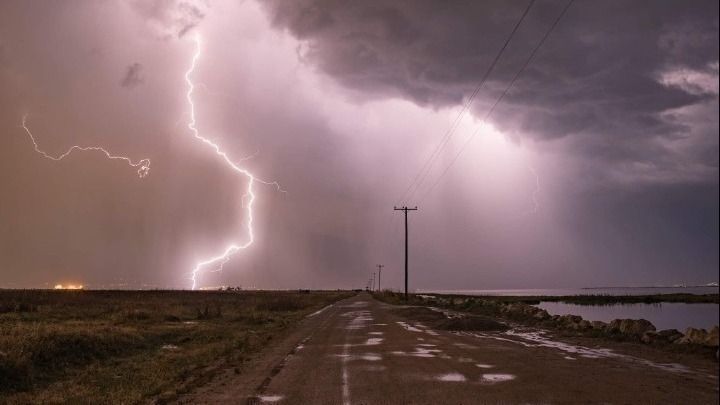
– Avoid outdoor work and activities in marine and coastal areas during severe weather events (risk of lightning strikes).
– Take immediate precautions during a hailstorm. Take shelter in a building or car and do not leave the safe area until you are sure that the storm has passed. Hailstorms can also be very dangerous for animals.
– Avoid walking under large trees, hanging signs, and generally areas where light objects (e.g., flower pots, broken glass, etc.) may become detached and fall to the ground (e.g., under balconies).
– Follow the instructions of the local authorities, such as the traffic police, etc., to the letter.
In areas with intense lightning activity:
If you are at home
– Do not hold electrical appliances or the telephone, as lightning can pass through the cables. Disconnect television sets from the antenna and the power supply.
– Avoid touching plumbing pipes (kitchen, bathroom) as they are good conductors of electricity.
If you are in the car
– Secure it at the side of the road and away from trees that could fall on it.
– Stay inside and turn on your hazard lights (emergency lights) until the storm passes.
– Close the windows and do not lean on metal objects.
– Avoid flooded roads.
If you are outdoors
– Take refuge in a building or car, otherwise sit immediately on the ground without lying down.
– Take shelter under solid branches of low trees if you are in a forest.
– Never take shelter under a tall tree in an open area.
– Avoid low-lying areas due to the risk of flooding.
– Do not stand next to utility poles, power lines, telephone lines, or fences.
– Do not approach metal objects (e.g., cars, bicycles, camping equipment, etc.).
– Stay away from rivers, lakes, or other bodies of water.
– If you are in the sea, get out immediately.
– If you find yourself isolated on flat ground and feel your hair standing on end (which indicates that lightning is about to strike), sit down with your head between your legs (to minimize your body surface area and contact with the ground) and throw away any metal objects you have on you.
For information and announcements regarding the current situation and the passability of the road network due to flooding, citizens can visit the Hellenic Police website at www.astynomia.gr.
For more information and instructions on how to protect themselves from severe weather conditions, citizens can visit the website of the Ministry of Climate Crisis and Civil Protection at civilprotection.gov.gr.