the draft report that resulted from the investigation of the Tembi train accident under the National Organization for the Investigation of Aviation and Railway Accidents and Transportation Safety (EODASAA) and which it came to the attention of «K», the events leading up to the collision between the two trains, the mechanism of the collision itself, and the causes of the subsequent fires are outlined.
According to the draft, parts of which were published by the Real News and the Newspaper of the Editors, there is no data to support the existence of a tank with a capacity of tens of metric tons or the presence of a hidden railcar in the commercial train, but it appears that by the time the final report is completed, the estimate regarding the quantity will be substantiated. 3.5–4 metric tons, most likely aromatic hydrocarbons, in the third car of the freight train, which caught fire after the collision.
The small leak of silicone oil from the transformers in the first two cars of the freight train is not sufficient to, according to reports, regarding the cause of the explosion that occurred. This is further supported by the fact that the transformers sustained only minor cracks.
The reconstruction of the sequence of events is based on the known train movement data (direction, speed, mass, analysis of the type of damage to the railcars after the accident), while for the explosions The analysis was based primarily on footage from the cameras, which is nevertheless considered sufficient to draw scientifically sound conclusions regarding the type of cargo carried by the freight train traveling on the downline.
According to the findings, none of the research centers involved—the The Universities of Pisa and Ghent, or the Swedish Institute– They have not yet reached a final conclusion regarding the type of cargo that led to the explosion. However, all three have documented the most appropriate methodology, from which reliable conclusions can be drawn, provided that the correct parameters (humidity, wind speed, temperature, etc.).
This is the method of «Computational Fluid Dynamics» (CFD), which analyzes the flame and determines the type and extent of the flammable material that caused it. Specifically, the University of Pisa has issued a positive opinion on the suitability of using this method to analyze the explosion at the the Tempi accident. The University of Ghent has so far validated the definition of appropriate parameters (e.g., humidity) for conducting the analysis using CFD methodology. Specifically regarding silicone oils, researchers in Ghent were quick to rule them out as a cause early on, precisely thanks to CFD.
While the full report is scheduled to be presented in late February, the method of carrying out the explosions, which the authors of the report identify as the most appropriate, has not yet yielded definitive results, while, according to information from «K», is «running» right now, as it takes time to analyze all the data.
Firefighting
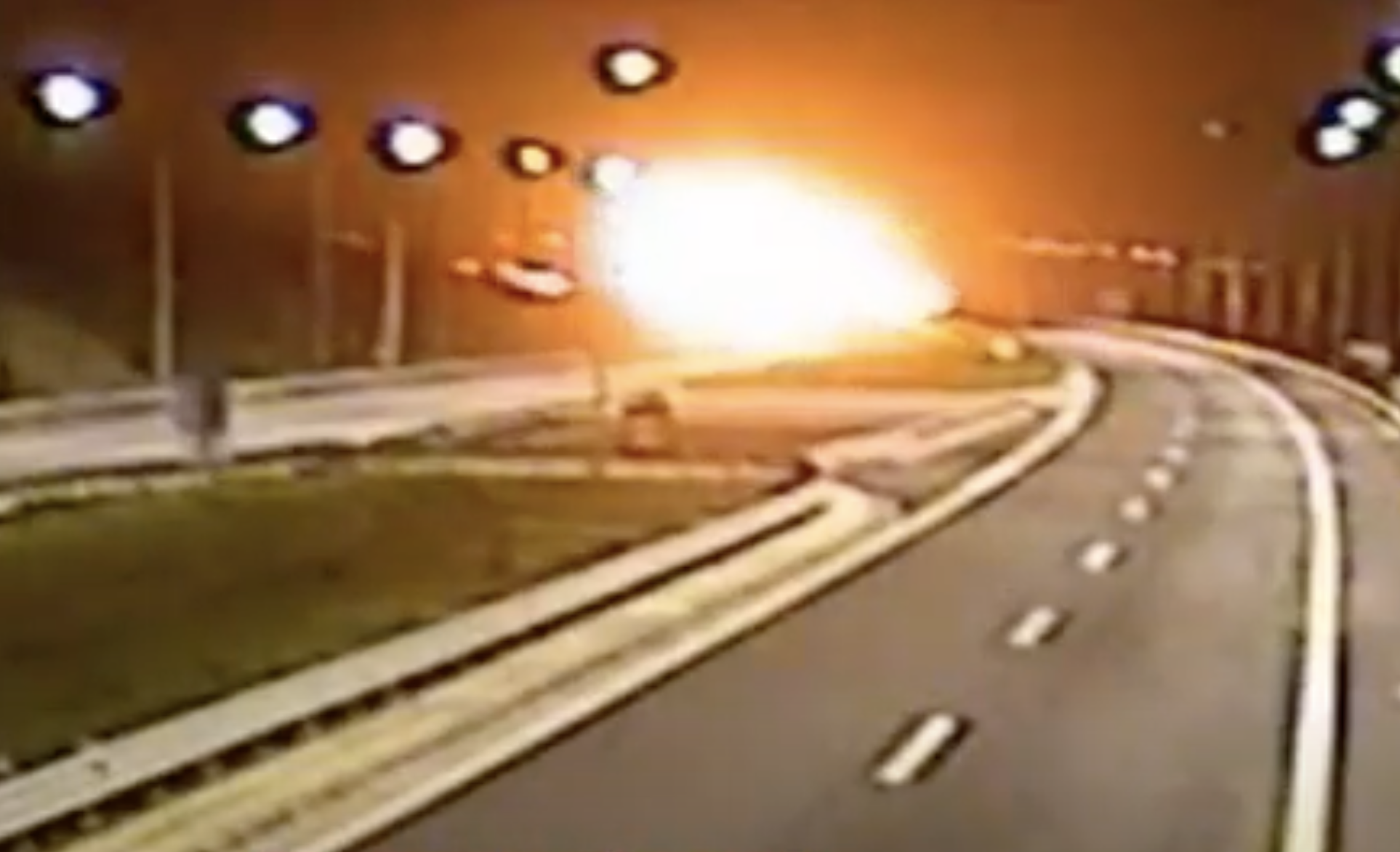
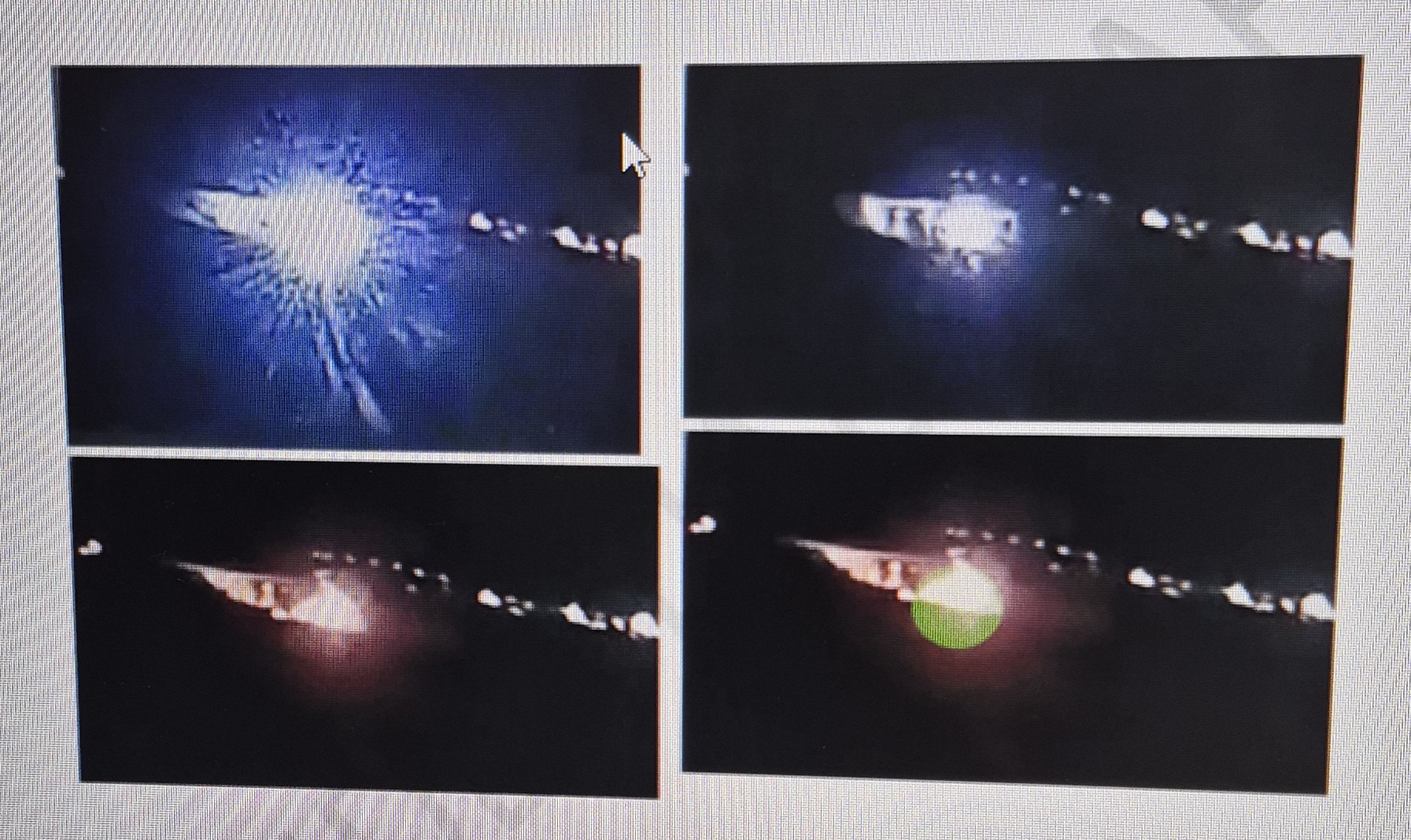
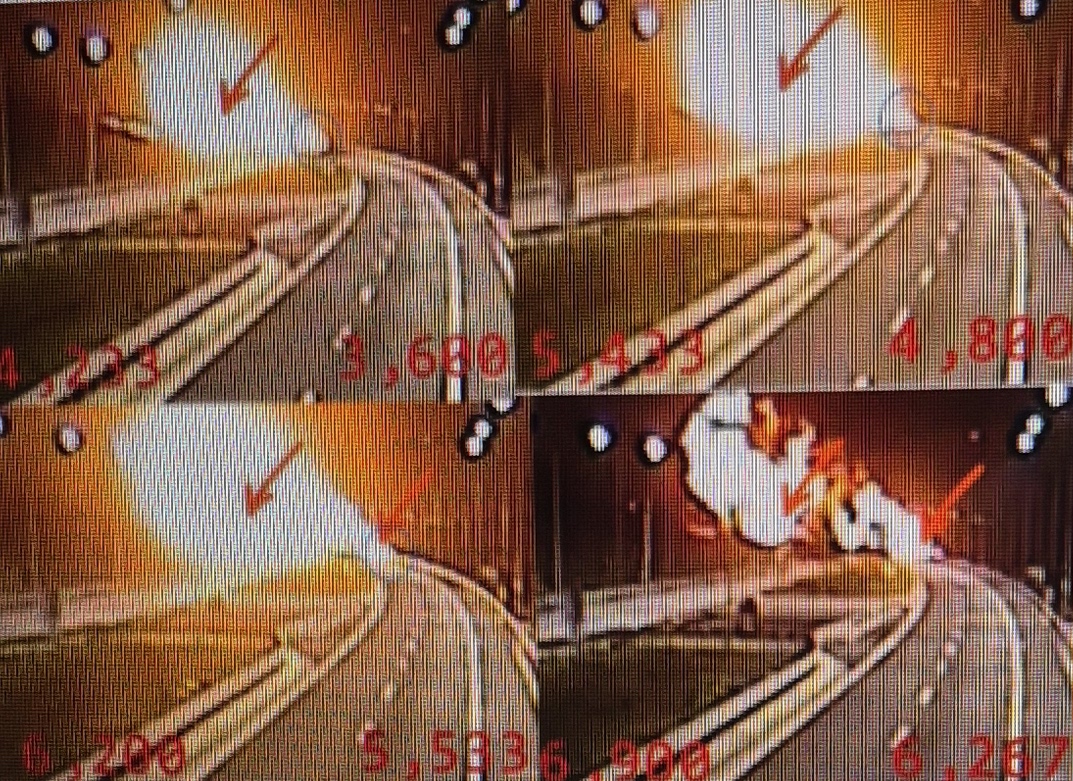
On Intercity 62, the rear section of the dining car and passenger car B2 were completely destroyed by the fire. Just six fractions of a second after the collision of the trains’ locomotives, the following is observed: first electric arc which causes a short circuit and a bright flash, followed by two more flashes. The explosion begins about three fractions of a second later from the ground, likely due to sparks from the brakes, according to the findings. The explosion spreads upward, forming a fire with a diameter of approximately 42 meters that burns for about 2 seconds, marking the first phase of the fire.
In second phase, a few seconds after the initial ignition, the following is observed new fire to an «undefined volume or area» away from the original fire. However, this feeds the initial fire, which doubles in size before going out seconds after ignition, according to the findings. The duration of this second phase and the height of the fire columns indicate that a significant amount of amount of fuel, based on what is stated.
All three research centers involved—the Universities of Pisa and Ghent and the Swedish Institute—have agreed on the appropriate methodology for analyzing the explosion.
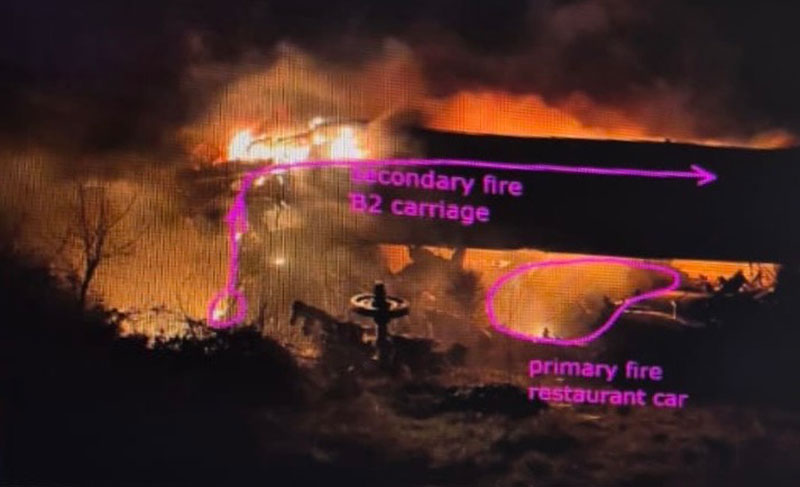
In third phase, two separate fires continue to burn at ground level, one near the engines of the freight train, which is likely heating the silicone oils as well. A fire breaks out there but extinguishes itself before it can consume all the oil in the transformer. Another fire burns in the remains of the dining car with a strong flame and lasts a total of 2 hours. These two fires appear to consume any remaining fuel that was not consumed by the initial fire. The first attempt to extinguish the fire took place 43 minutes after it started, carried out by a single fire truck, which had little effect on the fire.
The fire in car B2 of the passenger train started at the bottom at 11:35 p.m. and then burned its entire length «without any active firefighting efforts until it began to burn with very intense flames, fueled by the fabric of the large seats, the curtains, and the interior materials,» according to the findings. By 12:40 a.m., the fire had burned through the entire B2 car and had begun to die out on its own, as there was no more combustible material left.
It was just after 2 a.m. when the fire in the dining car seemed to be subsiding, as aerial photograph Footage from the scene of the accident shows smoke coming from the remains of the dining car and two other small fires still burning at the front and rear of the car. A firefighting effort recorded at 2:32 a.m. shows foam being pumped toward the car, though it is unclear whether this played a role in actually extinguishing the fire, which had already engulfed the entire length of the car, the report states.
Three phases
Η analysis of the visual material The moment of the collision also demonstrates a sequence of three successive but distinct phases (1st collision, 2nd collision, deceleration) from the moment of the first head-on collision until each vehicle comes to a stop in its final position.
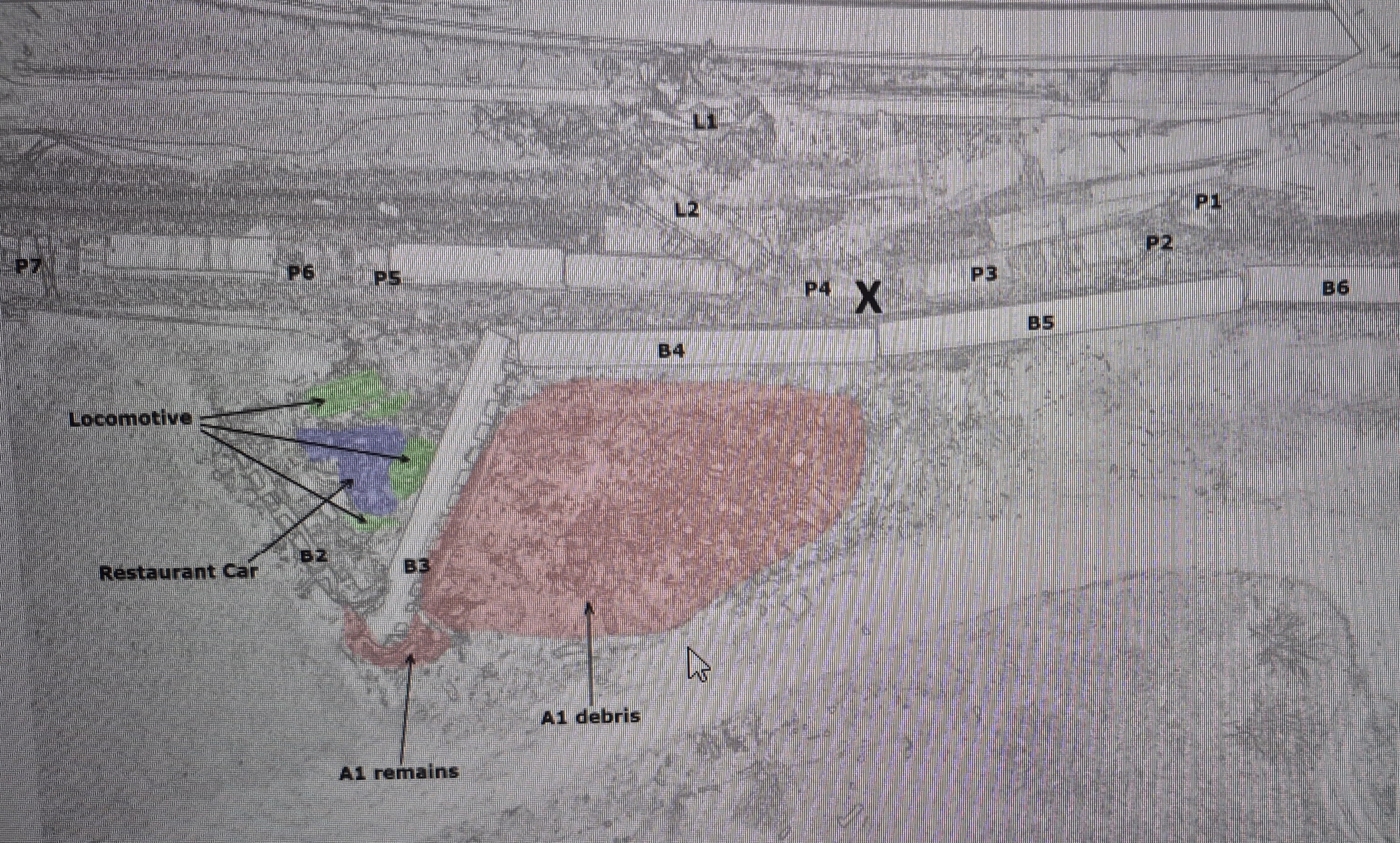
The first phase mainly involves the first four cars of the two trains: the two cars of the freight train, where the engines were located, and the first two cars of the passenger train, where the engine and the first-class passenger compartment were located. The initial collision was head-on, causing the cars to be thrown to one side and crash into the highway wall. The first-class car was completely destroyed, with seats scattered throughout the wider area of the accident. As the first four cars of the two trains became detached from their respective trains, the remaining cars were now moving more slowly due to the impact as well as the application of the brakes. The findings indicate that the manual emergency brake was applied 1 second before the first, head-on, collision and that the mechanical brakes are automatically activated on the passenger train due to a loss of air pressure from the first impact.
The second collision—between the remaining cars, the passenger train’s dining car (the third car), and the freight car carrying steel plates. This collision causes severe damage to the dining car, which takes on a «final sigma» shape. In the third phase of the collision, the cars continued to collide with slightly less force, according to the findings.
—
*Elvira Kritari is the daughter of Fani Kritari from Karava.
In 2023, he joined the freelance reporting team at *Kathimerini*. Since 2020, he has been collaborating with ERT on investigative programs and has covered international crises. She has worked for both foreign and Greek media outlets. He received the BIRN “Fellowship of Journalistic Excellence” (2020) and participated, with an SNF scholarship, in the investigative journalism training program at Columbia University in New York (2017). She studied journalism at Panteion University and earned master’s degrees from the National and Kapodistrian University of Athens and Panteion University.