My First Easter
«My dear friends,
These days, my thoughts always drift back to my childhood. And I remember those wonderful holidays I used to enjoy back home, when I was a carefree little child and had my kind parents to look after me and guide me in everything. Of course, this included church and my ’religious duties«… Whenever it was winter, my mother would take me with her to Agios Ioannis or Faneromeni, our neighborhood churches, which held services a bit late—one at eight, the other at nine. But when spring came, and I could wake up and go out earlier, my father would take me to the Episcopal Church or to Agios Charalambos, these little country churches in a lovely seaside suburb, which held services starting at seven. After the service, we’d take a walk through the Gardens and come back a little tired but both very happy.
»Oh, it was so beautiful! Spring had adorned the green fields with white and yellow daisies, bright red poppies, and other blue or purple wildflowers. What a colorful carpet spread out across the fields! I could see it even from the open door of the church, as I listened to the hymns, the prayers, and the Gospel readings. I especially loved the Gospel readings. The readings before and after Easter are so poetic! First, those for Palm Sunday—and usually starting that Sunday, I’d begin going to the little country churches—then those for the Resurrection, then Thomas Sunday, the Myrrh-Bearers, the Samaritan Woman… Father Logothetis, the parish priest at Agios Charalambos, a very learned man, delivered them wonderfully. And not chanting with deep basses and high trebles, as in other churches; but read aloud, clearly, distinctly, word for word, and with expression, with a tone so that even the illiterate could understand the meaning. And truly, those little churches were mostly attended by simple, humble people of the common folk—fishermen, boatmen, gardeners, millers. And it was a joy to see them dressed in their Sunday best, listening with such reverence and such attentiveness to the words of the Lord…
»But during Holy Week and Easter, my entire «church» on Sunday morning was the Resurrection service held outdoors, followed by the Divine Liturgy: «Come, receive the light,» «Christ is Risen,» «In the beginning was the Word,» and so on. They didn’t take me out at night, nor did they take me to the Nymphia, nor to the Service of the Passion, nor to the Epitaph procession, whose mournful music I could only hear from afar if I happened to wake up on Good Friday night. So I didn’t really know what had happened before the Resurrection. Only, starting on Palm Sunday, that Christ had entered Jerusalem in triumph. But what did He do there, what did they do to Him—I had no clue: some Last Supper, some crucifixion, some burial in a new tomb… What could those things have been? How could they have happened? I’d just had an idea.
»And suddenly… I learned it all! I had grown up, it seems, that year, and my parents took me with them everywhere. That’s how I heard those awe-inspiring Gospel readings for Holy Thursday and Good Friday, and ’Today He Is Hanged!’… I also saw Christ with his crown of thorns on the black cross, a large Christ, just like the real one… Then I saw him dead, lying on the golden Epitaph (and the Christ of the Epitaph in Zakynthos isn’t embroidered on cloth; He’s painted on wood, like a framed icon, just like the Crucified One). And I still remember what a different impression, what greater joy Easter brought me in that little church, the first time, after I had already heard, seen, and learned all of the above. I can say that this was my first Easter.
»Because I had spent the entire Holy Week in mourning, in the sorrow of the Passion. I had witnessed Christ’s martyrdom, His agony, and His death; I had heard His Last Will and Testament, I had sat at the Last Supper, and I had followed His burial procession, weeping alongside the Sorrowful Mother, who herself was depicted by a painter in a large icon as if she were real: ’O my sweet spring, my sweetest child…’ That is why «Christ Is Risen» filled me afterward with such joy, such elation; that is why it seemed to me like the ultimate fulfillment, like a victory, like a triumph. He who was mockingly dressed in false purple. He who was made to drink gall and vinegar, and was flogged, and nailed to a cross, and died a martyr’s death—as a man—rose alive from the tomb and ascended to heaven as God!
»That’s how it had to be. For the Resurrection to bring me such joy, the Passion had to come first; for Easter to make such an impression on me, I had to experience Holy Week. By learning what I learned that year, I was learning about life—which, until then, I had been too young to understand— since the parents who cared for me and guided me took me only to the joyful Sunday services and shielded me from the sorrowful ones, which were not yet meant for me. So it is in life: Joy—true joy—is attained only after struggle and anguish, after toil and sorrow. Before every Easter, we must go through Holy Week.
»Oh, you guys know that already. Don’t you call the week of school competitions—which is preceded by the victory and joy of getting an A—… Holy Week? You’re laughing, aren’t you?… See you next year!
I send you my regards
»FAIDON"
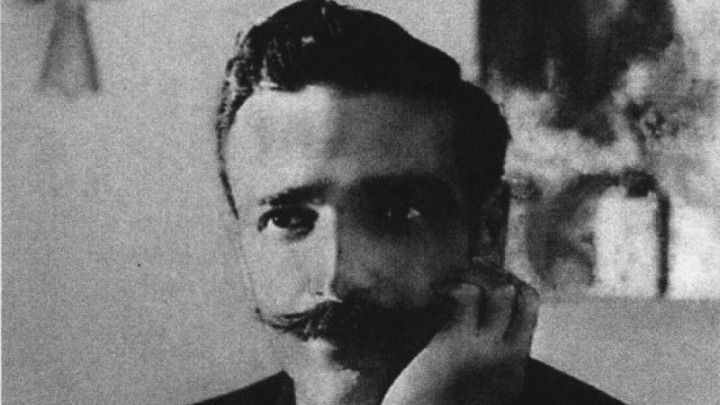
Gregorios Xenopoulos wrote the column «Athens Letters» for the magazine *Diáplasis ton Paídon* between 1867 and 1951. «My First Easter« is one of these texts, in which he recalls that for the Resurrection to give us the joy it brings us today, Easter Sunday must be preceded, during Holy Week, by the emotional outpouring surrounding the Passion of Christ. Xenopoulos served as editor-in-chief of the magazine between 1894 and 1945.
Despite the fact that Xenopoulos’s (1867–1951) have been frequently reprinted for many years now, and his plays continue to be staged to this day, his name remains somewhat obscure: either because of his prolific output and voluminous body of work, which cast suspicion on him for having commercial motives, or because of internal issues with his writing, which critics had identified in his work as early as his heyday —problems that were once again linked to his insistence on addressing the general public through both his fiction and his plays. In his autobiography, titled «My Life as a Novel» (1939), published when he was 72 years old, Grigorios Xenopoulos identifies «Margarita Stefa» (1893), as well as «The Red Rock» (1905), «The War» (1914), «The Secret Betrothal» (1915), and «Laura» (1915). Also noteworthy is his trilogy: «The Rich and the Poor» (1919), «The Honest and the Dishonest» (1921), and «The Lucky and the Unlucky» (1924), as well as «The Rising One» (1925), «Isabella» (1923), and «Teresa Varma-Dakosta» (1925), which established him as a pioneer of the urban novel in Greece. Throughout his prolific body of fiction, which was indeed widely read and beloved by the general public, Xenopoulos took a keen interest in everyday social reality and, in particular, in the conditions under which the capital of the Greek state was gradually – the capital of the Greek state was gradually evolving into a metropolitan center. In his works, we often witness major romantic conflicts, set against the backdrop of the protagonists’ financial hardship or, conversely, their financial prosperity.
Β. Hadjivassiliou