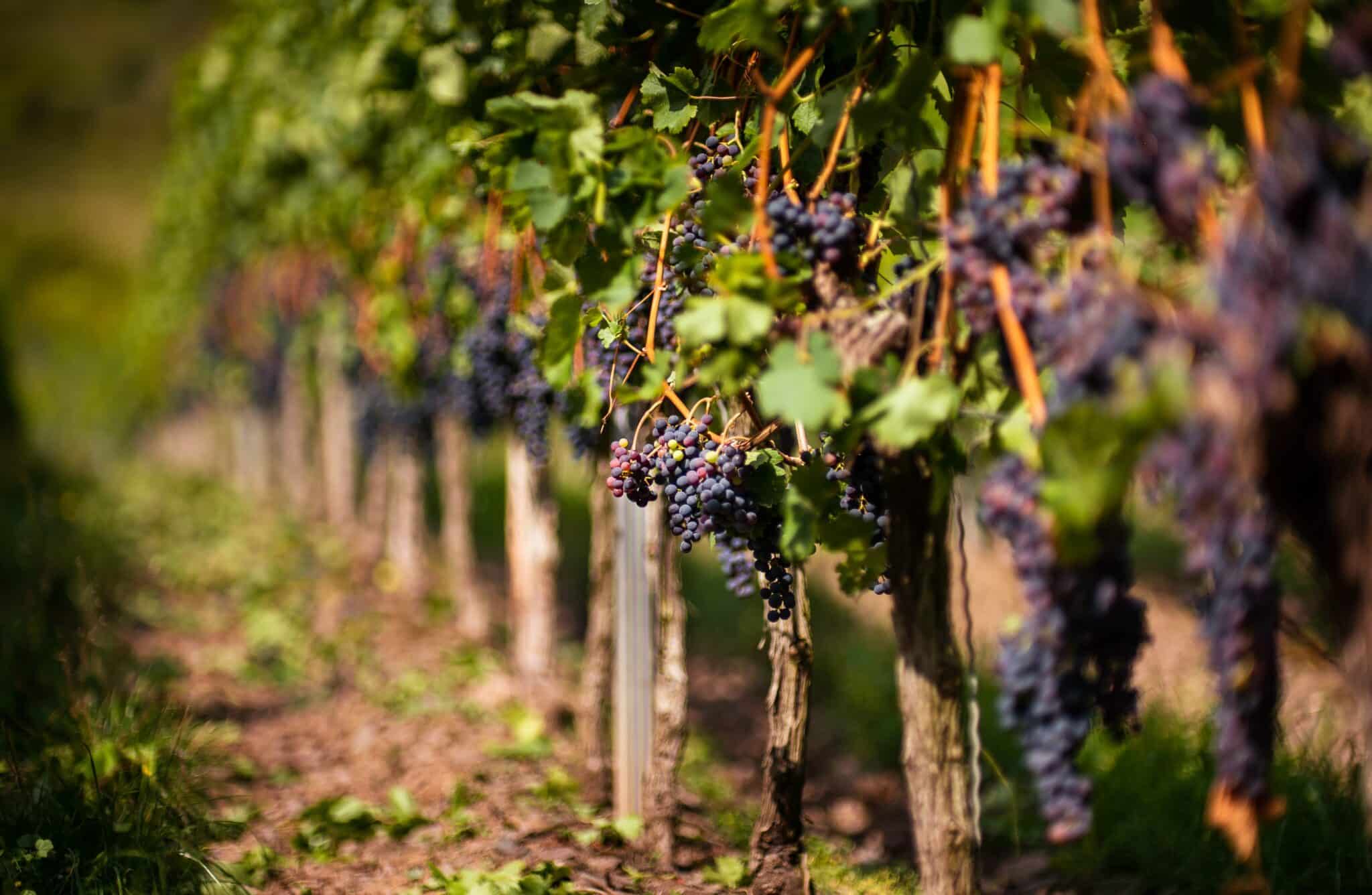
The area of the Greek vineyard will shrink in 2021 despite the new plantings of 6,300 acres per year, as recorded in data recently sent to the Commission by the Wine and Alcoholic Beverages Department of the Ministry of Rural Development and Food.
Specifically, the Greek vineyard is measured at 636,965 hectares, according to the census data per Region, recording an increase of 0.281 TP3T, i.e. 1,759 hectares compared to 2020 (635,205 hectares). However, it falls short of the number of acres granted as new ‘Planting Permits per year at 1% which equates to approximately 6,300 acres per year.
According to the same data, the annual increase of the Greek vineyard to an area of less than 6,300 hectares per year, the area covered by the new Planting Permits, means that areas are abandoned correspondingly, approximately equal to the difference between the annual increase of the Greek vineyard and the areas granted as new Planting Permits.
Thus, while the area of the Greek vineyard should have increased by about 6,300 hectares and should have reached 641,500 hectares, it has increased by only 1,759 hectares. There is therefore a relative reduction of around 4 500 hectares between 2020 and 2021.
Speaking to the Athens-Macedonian News Agency, the Director of the Central Cooperative Union of Vine and Wine Products (KEOSOE), Panagiotis Kordopatis, stressed that the main reason for the shrinking of the Greek vineyard area is «the economic performance of viticulture, given the low grape prices that are formed every year, prices that are the same as those of the early 1990s».
According to him, «the cause of the price depression is the entry into the wine sector of table varieties and subsidized grape varieties, which are forbidden to be vinified, at incredibly low prices», adding that «many wineries are sourcing varieties forbidden to be vinified, are negotiating prices for wine-making varieties at prices that do not cover the cost of cultivation, with the result that viticulture has been a loss-making activity for decades, especially in the country's major wine-growing areas.
Another reason, he said, «is the high average age of wine growers, combined with the succession of holders of vineyards, as well as inheritance law, due to which vineyards are fragmented into small and not economically viable areas».
Greater reduction in areas under PDO wines
As recorded in the data of the Wine and Alcoholic Beverages Department, the largest reduction was in areas of vineyards with PDO wines. Specifically, in the period 2020-2021, a decrease of 16.11% was observed, with the total area reaching 12,781.99 hectares, while in the period 2019-2020 it amounted to 15,236.3 hectares.
On the contrary, there was an increase of 1.17% in the areas with P.G.E. in which P.O.P. is included (2,528.16 acres in the period 2020-2021 compared to 2,498.8 acres in 2019-2020), and 0.32% in the areas with P.G.E. in which P.O.P. is not included (38,420.58 acres in the period 2020-2021 compared to 38,299.6 acres in the period 2019-2020).
An increase of 0.58% was recorded in the areas without PPAs / PGIs not established in PPA / PGI areas, reaching 2,737.82 acres in 2020-2021, up from 2,722 acres in 2019-2020.
Reduction of 65,000 hectares in the period 2012-2021
In the last decade the area of the Greek vineyard has shrunk by almost 65,000 hectares. According to data from KEOSE, the Greek vineyard in 2012 amounted to 664,738.2 hectares, while in 2021 the area reached 636,965.3 hectares. As the census data show, the net reduction in areas from 2012 to 2021 was in the order of 27 772,9 hectares.
However, if the new plantations carried out under the Planting Permits scheme that came into force from 2016 to 2021 (plantations of 37,180.79 hectares) are added to these areas, then the actual reduction amounts to 64,953.69 hectares, since the difference between 2012 and 2021 includes plantations through Planting Permits, as the KEOSOE pointed out.
«The State should carry out controls»
The Director of KEOSOE calls for controls from the State, speaking to APE-MPE, stressing that it should «ensure the implementation of the existing EU, national institutional and control framework, which is very detailed and strict, but is oriented (when applied) to create added value in the wine-growing areas».
According to him, this «increases added value and therefore profitability, resulting in an increase in demand for plantations».
Nevertheless, Mr Kordopatis is optimistic about the future of the Greek vineyard, especially if the above problems are resolved. «The future can be predicted with optimism, given Greece's special qualitative and varietal potential, its soil and climate conditions and the human factor, which guarantee the production of high quality wines,» he said.
Th. Papakostas