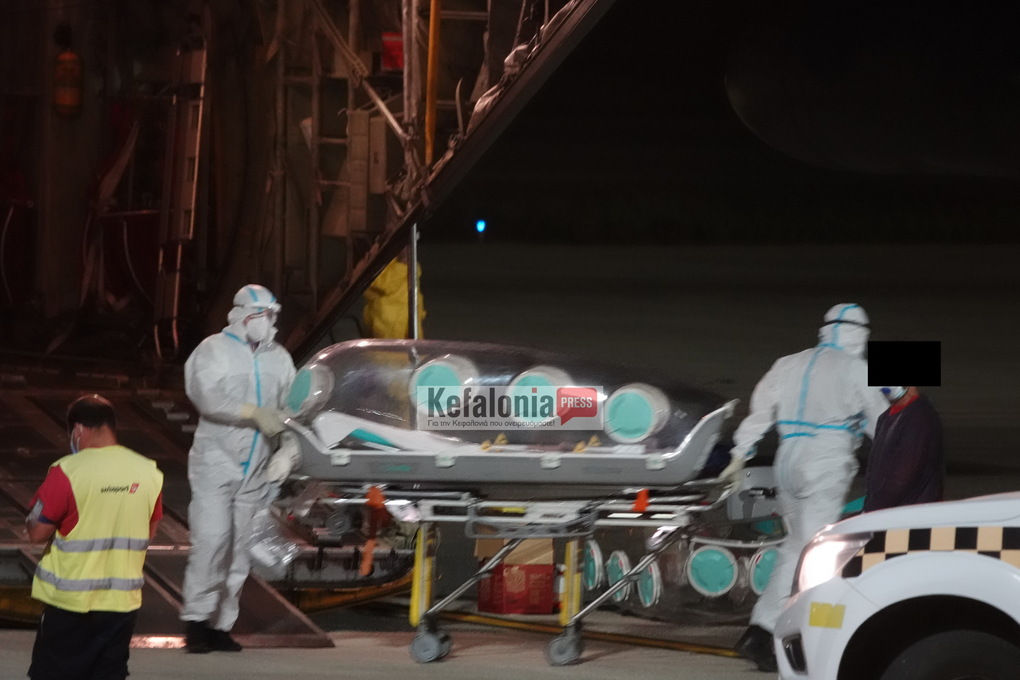
The first suspected case of smallpox in monkeys has been detected in Greece, with the results of laboratory analyses sent to the reference laboratory in Thessaloniki, which will be available on Monday. The 29-year-old English tourist and his partner μwere transported shortly after 23.00 at night on Saturday (22/05) with a C-130 of the Air Force from the airport of Kefalonia to be transferred to Attica hospital.
The medical staff wore the special uniforms and picked up the two patients who were placed in the special sterile transport and isolation capsules, EpiShuttle, according to the kefaloniapress.gr, which also protect the medical staff during the transport of the patient. Both are now being treated in a negative pressure ward at Attikon hospital.
The case has been taken over by the Professor of Pathology of the University of Athens Sotiris Tsiodras with the Associate Professor of Pathology - Infections, Anastasia Antoniadou.
The state of his health
Spyridon Pournaras, Professor of Microbiology at Attikon Hospital, where he is hospitalized, spoke about the 29-year-old's health.
According to Prof, the 29-year-old has no fever, is in a good mood, while his partner has not shown any symptoms.
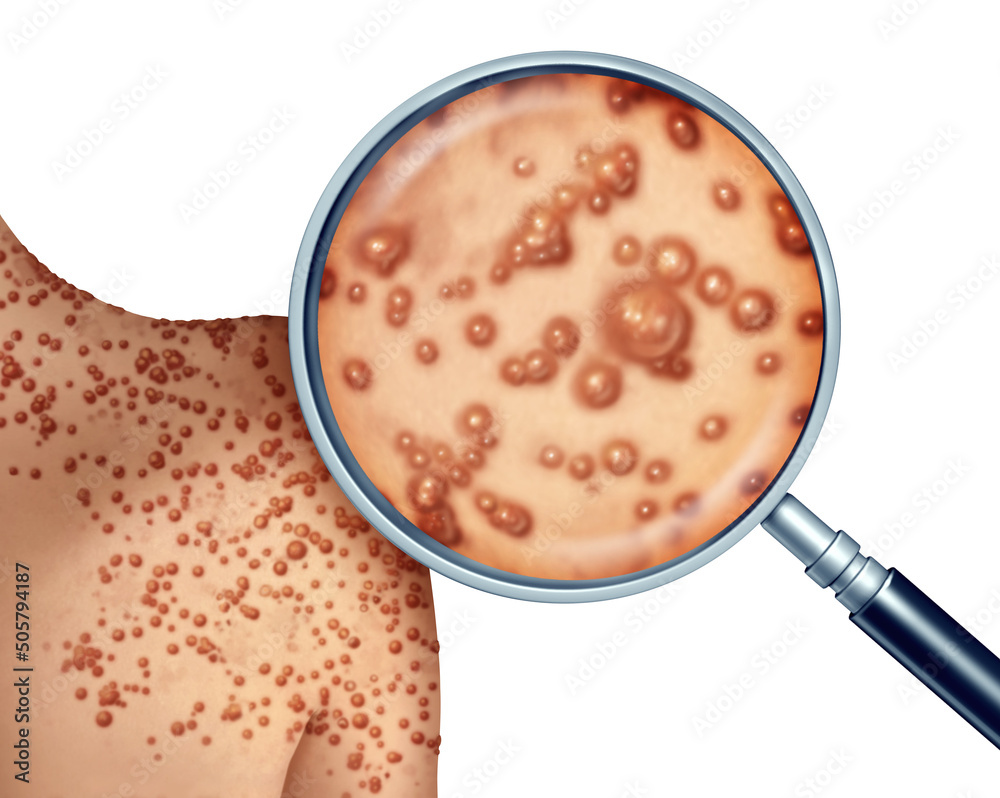
The 29-year-old carries skin rashes and the health authorities of Kefalonia who evaluated the case, considered it suspicious for the disease that has created a disturbance with its gradual spread in more and more countries in Europe and therefore it was transferred to Athens.
In an interview with Open, Pournaras assures that there is no reason to panic. In particular, he said:
«He will be admitted to the negative pressure unit in the special infections unit of Atticus, which is a safe unit with good staff. We knew there was something related, that it looked like monkeypox. It's nothing terrible, there's no need to panic. It sounds heavy-handed, but it has to be proven and it's not very contagious.».
«The girl accompanying him has no symptoms. She will be hospitalized with him as a precautionary measure. The first samples will go to the reference laboratory of the Aristotle University of Thessaloniki, where Professor Pappa is an expert in these rare viruses and we expect the results very quickly, probably on Monday,» Pournaras continued.
As the professor assured, the tourist is in good hands. «Sotiris Tsiodras is in charge of the control of the incident with Anastasia Antoniadou, the other professor of infectious diseases at Atticus».
«It is not a highly contagious disease. It is not transmitted from afar. It requires close contact from the respiratory tract. It has never become a common disease in the western world, more so in Africa, it is common, but not in Europe and the US,» he explained.
«It starts with fever and cold symptoms, fatigue, malaise... Then the rash appears. She has her period incubation period of one to two weeks. Initially, it has symptoms of a common cold. The rashes are slightly scary, but the disease is not severe,» he said at the end.
Monkeypox: what we know so far
Two weeks ago an epidemic outbreak of monkeypox outbreaks was detected for the first time in the UK causing concern among public health experts.
The spread of cases of smallpox in monkeys is increasing around the world, and its transmissibility is still unknown. For this reason, it is necessary to inform health professionals to take the necessary precautionary measures, as well as the degree of contagiousness of the virus, stress the doctors of the Therapeutic Clinic and the Medical School of the National and Kapodistrian University of Athens, Gianna Rentziou, Theodora Psaltopoulou, Maria Kantzanou, Yannis Danasis, Rodanthi Eleni Syrigo, Panos Malandrakis, Dimitris Paraskevis and Thanos Dimopoulos (Dean of the National Academy of Sciences), summarizing the latest data on monkeypox as published in the scientific journal Nature.
Epidemiology-Pathogenesis-Clinical picture-Diagnosis-Treatment
The simian smallpox virus belongs to the genus Orthopoxvirus of the family Poxviridae, in the same genus as variola, which causes smallpox and has been eradicated worldwide since 1980. The simian smallpox virus was first discovered in 1958 in monkey colonies and was first identified in humans in 1970 in the Congo. Since then, local outbreaks have been observed in countries in West and Central Africa, with the latest and most important epidemic outbreak in Nigeria with more than 500 confirmed and suspected cases, according to APE-MPA. In Europe and specifically in the UK, seven cases-associated with travel to endemic countries-have been detected since 2018.
The incubation period is usually 5-21 days and the virus is transmitted between people through the respiratory system by inhalation of large droplets and through contact with skin lesions or infected materials (e.g. bed linen or towels used by a patient). The disease is manifested by fever, headache, myalgia, lymphadenopathy and a rash, usually starting on the head and extending to the trunk and including the palms of the hands. The rash initially appears in the form of spots and papules, which develop into small blisters, pustules and then into vesicles which eventually subside. This rash is sometimes confused with the chickenpox rash. The disease usually lasts 2-4 weeks and in the majority of cases is self-limiting. Diagnosis is made by isolation of the virus in culture, detection of viral DNA by PCR in a clinical specimen or detection of the presence of orthopox-virus in tissues by immunohistochemical methods.
Treatment focuses mainly on improving symptoms. Regarding antiviral therapy, two drugs approved for the treatment of smallpox are also considered effective against monkeypox: tecovirimat, the treatment of choice in combination with brincidofovir in patients with severe disease. Mortality in African countries ranges between 1-10% for Central African strains, while for West African strains, which are those identified in the recent outbreak in Europe, mortality in Africa is about 3%. No deaths were recorded in the epidemic outbreaks in the Western Hemisphere.
Why is monkeypox virus of concern as a public health pathogen?;
One of the main causes for concern is the sharp rise in cases, as by the afternoon of 21 May 145 cases (confirmed and suspected) had been recorded in 9 European countries as well as the United States, Canada, Australia and Israel, as Moritz Kraemer, PhD, associate professor at the University of Oxford, points out. Also, another concern is the possibility of human-to-human transmission without a history of travel to an endemic area, which means there is horizontal transmission in the community.
The biggest question is, as Andrea McCollum, an epidemiologist in the CDC's Poxvirus Division, points out, how easily it is transmitted from person to person. For this reason, Mr Osterholm, director of the University of Minnesota's Center for Infectious Diseases, predicts the possibility of dynamic transmission of the virus due to its as yet unknown transmissibility. Jennifer McQuinston, deputy director of the United States Center for Disease Control and Prevention, said that «given the confirmed cases in Portugal, and suspected cases in Spain, and given the finding of cases in many countries around the world, it is still unknown how large the spread of the virus will be, and given the frequent movement between countries, we will see incidents around the world».
Finally, Marion Koopmans, DVM, PhD, director of an Erasmus department focusing on virus research, points out that the epidemic outbreak is becoming worrying as cases are being detected in different countries, unusual for the monkeypox virus which is not as contagious.