By Maria Antoniadou
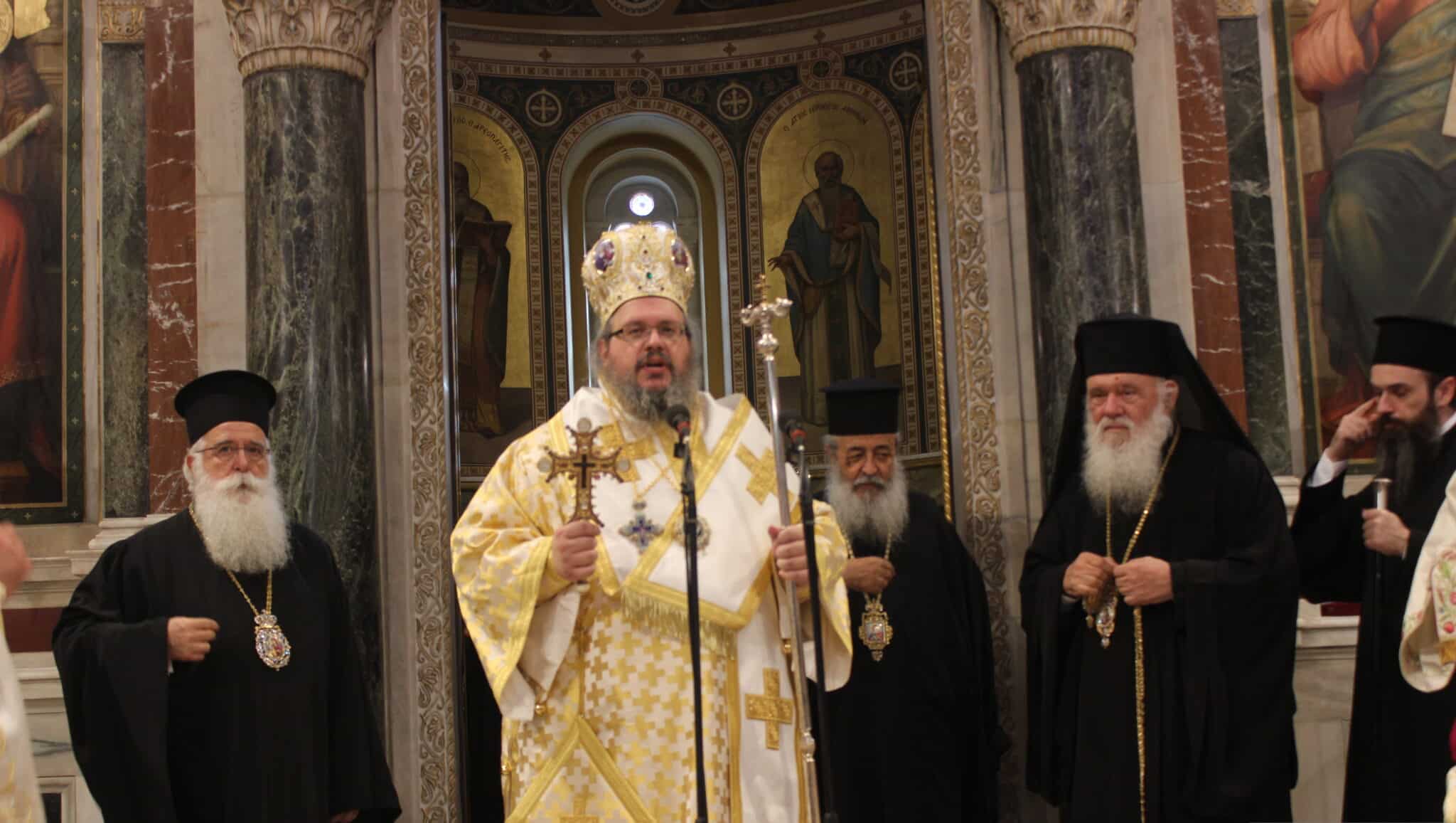
The Hierarchy of the Church of Greece is experiencing the greatest and deepest crisis of the last 100 years. From the very beginning of the pandemic, the clergy and the hierarchy refused to accept the seriousness of the situation, while in many cases they conveyed dark messages to the flock and «sprayed» opinions of the type that the virus is not transmitted through Holy Communion and that the only effective way to deal with the virus was... faith. Subsequently the suppression of the cases, the concealment of the facts, the «timid» acceptance of the fact and in some cases ambiguous misleading statements put the hierarchy in an extremely unfavourable position.
The illness of Archbishop K. Ieronimos, the death of the late Metropolitan John of Lagada, the information about hierarchs who go in and out of hospitals without making their illness public, the priests, deacons and chaplains, the guides who have fallen ill and some have even left the life, many monasteries that have closed their gates because nuns and monks are ill, from Alexandroupolis to Meteora, have caused friction within the hierarchy. The majority of the high priests are currently choosing silence because of the dysfunctional situation.
Leading scientists with strong spiritual ties who are the «arsenal» of the Church tried to warn the hierarchs, but they were only listened to after the problem had grown.
The conspiracy theories
The cries from priests for the use of masks in the churches and the attempt by a priest to distribute Holy Communion soaked in a counter-gift and distributed to the faithful with a paper towel, as happened in a parish in Athens, caused the indignation of the staff of the Archdiocese, many of whom were careful to express their strong objections in public. The priest who took this action in order to protect his flock was reportedly asked by the Archdiocese to stop his «innovations».
On the contrary, three clergymen, adherents of the notion that everything in the church is purified - that is, even the dust, as an archpriest ironically commented - who serve in the parishes of the Archdiocese and who urged the faithful not to believe what is said about the pandemic, were allowed to broadcast their sermons through modern media. Thus, with the help of social media, a large portion of the faithful deeply believed these conspiracy theories, to which, after all, many of them are prone. And this «toxicity» was transmitted from one end to the other of parishes and monasteries throughout the country.
They knew the problem
For months the Holy Synod limited itself to a few announcements and the whole issue was handled by the Archdiocese, as is the case today, at the same time that everyone was aware of the tragic events that occurred in the Patriarchate of Moscow with the loss of archpriests and Patriarch Kirill himself being quarantined twice. Even more striking is that the Church of Russia created a special observatory with which it provided concrete data, took measures regarding Holy Communion and the distribution of the Antidoros, the crowding of the faithful and constantly issued announcements in response to the accusation of «ultra-Orthodox». On the contrary, the Greek Church, because of the courageous decision (for a politician and even of the conservative party, who draws power and votes from the congregation) of the Prime Minister Kyriakos Mitsotakis to close the temples in the first phase of the pandemic complacent its leaders, and today it is paying a heavy price.
The «cluster bombs»
The majority of the metropolitans are constantly talking on the phone. They are aware of the problem, but none are willing to take a stand. But everyone recognizes and accepts that the feast of St. Demetrios in Thessaloniki and the table of the metropolitans on the feast day of the Archangels in the Synod Hall turned into a «bomb» for the spreading of the coronavirus. Just as a nuclear bomb for the Patriarchate of Serbia was the death from coronavirus of the Venerable Metropolitan of Montenegro Amphilohije, a leading high priest, and his funeral procession without masks by the late Patriarch of Serbia Irenaeus and the thousands of faithful who gathered in Bodgorica to bid him farewell. It was on the same days that the Romanian government banned the feasts of St Demetrius and the celebration of the great festivals in Iasi, and the Romanian Patriarchate spoke of the deprivation of religious freedom protected by the Constitution and international treaties.