These are three important Signs which were found in the building complex 2 of the Early Byzantine period, the uncovering of which was completed this year. The first inscription is «an interesting honorific inscription concerning a Cleared from Aetolia and relates to a well-known incident attested by inscriptions found earlier in Athens (IG II2 682 and 549), which refer to Pirate Glacier who had occupied Kythnos at the end of the 4th century BC. The inscription confirms an earlier hypothesis that Glayketes had the support of the Macedonians and was eventually driven out by the Athenians», notes the announcement of the Ministry of Culture, referring to this year's results of excavation research.
«Two inscribed stones, found in the demolition of another room, apparently all in second use. The inscriptions are very important. One, in Doric dialect is a resolution of the Municipality of Kythonia that sets out some building restrictions and the fine that will be levied in case of violation. The other long inscription is an honorary one and refers to the important honors bestowed by the Municipality and the Parliament of Kythnia on a person whose name unfortunately does not survive. It is interesting that in second use on the fortification of the early Byzantine complex a marble pedestal of a statue was revealed that on its front side saves cavities in circular arrangement, apparently for the fixing of two epithets,» the same statement adds.
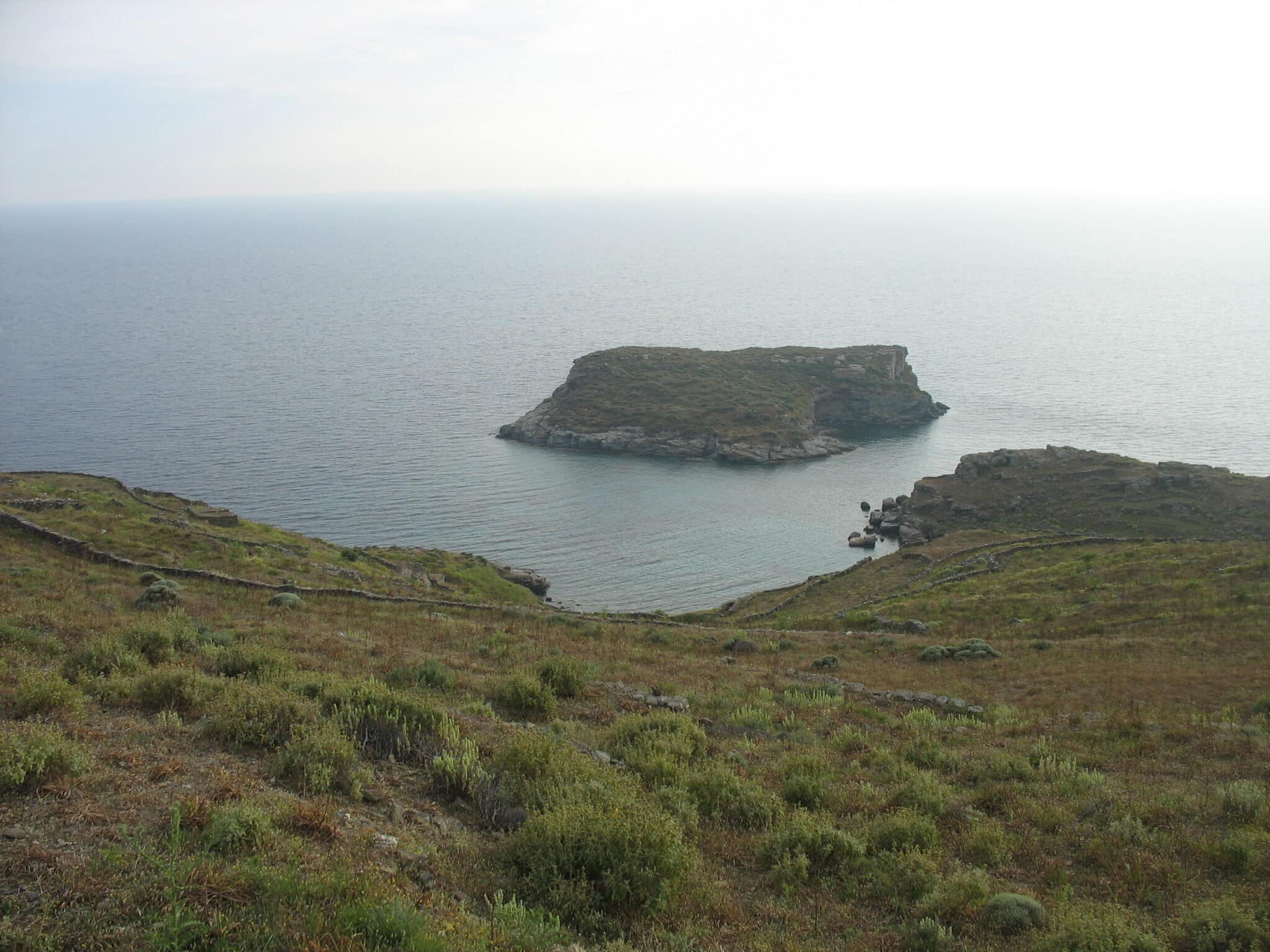
Note that the position in the Vryokastraki «inhabited uninterruptedly by 12th century BC. until the 7th century AD, while there are now clear indications of the presence of a Cycladic settlement of the 3rd millennium BC.» As for this year's work, it «focused on the three areas investigated since 2018: the monumental sanctuary of the Geometric-Classical period, the elongated Building 2 of late antiquity and the three-aisled early Byzantine basilica».
As for the ancient sanctuary discovered in 2019, «collected excellent quality pottery of the Geometric and Archaic periods. The shapes are mainly small closed ones, such as Hydras, oenochochochos and prongs, and there is no shortage of miniatures. The finds include a few clay figurines, mainly of female figures and some bronze offerings, such as miniature buckles and other jewellery. These finds probably refer to some kind of female deity. Moreover, they lead to the conclusion that the hill was built during the classical times in order to create a hill for the construction of a temple, from which only some carvings on the rhizome rock survive, as the early Byzantine settlement developed in the area. To the east there was a monumental altar carved into the natural rock, now very eroded».
Finally, the exterior and perimeter of the three-aisled Early Byzantine basilica was excavated, in order to further highlight the monument, as well as to investigate the presence of possible annexes. Among the finds were walls, but also marble members that had been used as spolia (i.e. older structural elements that had been reused). «For safety reasons, some of these, such as the fragments of a table top with a lion's foot end, were removed and transferred to the archaeological collection of Chora,» the ministry's statement informs.