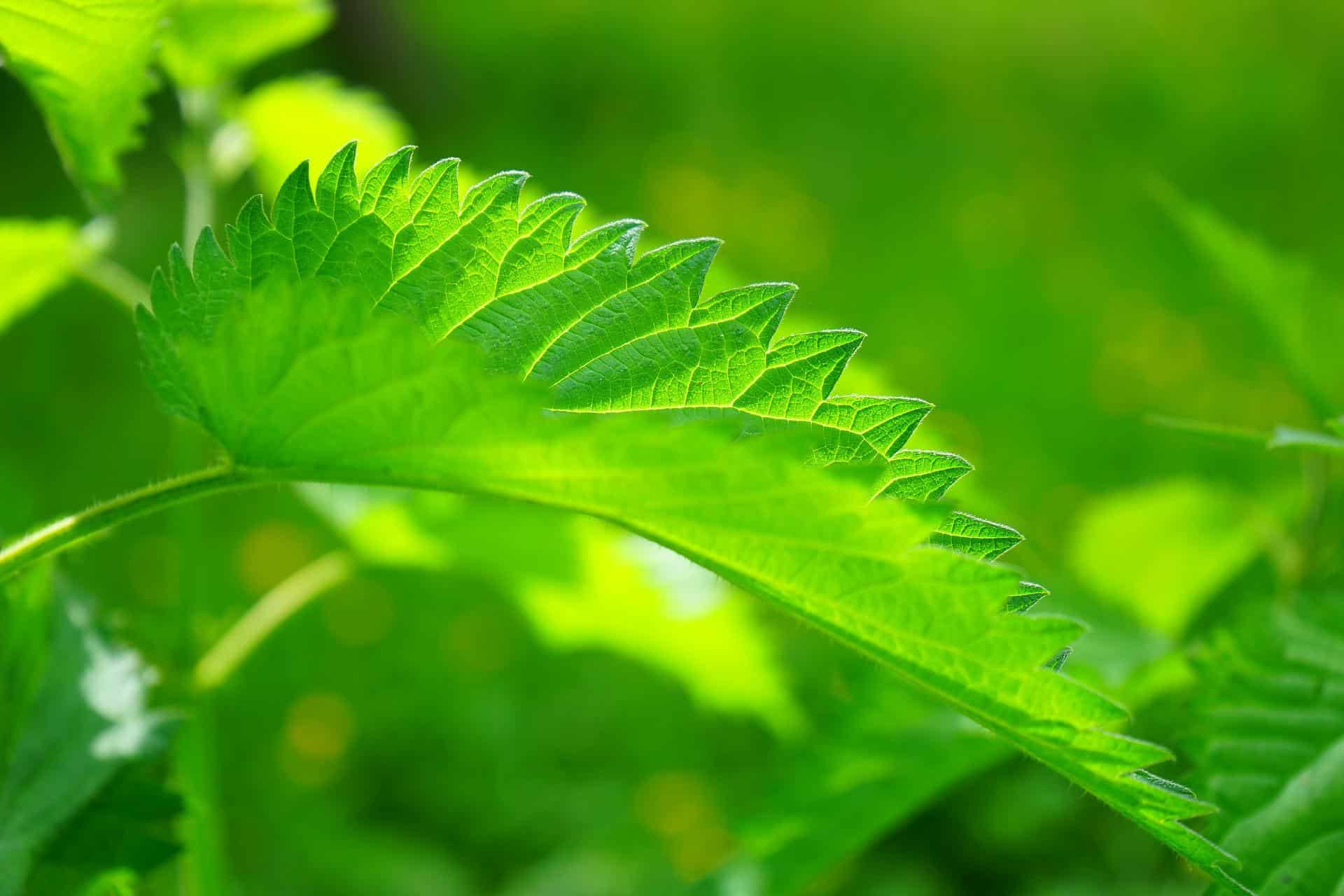
It is one of the most common native plants found throughout Europe, but also in Africa, Asia, Australia, and North America. The reason for this is stinging nettle, the perennial, herbaceous plant that causes the discomfort we all know on contact. The scientific name of the plant itself (Urtica dioica L.) comes from the Latin verb «urere», which literally translates as «to cause burning».
However, as Dr. Dimitrios Bilalis, Professor of Agriculture and Organic Agriculture at the Agricultural University of Athens, told the Athens-Macedonian News Agency, «what many people are unaware of is that apart from being an annoying weed that causes urticaria, it is also a promising alternative crop.».
Its cultivation for fibre production was widespread in Europe from the Middle Ages onwards, while one of the earliest references to the manufacture of nettle textiles dates back to the Byzantine period. Countries such as Germany and Austria were traditional powers in the production of textiles made from this plant as a raw material. «A milestone for its cultivation was the First World War, when the clothing of German soldiers was based on nettle fabrics due to tariffs on cotton,» said Mr Bilalis. In Greece, nettles, like flax and hemp, were grown for the production of fabrics, ropes, and paper, but over time cotton cultivation displaced them.
The plant is also characterized by high nutritional value as it is an excellent source of vitamins, antioxidants and trace elements. According to research, the consumption of nettle can help in the treatment of a variety of conditions, including sugar, allergies, respiratory problems and prostate diseases.
Recently there has been renewed interest in nettle cultivation within the European Union. «The European Green Deal and Farm 2 Fork aim to reduce losses from fertiliser use by 50% by 2030. Alternative crops with reduced fertilisation needs, such as nettle, could facilitate the achievement of these targets“, Mr Bilalis pointed out, adding that ”in addition, we must also take into account the climate crisis and soil degradation, which force us to switch to crops with greater adaptability and resilience to extreme climate changes. This is also why nettle cultivation has been included in the special green measure to support producers for the introduction of innovative crops».
In our country, the yields of the crop in fibre can be close to 150 kg/ha. Speaking to the Athens-Macedonian News Agency, the PhD candidate, Mavroeidis Antonios, stressed that «the literature suggests that yields of 200 kg/ha are feasible, and even with the application of relatively low levels of fertilization» and added that «our goal is to improve the crop as a whole and ensure the stable production of high quality fibre. That is why we are studying the interaction between plantation density, fertilisation, final fibre yields and also the quality characteristics of the fibre.’.
Th. Papakostas