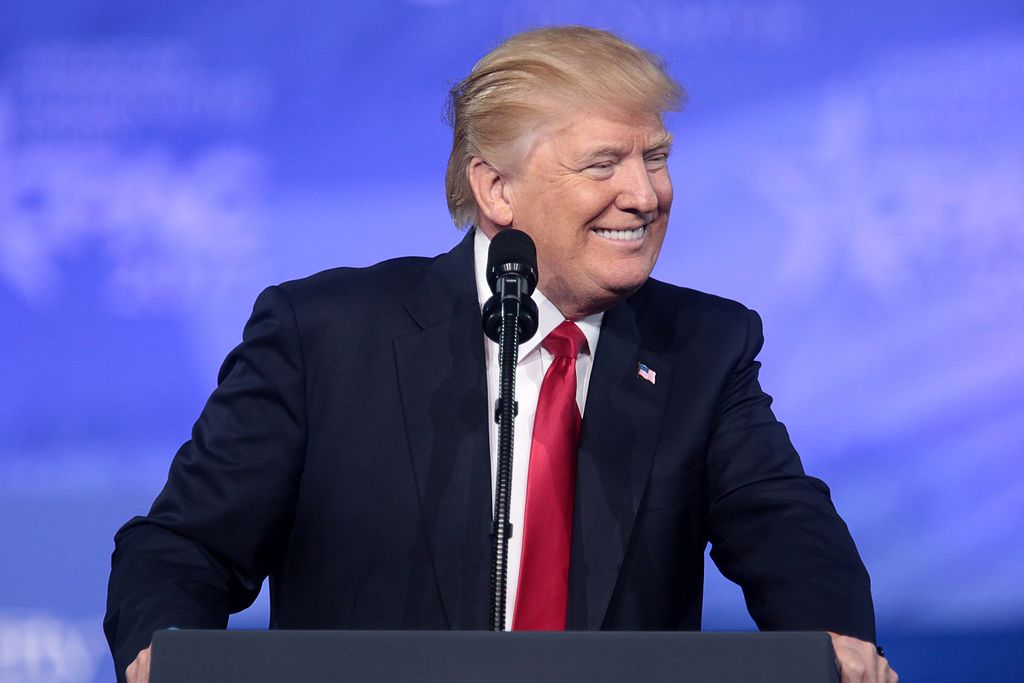
US President Donald Trump has decided to extend the de-escalation on the customs tariff front with China for 90 days, just hours before the truce between the two powers, the world's largest economies, was due to end.
The head of state signed an executive order formalizing the truce, while clarifying via Truth Social that all other elements agreed upon by both sides «remain the same.».
China «continues to take significant steps (...) to address US concerns regarding its economic and national security,» explains the decree published by his White House staff, adding that Mr. Trump considered it «necessary and appropriate to maintain» the truce in the trade war until November 10, with the application of «base» tariffs 10% on Chinese imports.
Almost simultaneously, the official Chinese news agency Xinhua reported on a joint statement issued following Sino-US negotiations in Stockholm, announcing that Beijing would also extend the truce.
China is thus continuing the suspension it had announced on August 12 for 90 days, while also maintaining, like the other side, the additional 10% tariffs on US imports, according to the same source.
After becoming embroiled in a bitter trade dispute in the spring, exchanging barrages of prohibitive customs duties in the triple digits, Washington and Beijing reached a 90-day truce agreement in May in Geneva.
Provisionally, that agreement set US additional tariffs on Chinese products at 30% and Chinese tariffs on US products at 10%.
Further rounds of negotiations between senior officials from both countries followed in London and Stockholm to prevent further escalation and keep the ceasefire on track.
Earlier yesterday, Donald Trump stated at the White House that trade negotiations between the two sides are going «pretty well.».
«The relationship between (Chinese) President Xi (Jinping) and me is very good,» the head of state also told the press.
Beijing, for its part, has repeatedly stated that it wants a «positive» outcome to the negotiations it is conducting with Washington.
«We hope that the US will work with China to implement the important consensus reached during the telephone conversation (ed. in June) between the two heads of state (...) and will strive to achieve positive results on the basis of equality, respect, and mutual benefit,» said Lin Jian, spokesperson for the Ministry of Foreign Affairs, in a statement.
US Trade Representative (USTR) James Greer stated after the conclusion of negotiations in Sweden that Donald Trump would have the «final say» on whether or not to extend the tariff truce.
The US president seemed determined to extract last-minute concessions. On Sunday night, he called on China via Truth Social to «quadruple its purchases of US soybeans.».
Beijing is «concerned about soybean shortages. Our great farmers produce the best soybean varieties,» Donald Trump proclaimed, assuring that these purchases would «significantly reduce» the US trade deficit with China, thanks to the rapid increase in Chinese imports. The message concluded: «Thank you, President Xi.».
Moreover, the Republican stated yesterday that gold will not be taxed and will remain unaffected by the new costs that have been imposed.
Following the publication of an article in the Financial Times and the release of a US customs document, investors became concerned at the end of last week about the possibility of additional tariffs being imposed on precious metals. Their prices skyrocketed.
After returning to the White House in January, the US president imposed waves of new customs duties on almost all products imported into the US.
They range from 10% to 50% per country, excluding sectoral tariffs that affect specific sectors (automotive, steel, etc.).
The Republican has not stopped threatening that new tariffs will be imposed, either in the name of protecting American industries (pharmaceuticals, semiconductor and microchip manufacturing, etc.) or, in some cases, as a form of punishment against specific countries for political reasons.