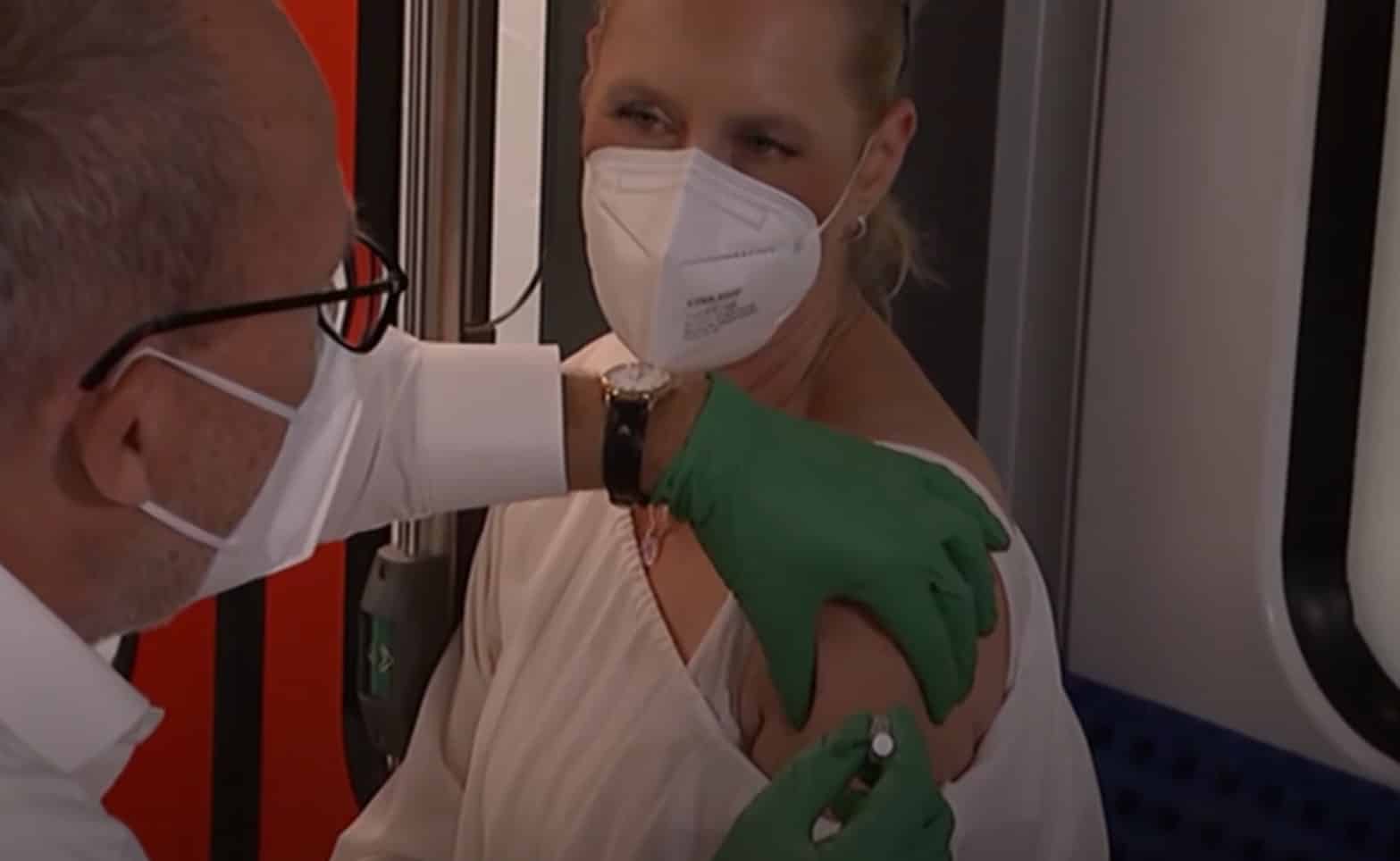
Further announcements regarding the granting of [...], are expected today COVID-19 booster shot in population groups at high risk of infection. The National Commission for Vaccination has issued a positive recommendation regarding the administration of a third dose to immunocompromised, for whom the appointment platform opened on September 14, to people residing in Care units for the elderly, people over the age of 60, and healthcare.
The announcements will be made during the regular briefing on the National COVID-19 Vaccination Plan by the chair of the National Vaccination Committee, Maria Theodoridou and the Secretary General of Primary Health Care, Mario Themistocleous.
The third dose—except for immunocompromised individuals, for whom it may be administered as early as 4 weeks after completion of the primary vaccination series—is given six to eight months after the second dose. The third dose of the vaccine will be an mRNA vaccine for individuals who have received two doses of an mRNA primary series, two doses of the AstraZeneca vaccine, or one dose of the Johnson & Johnson vaccine.
Speaking on ANT1, Mr. Themistokleous said that The third dose will not be mandatory, but it will be recommended. He added that approximately 10,000 appointments have already been scheduled by people in the immunocompromised group.
Η Vana Papaevangelou, a member of the National Vaccination Committee and the Ministry of Health’s expert committee on COVID-19, explained the rationale behind the decision to administer a third dose to population groups at high risk of infection.
“Scientists distinguish the third dose for immunocompromised individuals and the elderly—those over 80—where the third dose appears not to be a booster shot, but rather a boost to immunity, because did not respond very well to the first doses due to immunosuppression and their age“.
”There is also a need for people over the age of 60 to receive a third dose of the vaccine, since, according to scientific data, the strength of the immune response is also influenced by age.” “We have announced,” adds Ms. Papaevangelou, that people over the age of 60 will also need a third dose of the vaccine, because various laboratory studies as well as epidemiological data demonstrate that The older a person is and the longer it has been since their second dose—at least six months—the greater their chances of contracting the virus“, while making it clear, however, that the chances of him becoming seriously ill and dying are slim.
Healthcare workers are treated differently, Ms. Papaevangelou noted, emphasizing that they constitute a separate category. These are individuals with a history of exposure to the virus. Maintaining the vaccine’s effectiveness in preventing infections among healthcare workers is crucial for curbing the spread of the virus in the workplace and at home, but also to prevent the strain on the healthcare system that could result if a large number of healthcare workers become ill.
When asked about expanding the administration of a third dose to the general population, Ms. Papaevangelou said that there is still some skepticism.
Commenting on the WHO’s position against the widespread administration of booster doses to healthy people who are fully vaccinated, in order to allow poor countries to proceed with immunization, Ms. Papaevangelou states that the WHO is correct regarding the vaccination of populations in low-income countries “because that is where mutations will emerge, which may also reduce the vaccine’s effectiveness for us.”.
The professor emphasizes, however, that those who have passed the six-month mark after vaccination—during which, according to studies, protection against infection decreases— must protect themselves, and she adds that there is also a benefit for the community, as the spread of the virus—the R0—is reduced.
At the same time, he emphasizes the need to adhere to protective measures, as well as the effectiveness of vaccination, which has contributed to a milder course of the pandemic, which is why, as he notes, special emphasis is always placed on informing people who have not yet been vaccinated, in the belief that there is still room to convince them. He emphasizes that ”the spread will be reduced most effectively if we convince the unvaccinated to get vaccinated.”. ”An unvaccinated person is 10 times more likely to become ill than a vaccinated person who was vaccinated at least 7 months ago.".