Lithium, cobalt, vanadium, graphite, and bismuth are some of the raw materials of critical importance to the EU. Specifically, the 2020 list of this category of raw materials contains 30 materials, compared to 14 in the 2011 list, 20 materials in the 2014 list, and 27 materials in the 2017 list.
The European Commission considers raw materials to be of critical importance when they are essential to the economy but cannot be reliably extracted within the EU and are therefore imported.
Raw materials that are essential for advancing digitalization and future technologies are of particular importance.
Bauxite, lithium, titanium, and strontium have been added to the list for the first time, while helium, although it remains a source of concern, was removed from the 2020 list due to a decline in its economic importance.
DEPENDENCE ON TURKEY
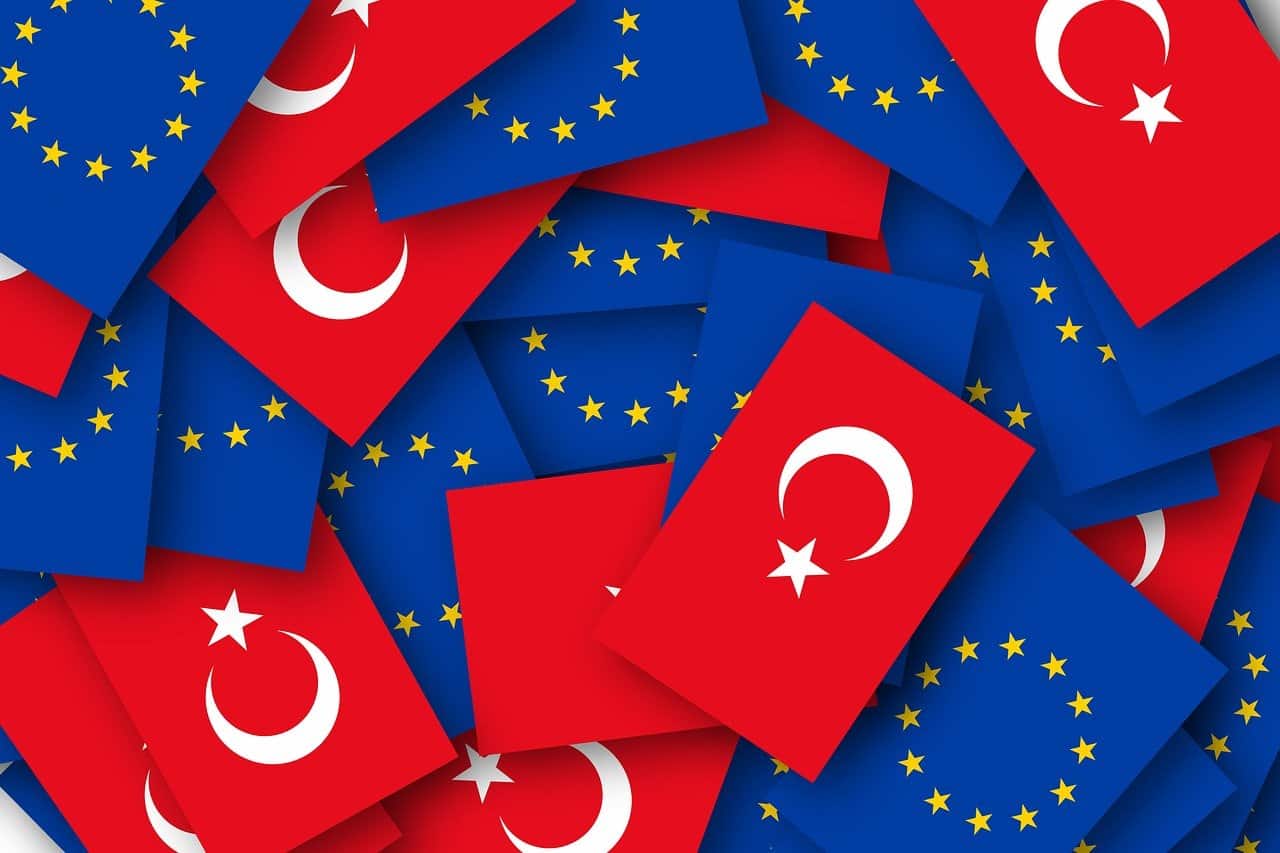
Turkey exports two critical raw materials to the EU: antimony and borates. In fact, the EU is completely dependent on Turkey for these raw materials.
For antimony, the EU’s dependence on imports from third countries stands at 100%. Turkey exports 62% of the antimony the EU needs. Antimony is used in the defense and aerospace industries, the textile industry, the automotive industry, and construction.
For boric salts, the EU's dependence on imports stands at 100%.
Turkey exports to the EU 98% of the boron compounds it needs, which are used in the defense and aerospace industries, in electronics, in the automotive industry, energy-intensive industries, renewable energy, the agri-food sector, the digital sector, and construction.
Along with migration flows, boric salts and antimony constitute a second lever that Ankara can use as it sees fit, with unpredictable consequences.
THE EU'S PATH TO INDEPENDENCE
The EU’s dependence on third countries for critical raw materials has raised concerns in Brussels. Breaking this cycle of dependence is a priority for the Commission, with the focus on reducing dependence on China.
The EU depends on Chinese exports of 38% of barium, 93% of bismuth, 27% of gallium, 17% of germanium, 93% of magnesium, 47% of natural graphite, 9% of phosphorus, 11% in silicate minerals, and in unspecified proportions in titanium, tungsten, and vanadium.
The Brussels plan includes the creation of an «EU Alliance for Critical Raw Materials.» The alliance’s priorities include developing advanced technology for batteries and hydrogen as a fuel, securing the supply of rare earths and other elements used in the manufacture of magnets, and promoting innovation investments in the EU. The market’s 80% dependence on Chinese-made batteries for new electric vehicle technology is a source of concern for the Commission. The European strategy also includes the use of the «Copernicus» satellite to locate deposits and manage existing ones.
The pandemic has revealed a grim reality for the EU, as it has brought to light the vulnerabilities of the European economy. From batteries to renewable energy, the coronavirus has revealed a bitter truth: Europe cannot go it alone; it is dependent on specific products, raw materials, and supply chains.
This explains the European Commission’s counteroffensive, as it realized that without materials such as strontium and cobalt, there is no basis for its Green Agenda.
The correlation between the EU’s dependence and the nature of the political systems in importing countries lends additional significance to the issue. The European Commission believes that dependence on countries with authoritarian regimes must be broken. That is, reducing dependence on imports of magnesium—classified under 93%—used in the manufacture of computers and car seats from Xi Jinping’s China, 85% of niobium used in aviation fuels and natural gas pipelines, sourced from Jair Bolsonaro’s Brazil; and 98% of boric salts used in refractory products and sourced from Turkey under Recep Tayyip Erdoğan.
The experience of dependence on the Russian natural gas monopoly has shown that there is a risk the EU would not want to take again, particularly in the electronics and renewable energy sectors, where Beijing wields significant influence. And this risk grows even greater when one considers that most of the cobalt produced in the Congo, as well as Australian lithium, is processed in China before being exported to the EU.
Given these facts, Turkey is well-positioned vis-à-vis the EU. It may depend on European know-how in various sectors, but it has also created strong ties that make the EU dependent on critical raw materials.
By Vangelis Chorafas
Source: https://www.facebook.com/vangelis.chorafas
*Vangelis Chorafas, director of the geopolitics website https://www.geoeurope.org/, publishes original articles and analyses daily on his personal Facebook page (https://www.facebook.com/vangelis.chorafas).