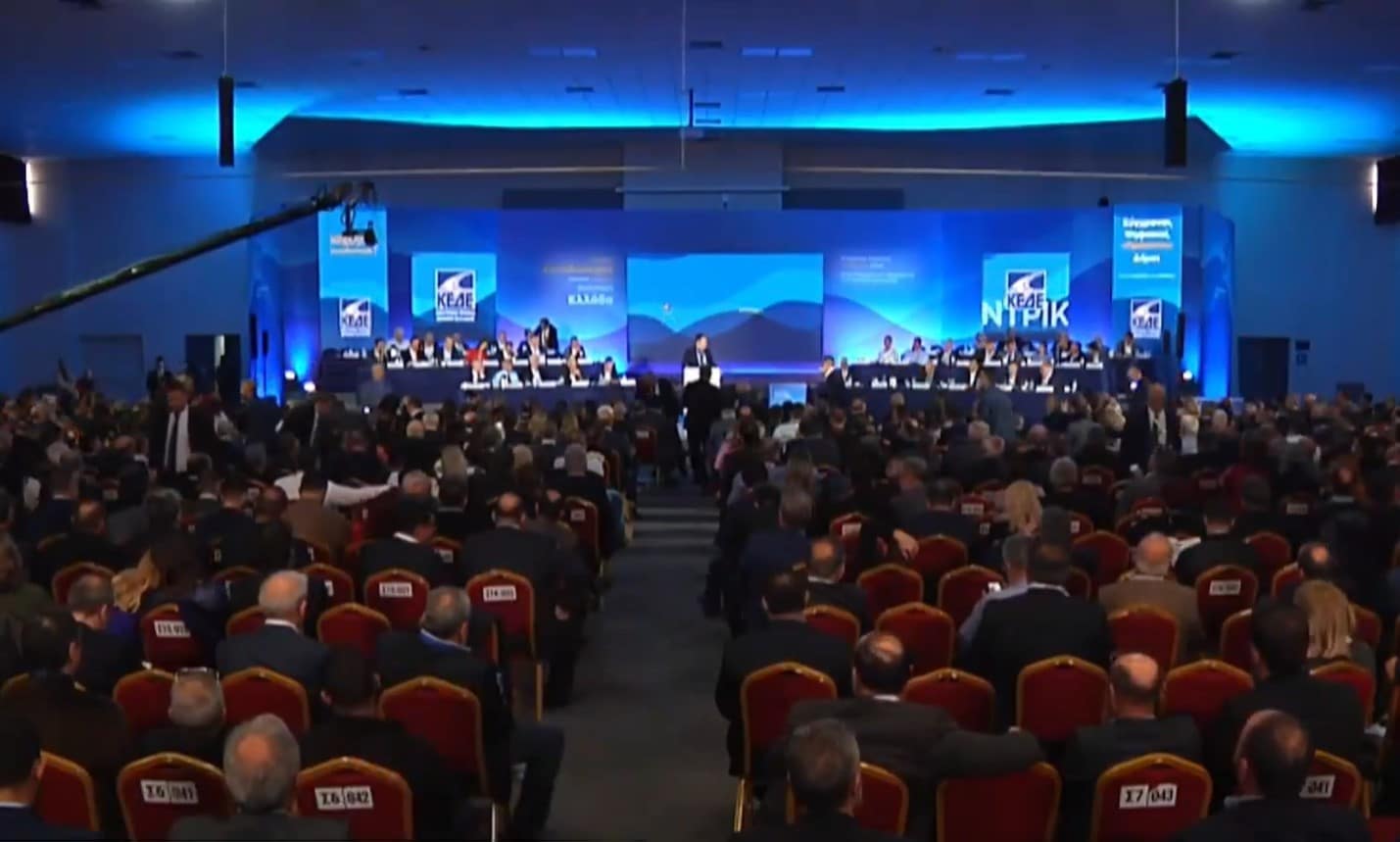
The Annual Regular Conference of KEDE (Central Union of Municipalities of Greece) held in Volos from November 21-23 has concluded, with the highest attendance in recent years. More than 1,800 delegates and observers attended the three-day conference, where all the important issues concerning first-level local government were discussed.
After extensive discussion, the members of the General Assembly of KEDE reached a majority decision on a series of policy positions and proposals, which will be brought to the attention of the local government, the government, and the political parties of the National Parliament.
Detailed text of the conclusions of the Annual Conference of KEDE.
Text of conclusions from the Annual Regular Conference of the Central Union of Municipalities of Greece
The Annual Regular Conference of KEDE was held in Volos from November 21-23, 2022, with the highest attendance in recent years. More than 1,800 delegates and observers attended the three-day event, where all the important issues concerning first-level local government were discussed.
The members of the General Assembly of the Central Union of Municipalities of Greece, after extensive dialogue during the proceedings of its annual Ordinary Conference, held in Volos from November 21-23, 2022, agreed on a series of policy positions and proposals, which are brought to the attention of the entire local government, the government, and the political parties of our National Parliament.
For the members of the General Assembly of KEDE, upgrading the institutional and operational role of first-level local government, based on proximity, decentralization, and efficiency, is a priority, because we believe that strong local government means a better Greece.
Our Conference, held at a particularly critical juncture, marked by intense geopolitical changes and events such as the war in Ukraine, the energy crisis, and the sharp increase in the cost of living, provided an opportunity to discuss all the major issues concerning the functioning of first-level local government.
As well as seeking ways and means that will enable us to transform our municipalities into modern, green, and digital ones, for the benefit of the citizens of our local communities.
We had the opportunity to present everything that KEDE and the first-level local government have achieved together in recent years, but also to highlight everything that has not been done to date, which will enable us to respond adequately and effectively in our institutional role, since our long-standing, fair, and timeless demands remain unresolved.
For the first time, KEDE presented a new, transparent, fair, and sustainable model for the distribution of CAPs.
A model that meets the needs of municipalities for the coming decades, treats municipalities with the same characteristics equally, ensures that no municipality will receive less money in the future than it does today, and supports small mountain and island municipalities in practice, constituting an essential tool for strengthening cohesion policy.
This model can be implemented from January 1, 2024, once it has been finalized by the new elected administrations that will emerge from the local elections in October 2023, with the necessary prerequisite being the strengthening of the CAPs by at least 15%, as already committed to at the previous conference.
Despite the positive steps forward that have been taken, there are still many important issues that have not yet been resolved, which are necessary in order to make local government a key pillar for the productive reconstruction and development of the country, as well as for strengthening social protection and solidarity.
Our priorities
Based on the new data, the First Degree Local Government, following the KEDE Conference in Volos, unanimously demands:
- upgrading the statutory status of its elected staff.
- strengthening the financial and administrative autonomy of municipalities so that they can meet their statutory obligations and provide quality services to citizens.
- the immediate promotion of renewable energy sources and the financing of municipal energy communities, together with innovative energy storage models
- a new decentralized model of state administration, with redistribution and clarification of responsibilities.
- immediate support for municipalities, with new highly skilled staff, so that they can respond to their increased responsibilities.
- further promoting digital transformation by promoting the “smart cities” operating model.
- promoting the circular economy model, sorting at source, and sustainable mobility as the only solution to tackle the consequences of the climate crisis.
- the exclusive competence of municipalities in matters relating to waste management and utilization, as well as the suspension of the landfill tax for 2023.
- upgrading the role of municipalities in matters of social welfare, education, health, and civil protection.
In light of the above, we require:
- With regard to governance of municipalities and the improvement of the operating model them
Significant positive steps have been taken in this direction.
- The change in the electoral system for local government elections, which was demanded by the majority of elected local government officials, strengthens the governability of municipalities.
- Law 4782 on public procurement has helped us gain the flexibility we need to quickly and effectively provide solutions to the issues facing our municipalities.
- All the steps taken to date on the initiative of KEDE and in cooperation with the municipalities for digital transformation, the creation and operation of modern digital platforms, applications, and services to facilitate municipal services and better serve citizens. However, the effort does not stop there.
However, the steps taken so far are not enough. That is why we demand:
- To proceed immediately and without any further delay with the Reform of the functioning of the state and local government. With regard to the content of the Reform of the State, we support the need for decentralization, multilevel governance, and redistribution of responsibilities, based on proximity, subsidiarity, and effectiveness.
- To this end, KEDE has submitted a position paper to the Ministry of the Interior as a basis for dialogue on the content of the reform.
- With regard to Municipal finances
A series of important positive steps have been taken.
- After a decade of sharp cuts in local government funding and reductions in CAPs, in the three-year period 2020-2022 our resources from CAPs for operating, investment, and special expenditures increased by €311 billion (€6.95 billion) compared to the three-year period 2017-2019 (€5.3 billion).
- For the first time in many years, municipalities are being given significant opportunities to carry out projects, utilizing resources from the «A. Tritsis» Program, Programs from the NSRF (Smart Cities), the Recovery Fund (Road Safety Program), the «Modernization of KEP» Program, the Electra Program, the Green Fund, etc.
- The disbursement by the Ministry of the Interior of emergency subsidies amounting to €1.2 billion to cover the emergency needs of municipalities.
- The public commitment made at our Conference by the Minister for Climate Crisis and Civil Protection to allocate €130 million through the Recovery Fund for the purchase of civil protection equipment by municipalities in order to meet their needs in this area.
- Approval for payment in 2023 of the 13of CAP, amounting to €120 million.
- We are awaiting the implementation of the commitment made at the Thessaloniki conference in 2021 to increase the annual CAP by €320 million from 1 January 2023.
A number of issues remain pending. financial issues, for which we demand immediate solutions. We do not accept any transfer of new responsibilities or powers to municipalities without the transfer of the necessary resources.
In this context, we request:
- The implementation, from January 1, 2024, of the new model for the allocation of CAPs to municipalities, as presented at the Volos Conference and to be clarified in detail in the near future, following consultation with the relevant local government bodies.
- The establishment of a special aid scheme for the financing of DEYAs from the state budget, with the aim of covering the additional energy costs of approximately €100 million incurred by their operation, based on actual consumption data. The promise of a return of just €20 million to date does not solve the problem.
- An increase in the resources paid to municipalities through the CAP, to the level provided for in the legislation in force, in order to cover all their operational needs.
- The gradual return to municipalities, KEDE, and PED of funds withheld from previous years. We will not stop claiming them; they are municipal funds, and we will not relinquish them.
- The promotion of legislative regulation for the postponement until December 31, 2023, of the repayment of loans contracted between municipalities and the Deposits and Loans Fund.
- The allocation of an additional €130 million to the Recovery Fund's Road Safety program to cover all proposals submitted by all municipalities.
- In order to avoid losing the Recovery Fund's money, all mature projects that do not fit into the A. Tritsis program and are consistent with the Fund's design should be transferred there.
- The immediate operation of the Committee for lifeguard coverage, the settlement of the €20 million difference between expenses incurred and funds allocated to municipalities to date, as well as the cancellation of fines imposed on municipalities that complied with all the required procedures but were unable to find a sufficient number of lifeguards.
- The interoperability of the KEDE (govhub) platform for gross and incidental fees with the AADE VAT information system and the requirement to submit applications electronically only.
- The payment of accommodation tax by hotels and AirBnb (city tax) to municipalities.
- The promotion, by the end of this year, of a favorable arrangement with the option of installment payments for the settlement of old debts owed to municipalities.
- The inclusion in the SATA of the percentage of the Public Investment Program relating to local development projects and its removal from the financing of Sectoral and Regional Development Programs of the Regions.
- Changing the current legal framework that currently exempts concessionaires from paying reciprocal fees.
- The reinstatement of the reciprocal fee on petroleum products and the amendment of the legislative framework for subsoil fees.
- With regard to issues concerning energy and the environment, we request the following:
- The suspension of the landfill tax until the end of 2023. It is not possible to ask municipalities and citizens to pay for the lack of necessary infrastructure for environmentally friendly waste management, the design and implementation of which is the responsibility of the central government. In any case, if our proposal is not accepted, we will implement the decision already taken by KEDE to challenge it in court.
- The reinforcement of FODSA to cover part of the enormous energy costs of operating units, landfills, projects, etc., proportional and corresponding to the subsidies to municipalities and DEYA.
- The issuance of a Joint Ministerial Decision that will allow municipalities without creditworthiness to take out loans with the Public Investment Fund, exclusively for the financing of energy saving projects.
- Full coverage of school energy costs by the central government rather than by municipalities, since school energy costs are the responsibility of the state budget.
- Municipalities should be given the necessary electrical space to create their own wind and photovoltaic parks. Funding should also be provided by the Recovery Fund to cover their own contribution through bank loans.
- Proceed with the completion of the TAP-Municipal Fees information system- Municipal Lighting and interoperability with HEDNO and RAE for providers, financing and implementation of the system by the Ministry of Digital Governance and the Recovery Fund.
- The participation of local government in planning for the future with regard to waste management. The only acceptable development is the withdrawal of the proposed amendment to the ESD, the establishment of the body proposed in Article 166 of Law 4951/2022, and the conduct of an exhaustive dialogue within the framework of European directives.
- With regard to issues concerning municipal staff, The gradual announcement of new permanent staff positions is a positive step, as it will cover the huge shortages in municipalities in this area.
At the same time, however, we demand:
- The Ministry of Interior should immediately proceed with planning new permanent staff recruitment to meet current high demand, especially for highly skilled scientific personnel.
- Changing the mobility model. Allowing movement only from municipality to municipality and requiring the consent of mayors, who know better than anyone else the needs of their municipalities.
- Recruit the necessary personnel for DEYAs, which do not burden the state budget.
- The bill concerning the operation of the Municipal Police must be passed by the end of the year so that we can control the operation of our cities. Without the Municipal Police, we will not be able to respond to recent responsibilities that have been assigned to us, such as those relating to companion animals.
- A permanent and fair solution should be found to the issue of the staff working for the Home Help Program. All legal means should be exhausted so that the program's employees can remain in their positions.
- Maintaining the Public Works Program to meet the needs of municipalities for seasonal staff.
- Changing the current legal framework, which requires municipalities to pay from their budgets the salaries of employees who have been seconded to other services, are employed there, and yet the municipalities continue to pay them.
- Direct funding from the Recovery Fund for the implementation of a digital skills training program for municipal employees, through a programmatic agreement between the Ministry of Interior- Ministry of Digital Governance - KEDE, with the participation of EKDA.
- With regard to issues concerning statutory position of elected representatives in local government, we consider it a priority to treat them on an equal footing with other political personnel.
In this context, we consider the commitment of the Minister of the Interior to be a positive development:
- to restore special jurisdiction so that mayors are tried in the first instance by the Court of Appeals.
- to reinstate compensation for elected members of municipal councils, requesting its extension to members of the Finance and Quality of Life Committees.
In addition, we request:
- The implementation of the law on the Legality Supervisor and the operation of the Independent Local Government Supervisory Authority.
- The implementation of the pilot proposal we submitted, in which we evaluate and categorize, one by one, the approximately 900 responsibilities of the Decentralized Administrations.
- The correction of the salary position of elected officials, by determining the level of remuneration of elected municipal political personnel in relation to the level of responsibility they assume.
- The reinstatement of the provision for the recognition of years of service in the local government as prior service for the career advancement of elected officials.
- The immediate amendment of the provisions of the existing legislation on companion animals, which makes mayors hostages to an unacceptable situation, since they are not provided with the means to exercise this competence.
- The legislation on lifeguard coverage provides for the amendment of any provisions that have proven to be unreasonable and unenforceable in practice.
- With regard to issues concerning mountainousness and insularity, we request:
- Special legislation for mountainous and island regions, which will include provisions for administrative and financial support for small mountainous and island municipalities, so that they can provide health, welfare, employment, and education services to support and strengthen local populations.
- Creation of development programs that will include small mountainous and island areas per Regional Unit.
- The establishment of a General Secretariat for Mountain Areas within the Ministry of the Interior, with responsibility for promoting the development of mountain areas.
In the new circumstances that are shaping and affecting the daily lives of citizens in our local communities, we believe it is necessary for us, as a first-level local government, to take the lead and demand meaningful reform, considering it imperative to change the model of organization of the functioning of the State and Local Government.
We are ready to leverage the resources at our disposal to design, execute, and deliver on time important, high-quality, and valuable projects that the citizens of our local communities need.
We are demanding resources to exercise our responsibilities and respond adequately and effectively to current and future crises, creating an effective social protection network for vulnerable groups in our society.
We are leading the national effort to address the consequences of the energy and climate crisis.
Our demands are fair and timeless, transcending party politics and serving the long-term interests of Greek society.
Our future is green, and transforming our municipalities into modern, green, and digital ones is the only way forward for us.
The First Degree Local Government is united, and in the coming period we will seek to promote our common positions through meetings with the country's political leadership, the Prime Minister, and the leaders of all political parties.
The KEDE emerges from the Volos Conference more united and stronger, with the goal of achieving strong local government, not only in the minds of citizens but also in the functioning of our state institutions.
Because strong local government means a better Greece.
For the benefit of the citizens of our local communities.