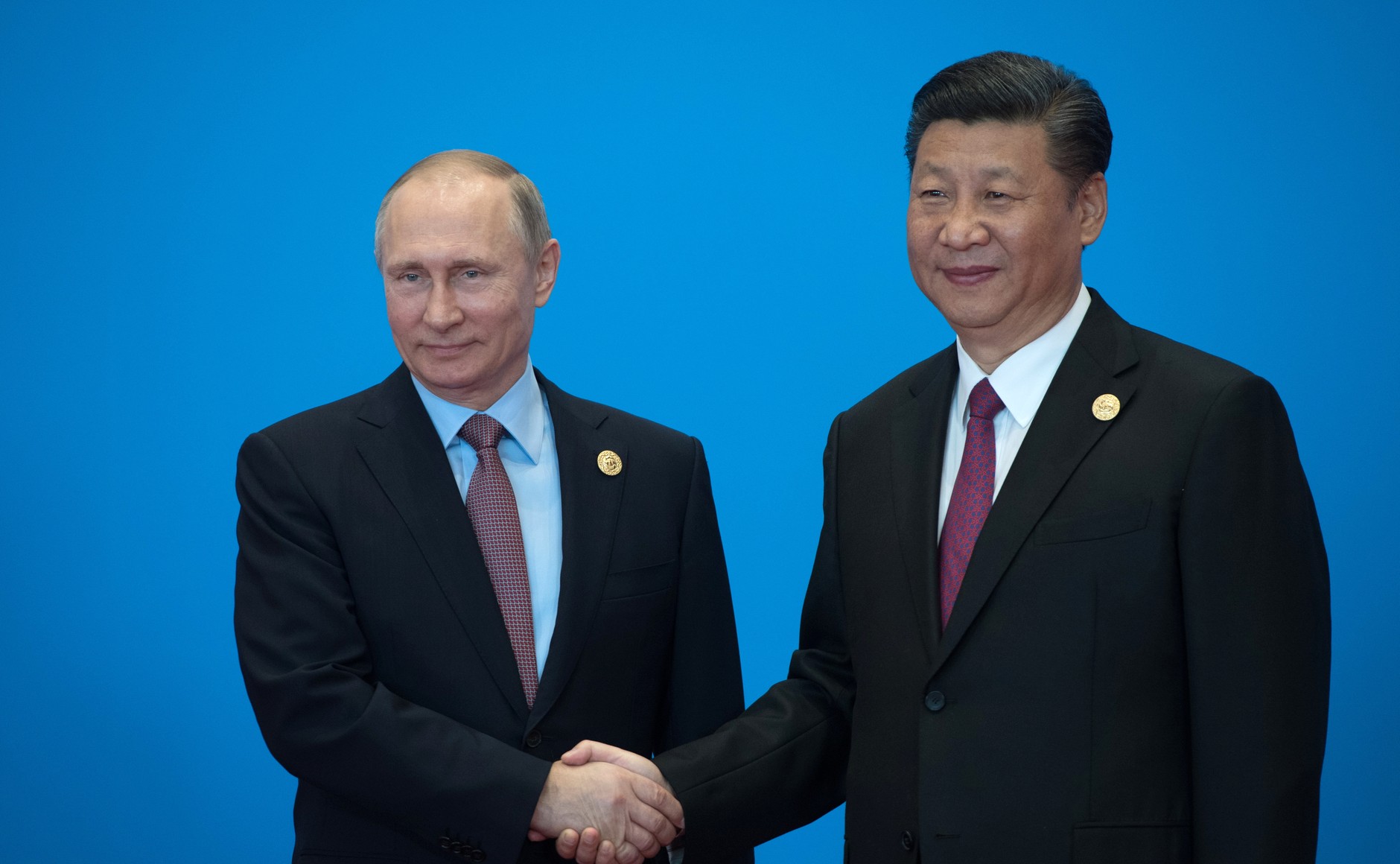
Russian President Vladimir Putin will meet today with his Chinese counterpart Xi Jinping in the Chinese capital, where the two leaders are expected to reaffirm their friendly relations on a personal and state level, against the backdrop of tensions with the US, in Moscow's case over Ukraine, and in Beijing's case over a wide range of issues.
The Chinese government has supported Russia so far during the Ukrainian crisis. It wants, he notes, guarantees for Russia's security and opposes the expansion of organizations such as NATO.
Before leaving, Mr. Putin made sure to emphasize the friendship between the two countries and his personal friendship with Mr. Xi in interviews and articles published in Chinese state media.
He is traveling to Beijing on the day of the opening ceremony of the Winter Olympics, in the afternoon (local time) at the National Stadium of the Chinese capital, also known as the «Bird's Nest.».
Mr. Putin, the highest-ranking foreign politician attending the opening ceremony, will be honored as a «friend of China.».
In protest against what they see as flagrant violations of human rights in China, many Western countries, including the US, Britain, Canada, and Australia, have imposed a diplomatic boycott on the Winter Olympics. Their national teams will participate, but politicians and other officials will not travel to China.
Moscow and Beijing sent a message of unity at the preparatory meeting of foreign ministers on Thursday afternoon.
In talks between Wang Yi and Sergey Lavrov, the two sides aligned themselves on issues such as the crisis in Ukraine, the crisis in Afghanistan, North Korea's weapons program, and other international and regional issues, according to the Russian news agency TASS.
«China is ready to work with Russia to deepen the time-tested friendship and close strategic coordination between the two countries,» Mr. Wang said, according to the Chinese news agency New China.
The Chinese Foreign Ministry said that the foreign ministers of the two countries expressed their opposition to the «politicization» of the Olympic Games and to any attempt to create conflicts between countries and organizations.