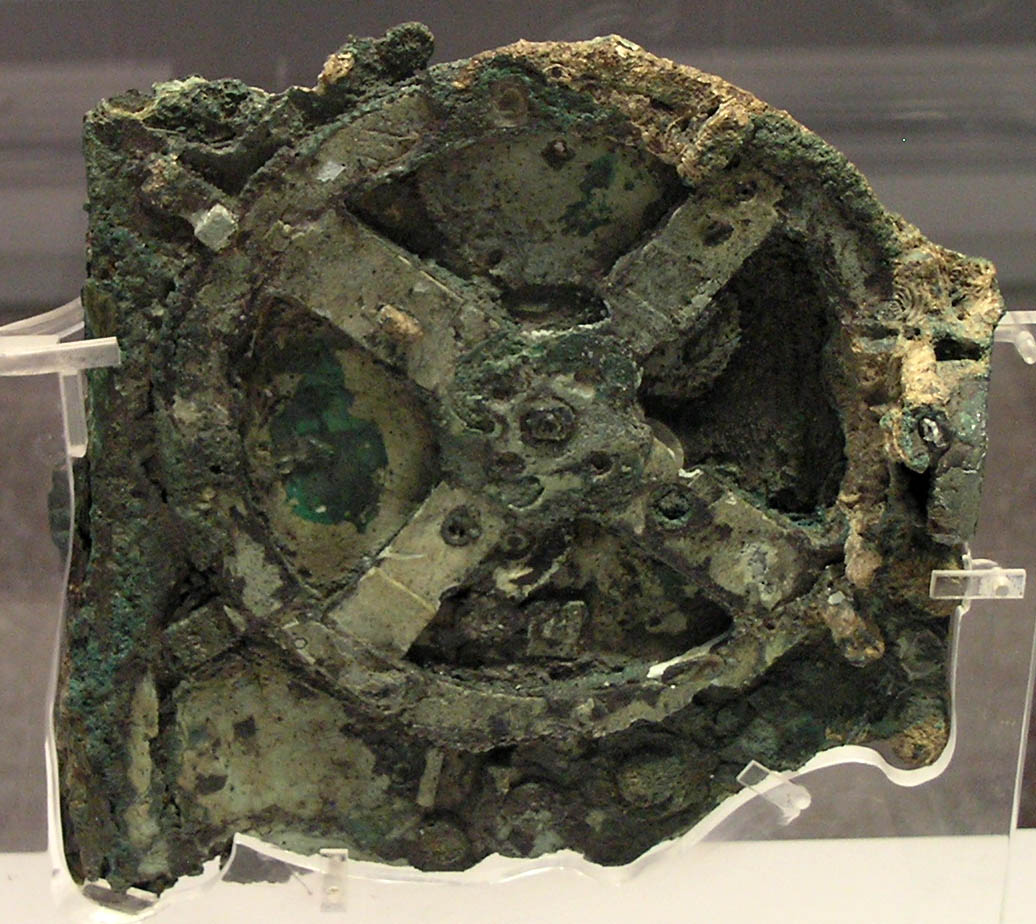
In 1901, among statues and amphorae from a sunken cargo, divers off Antikythera recovered something unlike anything they had ever seen before. A solid mass of greenish metal with teeth, letters, and something resembling a clock. More than a century later, the Antikythera Mechanism remains the most complex technological object of antiquity. And perhaps the most misunderstood.
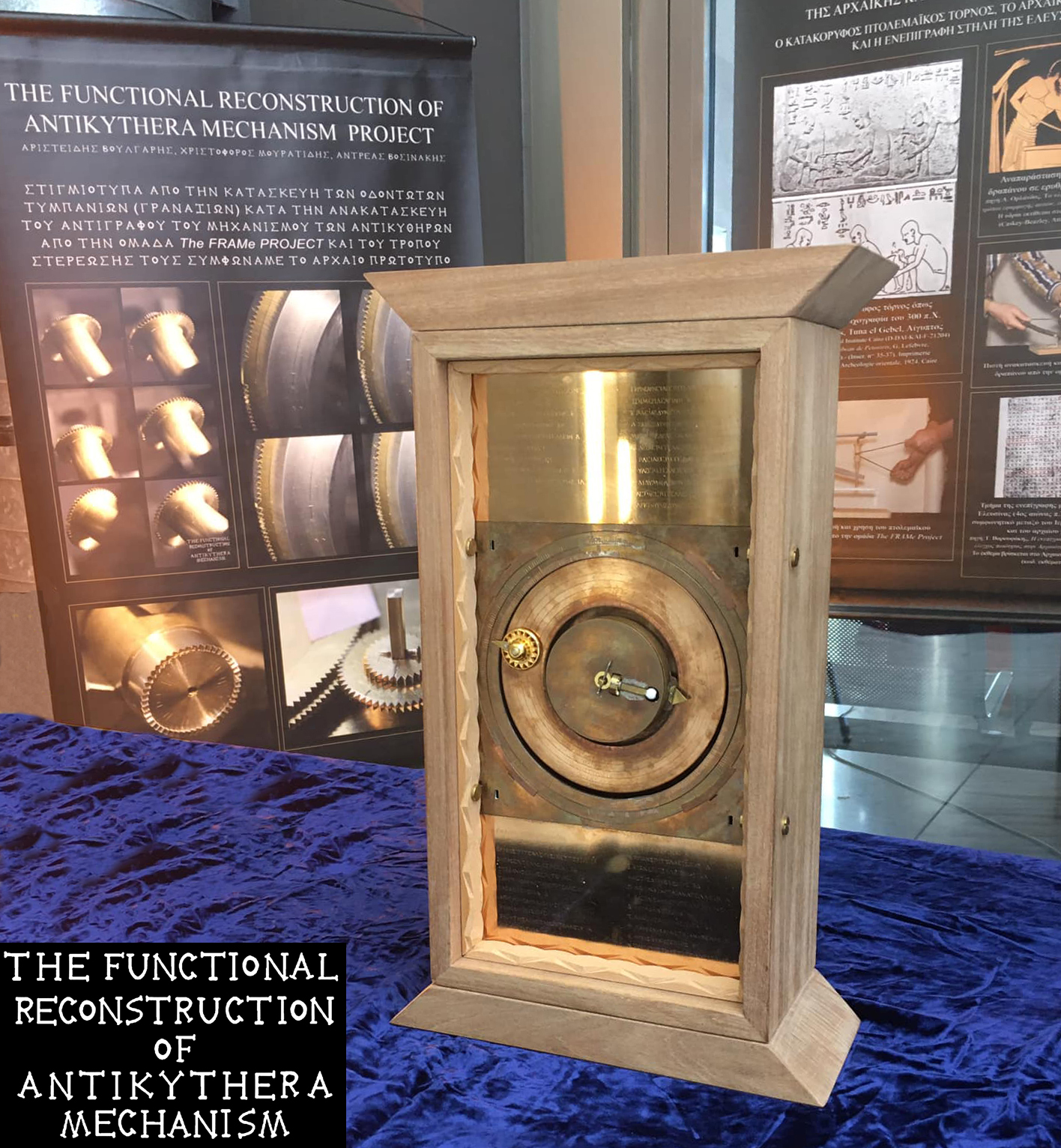
The recent article The Functional Reconstruction of Antikythera Mechanism – The FRAMe Project, published in the Journal of Astronomical History and Heritage, attempts something that no other study has yet presented with accuracy, as the authors claim: to determine when the Mechanism began to function and how its indicators were calibrated. The date they propose – December 22 or 23, 178 BC – is derived from the «bibliography» of the object itself, as it is called, and not from speculation.
K spoke with researcher Aristides Voulgaris, one of the three authors of the publication, who analyzes not only the findings but also the errors that, as he says, have spread uncontrollably in the international debate on the Mechanism. With a rigorous technical eye and hand tools, Voulgaris and his team present a different example: not of ancient wonder, but of ancient protocol; not of inspiration, but of mechanical consistency.
The zero date: December 22–23, 178 BC.
A mechanism that maintains astronomical memory does not start randomly. Behind the setting of the Antikythera Mechanism's dials lies a starting point in time that was not chosen arbitrarily. According to the FRAMe team, this is December 22–23, 178 BC, a date that results from the identification of natural and cultural events—and is recorded with unusual precision on the instrument itself.
«The ancient Greek astronomer Geminus wrote the work “Introduction to Phenomena,” which survives today. In the chapter “On Evolution” (which is the time cycle according to which the sequence of solar and lunar eclipses repeats at exactly the same time), he states that this cycle begins when all the cycles of the Moon are at their beginning,» Aristides Voulgaris tells «K.».
We identified a number of candidate dates where the Moon's cycles lock in at their beginnings. The appropriate date would certainly have to match the «bibliography» that the Antikythera Mechanism itself has.
The team applied this principle of evolution (Saros – Exeligmos) by researching the annular eclipses of the period from 250 BC to 200 AD in the NASA archive.
«We have identified a number of candidate dates where the lunar cycles lock in at their beginnings. The appropriate date would certainly have to match the “bibliography” that the Antikythera Mechanism itself has.».
The concept of «bibliography» here is not a metaphor. Voulgaris himself states: «My team and I view the Antikythera Mechanism as a “bronze book of the ancient world.”».
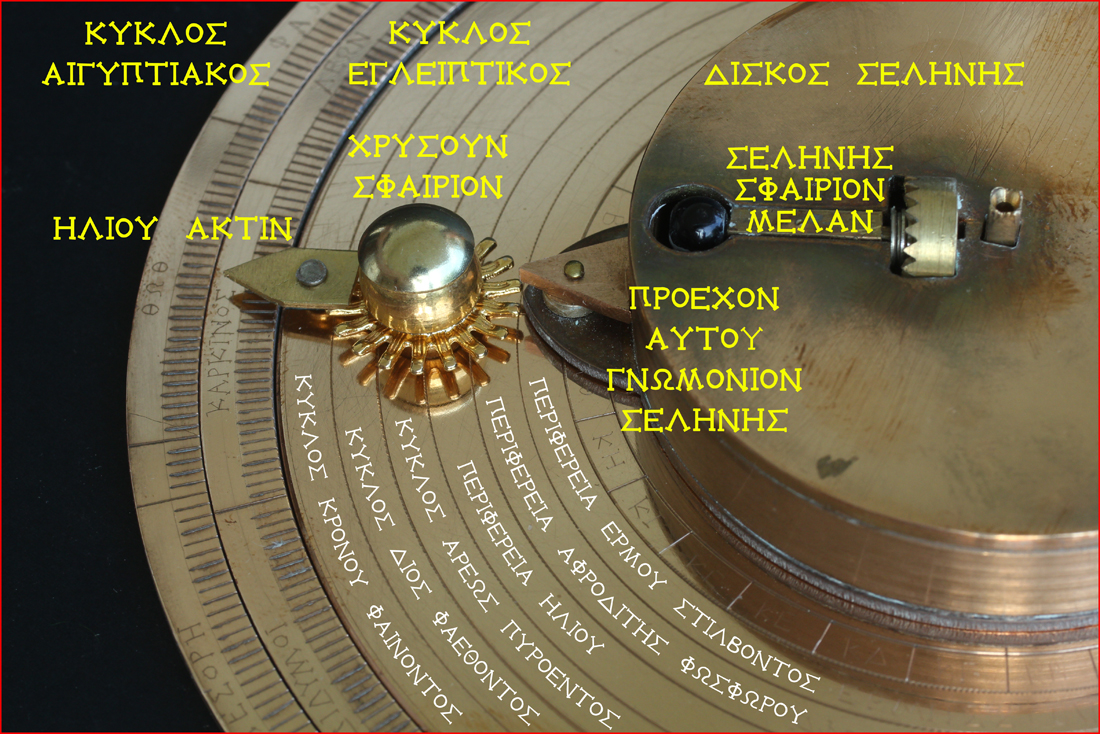
The date of December 22–23, 178 BC appears to be the only one that cumulatively fulfills the mechanical and epigraphic indications on the front face of the Mechanism. «In each of the four corners of the front face of the Mechanism, the ancient manufacturer has inscribed four paragraphs with information about each season. In the upper left corner is inscribed AIGOKEROS ARCHETAI ANATELLIN TROPAI CHIMERINA. Because Greek (and Latin) is read from left to right and from top to bottom, the upper left position has a particularly prominent place.».
The date we have identified is directly linked to the surviving «bibliography» provided by the Antikythera Mechanism.
This coincidence is not unique; the date coincides with the solstice, the Sun's entry into Capricorn, the coincidence of lunar cycles, the beginning of the Metonic and Callippic cycles, and the celebrations of Isis.
«December 22–23, 178 BC corresponds to the 17th day of the month of Athyr in the Egyptian calendar. That was when the Isis celebrations began. This festival was introduced to Greece by Ptolemy I. Isis in Greece was also accompanied by her Greek epithets, such as Isis-Tyche, Isis-Pelagia, and Isis-Nemesis,» he tells us. «Therefore, the date we have identified is directly linked to the surviving “bibliography” provided to us by the Antikythera Mechanism.».
The papyrus of 165 BC and clerical memory
For the first time, the reconstruction of the Antikythera Mechanism's initial operation is not based solely on astronomical models and geometric analysis, but is explicitly linked to a written document from the period: a papyrus written just 13 years after the zero date.
«The papyrus we associate with the Mechanism was written in 165–164 BC, i.e. 13 years after the Mechanism was calibrated, and contained astronomical notes from that period, written in ancient Greek by a “somewhat careless” student, who wrote the lengths of the days for the summer and winter solstices backwards.».
The papyrus we associate with the Mechanism was written in 165–164 BC, i.e. 13 years after the Mechanism was calibrated, and contained astronomical notes from that period.
The temporal proximity between the writing of the papyrus and the start date reinforces the hypothesis of functional continuity. Voulgaris himself considers this to be conclusive evidence: «The astronomy known in 165 BC would hardly have differed from the astronomy found in the Antikythera Mechanism. Indeed, astronomical information described by Geminus (around 80 BC) is also found in the Antikythera Mechanism.».
However, the papyrus does not end here. The researcher suggests that additional information has been identified in its pages, with possible implications for the missing parts of the Mechanism.
«We will find out what else will emerge from the secrets hidden in this papyrus in the near future. I am implying, as you understand, that we have identified other important new information concerning the reconstruction of lost parts and inscriptions of the Mechanism,» he reveals.
The Mechanism is no longer cast in bronze
Most images of the Mechanism circulating today depict it as a bronze machine. However, the reality is dramatically different. According to its chemical history, nothing in the Mechanism is bronze anymore, as our interlocutor informs us.
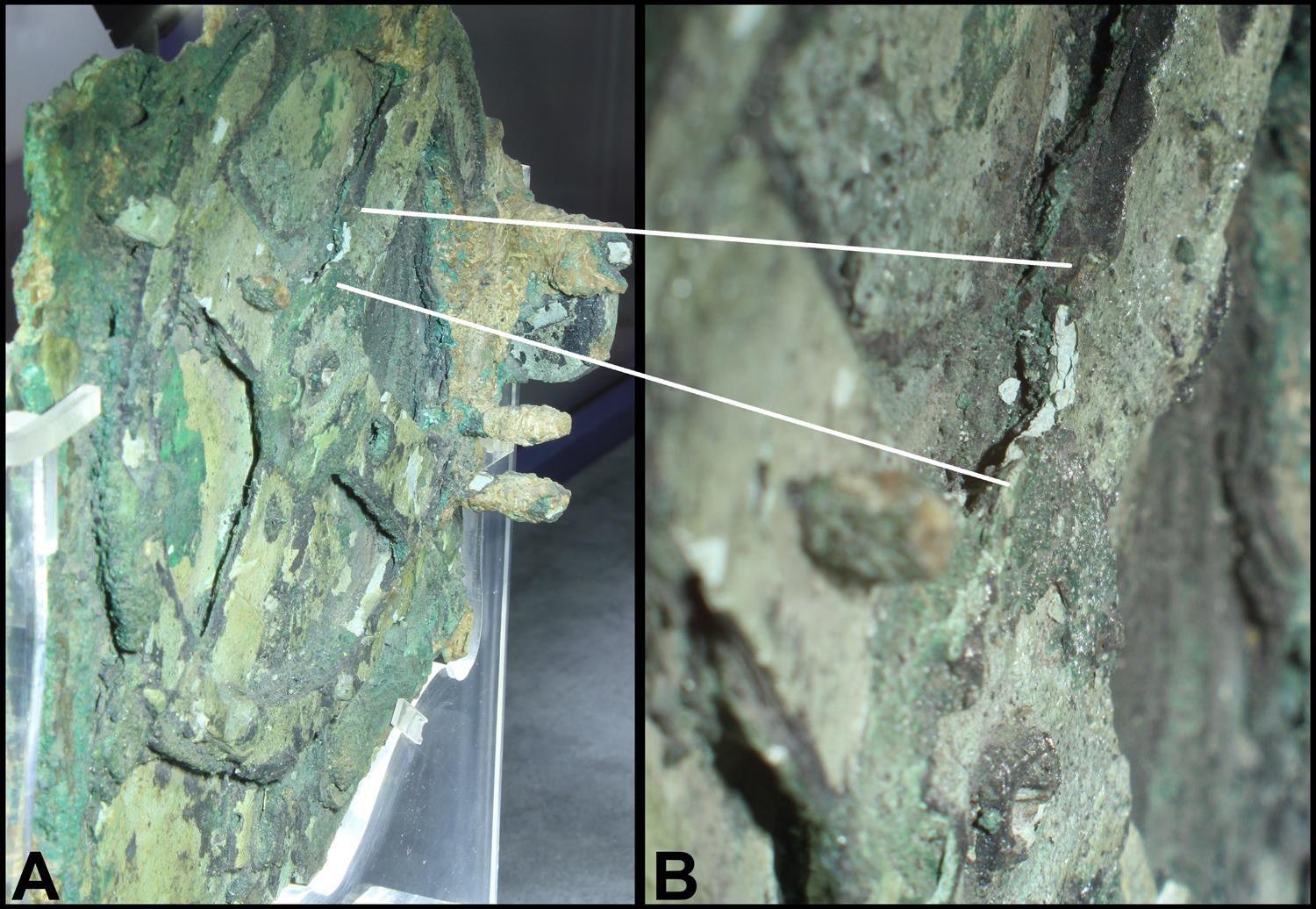
«The Antikythera Mechanism was made of bronze (an alloy of approximately 94% copper and 6% tin) around 180 BC. When the bronze came into contact with seawater, chemical reactions immediately began between the copper and the chlorine in the sea. During its stay at the bottom of the sea for approximately 2,000 years, all of the bronze components of the Mechanism gradually transformed into a new material: atacamite (copper trioxychloride).
The change in material is not merely superficial. Voulgaris explains that its new composition is denser, more fragile, and radically different in terms of behavior.
During the Mechanism's stay at the bottom for about 2,000 years, all of its bronze components gradually transformed into a new material: atacamite.
«Atacamaite is a rocky mineral with a density of 3.8 g/cm³, in contrast to the original density of bronze, which was 8.8 g/cm³. The change in density, pressure, gravity, and total corrosion distorted the geometry of the Mechanism. None of the surviving plates and gears of the Mechanism are flat. In 1901, the Mechanism was raised from the seabed, but its rapid dehydration caused significant shrinkage, further deformation, and cracking of its parts.
The researcher poses the crucial question: can anyone reliably measure this material? His answer is categorical. «Any dimensional measurements taken on the fragments are affected by shrinkage and deformation, and any conclusions drawn based on these measurements are completely wrong. Some researchers concluded that this gear had a problem with the transmission of motion and therefore the Antikythera Mechanism was a non-functional “decorative toy” of that era.».
Why would anyone build such an expensive, complex, time-consuming, and laborious machine with an enormous number of parts and holes and a user manual if it were just a non-functional «toy»?;
Voulgaris reverses the argument and argues that the Mechanism itself is proof of functionality, not the opposite. «The ancient manufacturer created the gears, axles, spindles, measuring scales with their indicators, and then wrote the user manual for his creation, which has been preserved in fragments, in fragmentary sentences, words, and letters. If a gear had a mechanical problem, he would simply replace it with a new one.».
And he concludes with questions that are at once scientific, philosophical, and aesthetic: «Did he go to all that trouble to build a machine that doesn't work? What was the point of constructing such an expensive, complex, time-consuming, and laborious machine, with an extremely large number of parts and holes and a user manual, if it was just a non-functional “toy”?»
Screws and planets: How truth gets distorted
Aristides Voulgaris does not hide his opposition to the stance taken by a large portion of the scientific community. For him, many reconstructions of the Mechanism are not just problematic; they are dangerous, as they distort the documented mechanical reality, as emerges from our conversation.
«I must confess that we have serious objections and reservations about the reconstructions of the Antikythera Mechanism and those presented with great publicity, which are hypothetical and highly questionable. Several models that have been constructed, even by prominent researchers, show serious deviations from the ancient original, with arbitrary placements of hypothetical/non-existent components, even in places where there is no indication/suspicion that any component existed,» he emphasizes.
We have serious objections and reservations about the reconstructions of the Antikythera Mechanism and those presented with great publicity, which are hypothetical and highly questionable.
The issue for Voulgaris is not personal. It is mechanical. And that is what makes his disagreements seem non-negotiable.
«My disagreements are not the product of my imagination or opinion, but are based on the experience I have gained from studying the fragments, the tomographs, the reconstruction of the bronze parts using conventional methods (not computers), assembly, and dozens of hundreds of “flight hours” interacting with this unique machine. For any reconstruction, we must rely on and respect the ancient original.».
One of the points of intense debate, in fact, is the addition of planetary indications to the models. «I have evidence to support my disagreements, which are based on mechanical and existing data and not mere opinions. Let me give you an example: I strongly disagree with the existence of planets in the Mechanism (in the models we have constructed, there is only—and I emphasize this—the Sun-Golden Sphere and the Moon-Black/White Sphere).».
Changing a component, its position, or its material alters the mechanical status of the system and leads to different mechanical behavior, with different results and, ultimately, incorrect assumptions.
The problem comes to a head when the freedom of assumptions reaches critical material and dimensions, altering the mechanical nature of the Mechanism, as our interlocutor seems to argue. «Therefore, changing a component, the position of a component, or the material of a component changes the mechanical status of the system and leads to different mechanical behavior, with different results and, ultimately, to incorrect assumptions.».
For this reason, the FRAMe team follows a strict manufacturing protocol. Voulgaris is adamant. ’This protocol prohibits the installation of steel axles, prohibits the addition of modern stabilizing components such as screws, nuts, and wedges, and prohibits changing the thickness of the gears, installing iron gears, etc. Obviously, the above improvements make a model work better and enable it to perform other hypothetical processes... but – and I am adamant about this – they are not in line with the ancient original.
The «Chronos Automaton»: A robot from antiquity
In modern technological imagination, the Antikythera Mechanism is often presented as the precursor to the computer. However, Aristides Voulgaris takes the discussion further: he characterizes it as a Time Automaton. A device that encompasses, organizes, and activates time in a direct and fully processed manner.
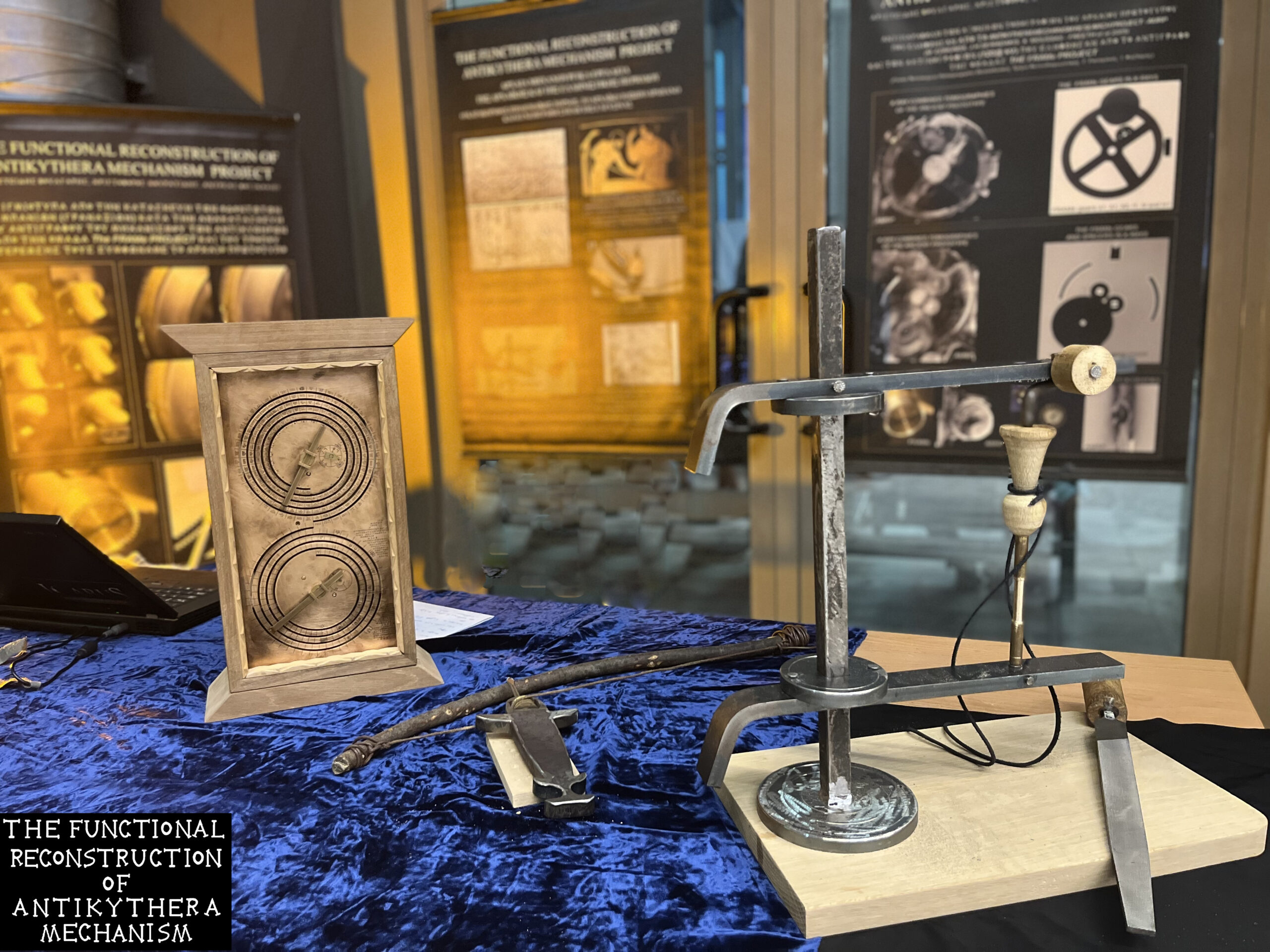
«Time could have been lost at any moment: after a barbarian invasion that burned everything down or due to an epidemic in a city-state, who would have been able to measure and keep track of time?» he wonders. «The Antikythera Mechanism had gathered all the information concerning time. It had a high degree of repeatability in the results it calculated through its gears, presenting them through its pointers and measuring scales.».
The example he gives is not theoretical: it is fully functional. The Automaton knew when the Olympic Games were starting and broadcast it accurately.
The Antikythera Mechanism contained all the information relating to time. It had a high degree of repeatability in the results it calculated through its gears, presenting them through its pointers and measuring scales.
«With a few turns of the input, the user knew, for example, that in eight full moons from today, the Olympic Games would begin. So someone had to inform the athletes in each city-state about the upcoming event and start preparations for accommodation, food, security, transportation, etc.»
As it appears, this is a time management machine. Not a «miracle» detached from its social environment, but a planning tool for civilizations that had to calculate, organize, and survive.
The society that gave birth to him
The existence of the Mechanism implies not only a creator, but also an environment that could understand, use, and support such a complex tool. Aristides Voulgaris puts it in modern terms: «Today, you hold your cell phone in your hand and in 10 seconds you know what date Easter will be in 2026 so you can book your plane tickets, for example. That convenience did not exist back then.».
According to him, the multitude of functions of the Mechanism indicates its use by an administrative time management authority, not by a private individual or... art lover. «This extremely expensive machine, difficult to construct and with such an excessive concentration of time information, must have been built for use by some time management authority of the time, which could even have been an oracle.».
In order for such a tool to exist, a multidisciplinary infrastructure was required. The manufacturer was not a «fairytale craftsman.» He was a bearer of knowledge and technical expertise.
The ancient manufacturer certainly had access to astronomical data and mathematical equations for the cycles of the moon for the construction of gear teeth, etc.
«To build such a machine, you need to know metallurgy and casting, mechanical engineering, astronomy, mathematics, papyri with collected data, metalworking machines, and special technical skills in construction. So, the ancient manufacturer definitely had access to astronomical data, mathematical equations for the cycles of the Moon for the construction of gear teeth, etc. Undoubtedly, there must have been other, simpler machines, which have not been preserved to date. Bronze, as an extremely expensive material, was recycled even then. Even I recycle bronze in my machine shop.
The Antikythera Mechanism was not preserved because it was kept safe. It was preserved because it sank. And this, according to Voulgaris, is a tragic irony: «The Antikythera Mechanism escaped destruction in a foundry of that era because the ship carrying it sank in the sea. Unfortunately, however, it also paid the price of corrosion from the very place that protected it.».
Matter cannot be undone
From processing tomograms to manual reconstruction, the work of the FRAMe team was not exclusively theoretical; it was also physical: it required effort, repetition, precision, and acceptance of failure.
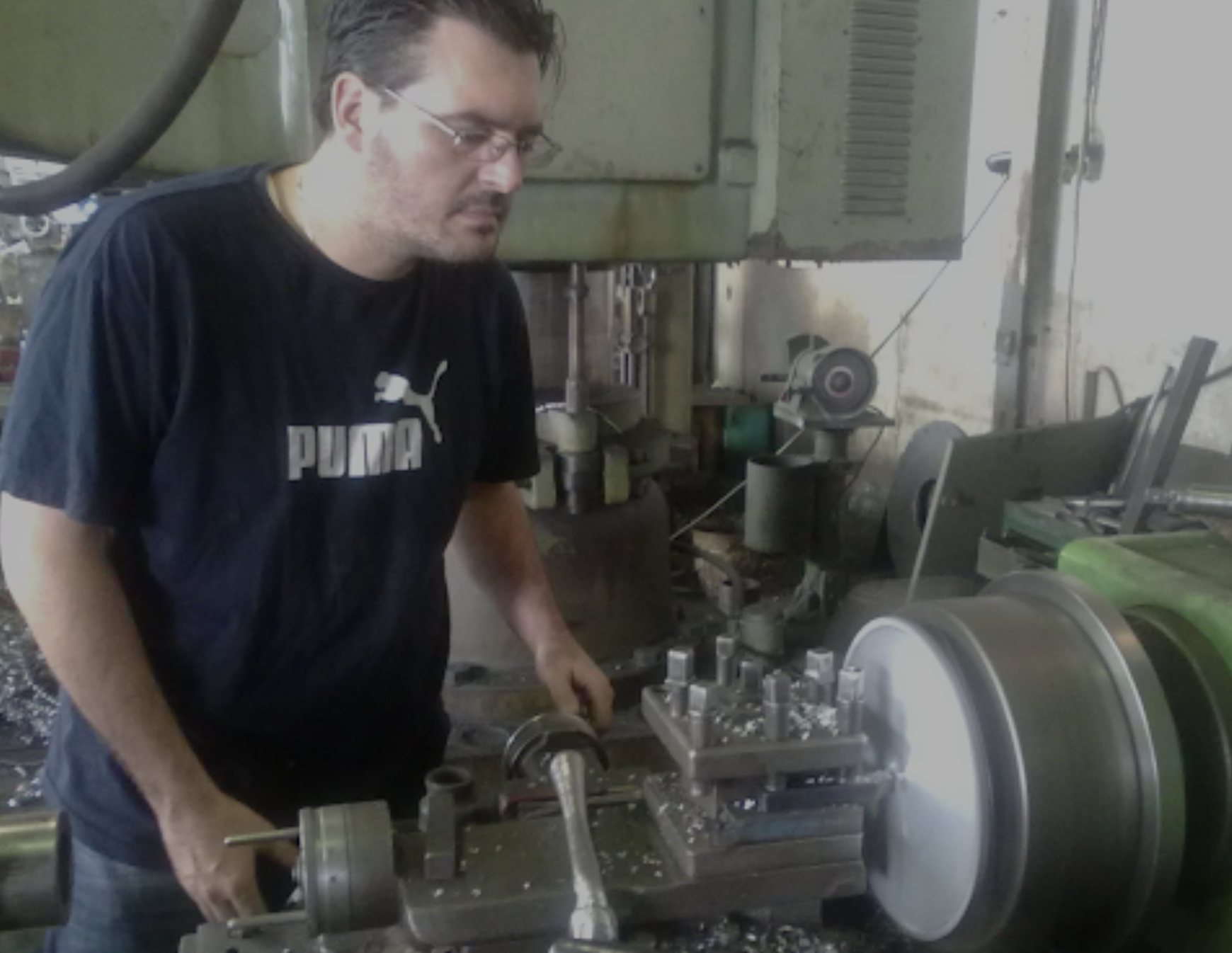
«I should point out that I used only conventional methods to make the parts: files, saws, simple mechanical dividing systems to shape the gear teeth, and some electric repetitive tools. It seems that this machine would have to be built and assembled by one person. It has many critical points and details that are difficult to convey to a partner to continue the construction.».
It seems that this machine would have to be designed and assembled by one person. There are many critical points and details that are difficult to convey to a colleague so that they can continue the construction.
The creator's emotion is expressed not only through success, but also through loss. The example is characteristic: «I remember when I finally managed to make the gear with 223 teeth correctly, completing the last tooth, I was so happy that I forgot to remove the cutting file and it completely shaved off the last tooth. Matter is harsh; it does not forgive. In the material, there is no digital UNDO button that I can press to redo the tooth before shaving it off. I simply remade the gear from the beginning: 1, 2, 3, 4, 5 ... 221, 222, 223 ...»
Nevertheless, the most tangible moment is not visual. It is auditory: the sound of time regaining its momentum. «When we built the first working model of the Mechanism and saw the gears moving, as they rotated, they made a “krr, krr” sound, reminiscent of a repeating machine gun,» recalls our interlocutor.
The Mechanism as Mechanical Memory
The FRAMe Project began its research in 2017 with access to the original 2004 tomography files. Since then, their work has shaped a different reading framework: mechanical, experimental, with complete fidelity to the original.
This perspective brought to light new proposals, but also intense controversy. Voulgaris does not shy away from taking a clear stance: «We cannot worship as sacred totems hypotheses about the Antikythera Mechanism which, although widely publicised, have not been confirmed experimentally and pragmatically, and many of which are unrealistic and do not correspond to reality. The Antikythera Mechanism must also be investigated from an engineering perspective. This should be the point of reference and the basis for hypotheses about this unique machine of the ancient world. Research is not something static; it evolves, is reformulated, and new evidence has emerged that was unknown at the time of the Mechanism's investigation in 2004.
The investigation is not static; it evolves, is reformulated, and new evidence has emerged that was unknown at the time of the Mechanism's investigation in 2004.
He, however, calls on the scientific community to take measures and initiatives. «The longer the community delays in clarifying open issues and erroneous assumptions, the more unsubstantiated opinions, anarchy, and controversial results will increase, and this will ultimately be detrimental to the Antikythera Mechanism and all the efforts made by researchers over at least 50 years.».
Discipline and zero tolerance for arbitrariness
The biggest misconception about the Antikythera Mechanism is that it was a one-off miracle; a contraption ahead of its time; a mechanical anachronism, hidden in the depths of a technologically naive society. However, as the FRAMe team demonstrates, this narrative is incorrect—even offensive, if we take into account what Aristides Voulgaris told us.
The Antikythera Mechanism was the surface of an invisible institution: a world where time was a tool of power, control, and ritual.
The Mechanism was not a paradox. It was a system. It was the surface of an invisible institution: a world where time was a tool of power, control, and ritual. And for such a thing to exist, observation, storage, prediction, technique, role allocation, and bureaucracy were necessary. And then it becomes clear: precision was not inspiration. It was culture. It was not a momentary intellect. It was productive potential. Matter obeyed because it was obeyed.
As for us today? We are left with something more difficult than repairing the gear. Restoring institutional accuracy. Not rebuilding the Mechanism, but relearning how to measure correctly.
The Mechanism, moreover, does not ask you to explain it. It asks you to stand still before it and not to assume; to prove.
Dimitris Athinakis (Drama, 1981) has been working as a journalist, literary critic, editor, and translator since 2007. He published his first piece in Kathimerini in 2009, and since 2014, with a short break, he has been regularly writing stories from the international and cultural scene for the newspaper's print and digital editions. He has published four collections of poetry.