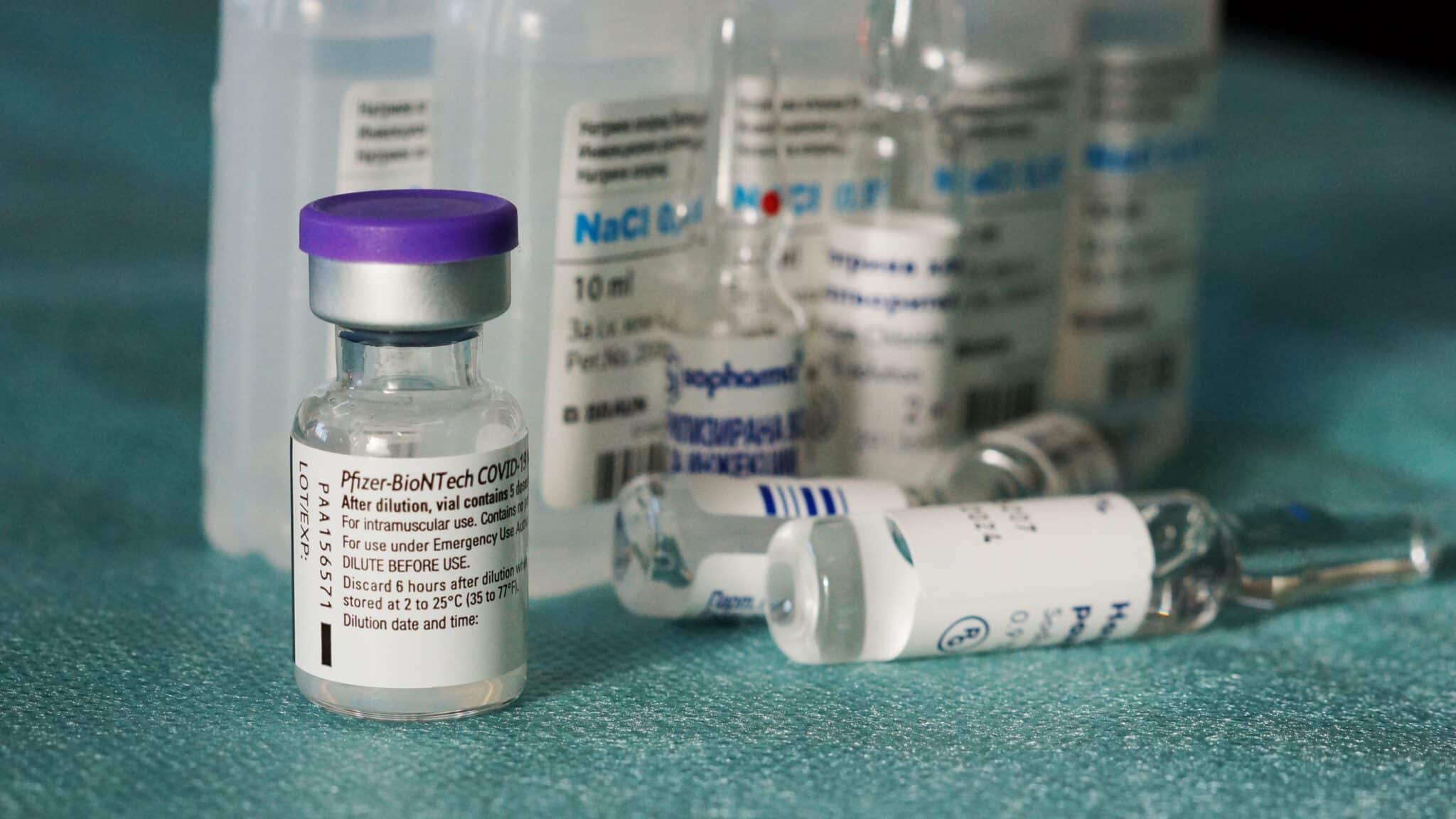
Three decades ago, a team of scientists focused on the process of using RNA, the “messenger” of the human organism, to enable it to develop, simply put, based on DNA. However, because DNA (either due to genetic factors or some external intervention) may not send the right message, intervening in its messenger could prove to be lifesaving.
This is now also the case with mRNA vaccines, that is, of the Pfizer and Moderna. Two new vaccines, which are based on relatively old technology.
As Mr. Achilles Gravanis, Professor of Pharmacology at the Medical School of the University of Crete and Researcher at the Institute of Molecular Biology & Biotechnology of the Foundation for Research and Technology-Hellas (FORTH), tells us, The history of mRNA technology use in humans began 30 years ago.. The problem with applying this in clinical practice was that, unfortunately—but also fortunately— RNA, and even more so mRNA, is an extremely unstable molecule and has a lifespan of only a few minutes outside the body or even inside the body.. So the technique of using a genetic message that has a short lifespan either to treat or prevent a disease did not progress for this reason.
The big change came two to three years ago when scientists managed to alter a structural element of mRNA (nucleoside), which created conditions for greater stability. This made it possible to maintain the life and stability of mRNA for a longer period of time—though not for very long.
This led to efforts to develop therapeutic mRNA vaccines that did not initially focus on infectious diseases, viral and microbial diseases, but primarily on cancer and neurodegenerative diseases.
“Keeping the molecule in our bodies for longer is considered a godsend with the outbreak of the pandemic 1.5 years ago, but research had begun earlier. The Biontech which created the mRNA vaccine (the well-known Pfizer vaccine) currently has many clinical trials in humans for other diseases. For example, it has a vaccine for COVID-19 in phase I-II clinical trials, a vaccine for HIV, a vaccine for hepatitis B, a vaccine for hepatitis A, a vaccine for influenza, a vaccine for measles, a vaccine for mumps, a vaccine for rubella, a vaccine for hepatitis B, a vaccine for hepatitis A, a vaccine for influenza, a vaccine for measles, a vaccine for mumps, a vaccine for rubella, a vaccine for hepatitis B, a vaccine for hepatitis A, a vaccine for influenza, a vaccine for measles, a vaccine for mumps, a vaccine for rubella, a vaccine for hepatitis B, a vaccine for hepatitis A, a vaccine for influenza, a vaccine for measles, a vaccine for mumps, a vaccine for rubella, a vaccine for hepatitis B, a vaccine for hepatitis A, a vaccine for influenza, a vaccine for measles, a vaccine for Multiple Sclerosis, while also testing vaccines against breast cancer and other neoplasms,” says Mr. Gravanis.
He adds that Moderna also has clinical protocols for malignancies, while many other small biotechnology companies are conducting important research. “Of course, we should mention that mRNA vaccines were first conceived by Novartis, However, he considered that they would not be particularly useful in clinical medicine and halted their development. In fact, many scientists from the specific department of the company that developed this technology went on to work for the small biotechnology companies that are now leading the field,” says the professor.
“What I should note is that we don't want the message to remain in the body for a long time. We want the molecule to enter the body, transmit the message, and then disappear. That is We want either the protective factor, i.e., an antigen such as the spike protein for the coronavirus, or a molecule that blocks either a disease, a gene, or a signaling process associated with a disease and then disappears. I mention this to say that the concerns held by many who are unfamiliar with the technology and fear that it will become embedded in our DNA should not exist.
It should be noted that there are hundreds of scientific publications that discuss efforts to develop therapeutic and prophylactic vaccines—in laboratory animals—over the past 15–20 years. Now, in the last 2-3 years, they have progressed and will accelerate, and it is more than certain that In 10-15 years, we will have the first mRNA drugs, either for prevention or treatment.
“I should note that we have drugs based on this technology, namely antisense RNAs, which we use. A disease that affects motor neurons in children can be treated with such a drug. If you remember the case of little Panagiotis Raphael, this child was treated and is now in very good condition,” notes Mr. Gravanis.
Action and safety of mRNA vaccines
With the vaccine for the coronavirus, mRNA technology was used for the first time in humans. “It is currently the safest vaccine that medicine has created. It is a small message which, when it enters our arm, is incorporated locally into the muscle cells, expressed where the spike protein is, and then destroyed by our body. Only a tiny part of the virus remains, the spike protein, which is the virus's «weapon» for attaching itself to healthy cells in our body and infecting them, i.e., causing them to reproduce billions of the virus. When the spike protein is created by the vaccine, it remains only in the arm. It is not transported throughout the body,” the professor specifically states.
He continues, saying that at the site of the vaccine, very specific cells of our immune system called antigen-presenting cells arrive. “These recognize and engulf the protein and its message in their bodies, multiply into hundreds of millions, and these are the ones that will go throughout our bodies to produce the memory immunity that is antibodies (B lymphocytes) and T cytotoxic lymphocytes. The latter are not interested in the virus but in the infected cells, which they destroy,” says Mr. Gravanis, describing the vaccine's mechanism of action.
This process is therefore twofold: it blocks infection by the virus, kills the virus, and kills any cells that it has already infected.
“These cells, it should be noted, remain dormant in the body, but when they come into contact with the virus over time, they recognize the virus and begin to act. It should be noted that, based on two important scientific publications, it has been proven that this memory is retained in our body for at least one year,” says Mr. Gravanis.