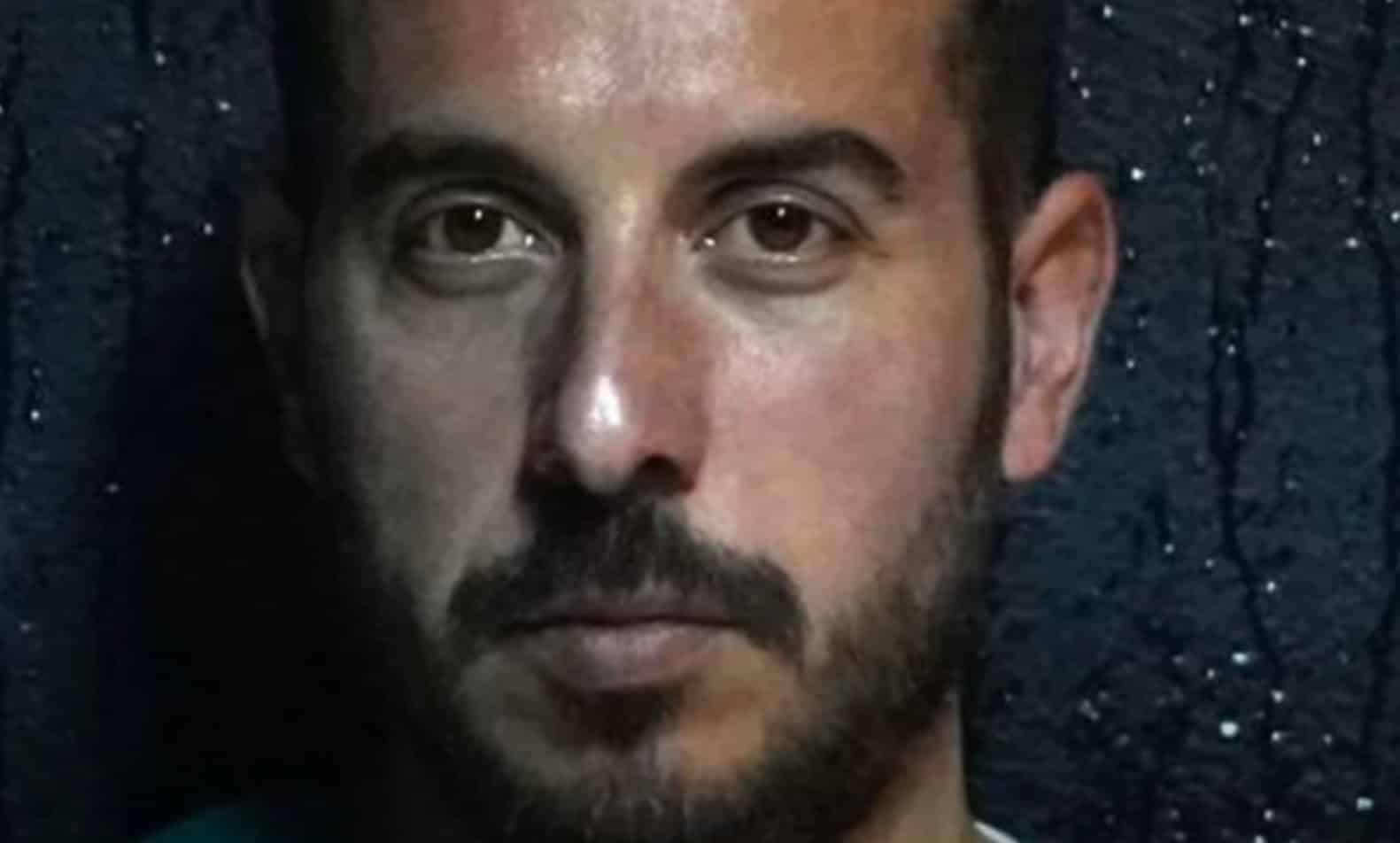
«Our society and its ills concern me deeply. Because I am part of this society.», he tells me Enke Fezollari, the 40-year-old actor and director, which He was born in Albania and spent the first 12 years of his life there; since then, he has lived, studied, and worked in Greece. It’s no surprise, then, that she feels «trapped between the two countries. Both homelands bring tears to my eyes just as much, and both make me angry.»And the fact that he uses the first-person plural when speaking of both is telling.
An artist living in Paris, Vorpsi «wrote the book in Italian, and it was published last year in Albania—for the first time in 20 years—because her mother had banned it. »Because it’s their personal story,« explains Enke. He discovered it in 2009 and was impressed by its »indictment.”, which exposes not only the established Albanian patriarchy but also the Stalinist Hoxha regime—after all, the author «was the daughter of a political prisoner». And she was also somewhat hesitant to grant the rights to her book to Fezollari; she gave him a hard time. But she agreed, and of course she’ll be coming to Athens to see the new stage adaptation of her book (which has been performed before in Italy), in which the Amalia Arseni plays the young Ornella, while the Vefi Rendi and the Athina Karagioti «They play various roles: the mother, the grandmother, the teacher of Party History, the father…»
Fiery in his speech, almost impulsive, Enke Fezollari talks to me about the «abusive relationship» he had with his father while they were living in Albania, and about the play «Amalia,» about the Bavarian queen, which he staged with the Serres Municipal and Regional Theater as part of the 1821 anniversary celebrations, and about the rehearsals for the play «Melted Butter» by Saki Serifa which he will stage at the Chytirio under his own direction. Undaunted… And fearless, he puts all his fingers on the plow, and whoever Death takes…
About the Greek #MeToo movement
«What #MeToo has achieved is that now people will think twice before laying a hand on someone again… Of course, all the things that came to light were already known—the serious cases, that is—the whole community knew about them. They knew about them, and yet, the very people who [today] are tearing their hair out were the first to write to Lignadis wishing him ’good luck“… When this can of worms opened up with #MeToo, we all remembered—each from our own perspective—and brought things to the surface. I, for one, know many cases that were not reported, I know of even more harrowing stories of people who didn’t speak out. At some point, we have to respect the victims who don’t speak out, too. Because suddenly we’ve crossed over to the other side—you’re an accomplice just by not speaking up. Come on, for Christ’s sake—what’s going on here! I believe, however, that it’s not over; it’s a proces [he says with an Albanian accent]; this informal movement is still in progress.»
On Patriarchy
«Yes, I come back to this topic from time to time. Maybe it’s partly because of the strained relationship I had with my father as a child… And the fact that I grew up surrounded by women certainly played a role. I didn’t finish my studies at the Sorbonne; I’m an experiential filmmaker. And I consider myself, so to speak, anarcho-autonomous, a man of the people. A proletarian of art, I’d say—though I’m marching with mathematical precision toward the lumpenproletariat [laughter]. I didn’t say, ‘Oh, I’m going to tackle patriarchy“—it just happened. We live in a world where men are emasculated anyway. Because patriarchy creates this—especially in rural Greece, where it produces emasculated men. And if you want, and Women consent to the perpetuation of this patriarchy. When a mother raises her son and tells him, “Look how big your little bird has grown!”, the child grows up with a sense of permissiveness, and his uncle—or anyone else—feels entitled to touch him…
It’s 2021, and it’s great that these issues are finally being brought to the table. Of course, we’ve clearly moved on to political correctness, to this whole diversity and ’politically correct» thing, [but] those, okay, are just trends—they’ll pass. Essentially, though, we’re tackling issues that we wouldn’t even have discussed 15 years ago. Some things will certainly be mowed down, burned—the green along with the dry—but what matters is that we burn the dry ones. Let’s burn these pathologies.”
On the Thorns of Albania
«Ever since the borders with the West opened—and even today—most Albanians want to leave their country. Of course, quite a few are now returning, because they’ve seen that the West, as [Vorpsi’s] book says, isn’t what they dreamed it would be. But Albania also suffers from Balkan syndromes, mainly of Ottoman origin. On the other hand, [the Albanians] took all the kitsch of the West and brought it to Albania. Back in the Hoxha era, I remember as a child the respect people had for nature. That doesn’t exist anymore. They took the most chaotic, unregulated construction practices from Greece and Italy and planted them in Albania. They took the trashy music they heard in Greece and brought it into Albanian music…
Also, I don't like that Albania lacks political awareness. Neither the younger generation nor the older one. There is no concept of citizenship or political thought. If it’s 10 times worse here, it’s 25 times worse there. Right now in Albania, my country, the rights of gay people, trans people, and the Roma are being trampled upon. Albania has not been able to embrace these minorities.
And I don’t like the Islamization, which is really very intense. Turkey and other Muslim countries have made a lot of investments [in Albania], and these religions and their offshoots have taken root. The Albanians were a non-religious people—one of Hoxha’s good points was atheism. Yes, I don’t like seeing women wearing headscarves or chadors. Because this isn’t my country. I want there to be multiculturalism, but this Islamization of everything terrifies me.’
In Celebration of 200 Years of Modern Greece
«Because I grew up with legends and heroes, and because my grandparents fought the Germans, I love this heroic and mournful epic. But what does it mean for a country to celebrate 200 years? That’s a very big discussion. Which country is celebrating it? [The 200 years] were an occasion to reexamine and revisit the past. I don’t know if we have a connection to Pericles, or Themistocles, or Alexander the Great, but we certainly have a much better connection to Karaiskakis and Kolokotronis. No one bowed down, however [in the past].
I think we need to be aware of the dark side of history, no matter how much it hurts us. It's a shame we missed that opportunity. And since I’ve also seen satires about ‘21, what exactly are these 200 years? I don’t know if COVID is to blame for this, but I think it’s not in any government’s interest to reshape, reexamine, and put national issues back on the table. Unfortunately, for the 200th anniversary, they tried to pull off another 2004 Olympics, and it didn’t work out. And it turned into a total mess—that’s what happened.’
For television
«As for the quality? It’s terrible—like a PASOK dump… On the one hand, you watch a TV series and think, ’Is this 2005 or 2007?“ And on the other hand, propaganda in the media [flourishes]. That’s why I’m glad that social media plays a role in keeping people informed. Television continues to distort not only the news, but even its lifestyle programming—I don’t know who it’s aimed at. We have Big Brother again; we have reality shows again—all of which are despicable. In general, there’s a lack of an alternative voice on television. Not just in culture, but also in politics, education, and health—that other voice is missing. Does every channel reflect a society that I don’t know exactly where it lives?.
And these new TV series are just a fad. Greek television will never measure up to Netflix—I’ll say it and I’ll stand by it, Enke Fezollari, even if TV directors hate me for it! Not because we don’t have the resources, but because we don’t have scripts or good writing. There are people out there who write very well, but it’s such a dirty business, such a dirty game, that no country would want its television to enlighten and educate its citizens. That has never served the interests of governments. And Greek television still perpetuates clichés. ’Are you from Albania? Oh, come on, play the Albanian. ’Are you from Africa? Then play the African.»
On Racism
«The first decade of Albanian immigration, 1990–2000, is now a taboo subject. It was a people that faced an enormous amount of racism. And the media—especially television—played a huge role in that. Obviously, when a wave of immigrants arrives, not all 500,000 of them can be angels. But Greece lacked the infrastructure—in schools or anywhere else—to distinguish between them and say, ’Kids, there are good ones and bad ones, and all the tribes of Israel have this.“ In recent years, it’s been wonderful to see these issues being brought to light and discussed. But we really screwed up. And that’s stuck with you. Even now, whenever I see a cop, I always remember my first year in Greece. And no matter how much the Greeks may dislike it, I’ll keep saying this in every interview I give. That “you’ll never be Greek, Albanian, Albanian” mentality still exists. It’s not something that can be eradicated from one moment to the next.
Although the Albanian community has been in Greece for over 30 years, it has not managed to enter the country’s political scene—the actual institutions—and it will take a very long time, let’s say, before we see a Albanian theater director. I hope that next year we’ll actually see someone from Bulgaria [in such a position]. It’s very difficult… A foreigner is integrated into society to the extent that they do not threaten social cohesion. »Since it’s a game of survival, I accept your identity—as long as it doesn’t encroach on my space or my rights.”
Regarding the situation at the theater
«These days, if I want to put on a show, I’ll do it in a bathroom or an elevator, for crying out loud. Everyone struggles as best they can… Our generation is a bit cursed. I do believe, however, that changes will be made in the workplace. I imagine that no one will be hired based on quotas anymore. That everyone will be wary of the “Medieval labor sweatshop,” as the minister called it [L. Mendoni] the black money of culture. Which, of course, was a consequence of the austerity policies pursued by the Samaras-Venizelos, and then SYRIZA-ANEL finished it off. Because, whatever we may say, SYRIZA—and I’m a leftist—slashed it to pieces and brought culture to its knees.
Then again, why, let’s say, has the National Theater never staged plays like the ones I’m staging at the Station Theater? If they do, it’ll only be because it’s trendy. And both the Stegi and the Festival operate on the basis of trends. Just like the free press pamphlets that shape public opinion. But when I claim the space that belongs to Greeks—and I say this as someone with a Greek identity—they won’t make it easy for me. On the one hand, we’re calling for a redefinition of the concepts of national identity; on the other, we’re bringing in Ostermeier to give “Oedipus” a new script, and we rush to see Ostermeier with a cake bearing the Greek flag and the tsolias… And it doesn't open the nostril in this country!
And we’re also in a country that has no intellectuals. Its intellectuals remain silent, and people who have the breadth of mind to speak out publicly and take a stand don’t do so. The reader couldn’t care less about the opinion of a filmmaker from Albania. I’m not an opinion leader in the sense that [[Dimitris] Papaioannou, let's say. It strikes me as odd: why would an artist like that remain silent? Why hasn't he taken a stand on public issues? Take Papaioannou, for example.»
The Identity of the Performance
Author: Ornella Vorpsi/ Translation: Maria Spyridopoulou/ Adaptation, Direction: Enke Fezollari/ Original music: Kostas Leivadas/ Set design, costumes: George Lintzeris/ Lights: Semina Papalexandropoulou/ They play: Amalia Arseni, Vefi Renti, Athina Karagioti
Information: «The Land Where You Never Die,» Stathmos Theater (55 Viktoros Ougko, Metaxourgeio, 210-5230267), September 29 through October 27. Tickets: €15, reduced rates: €12 and €8.