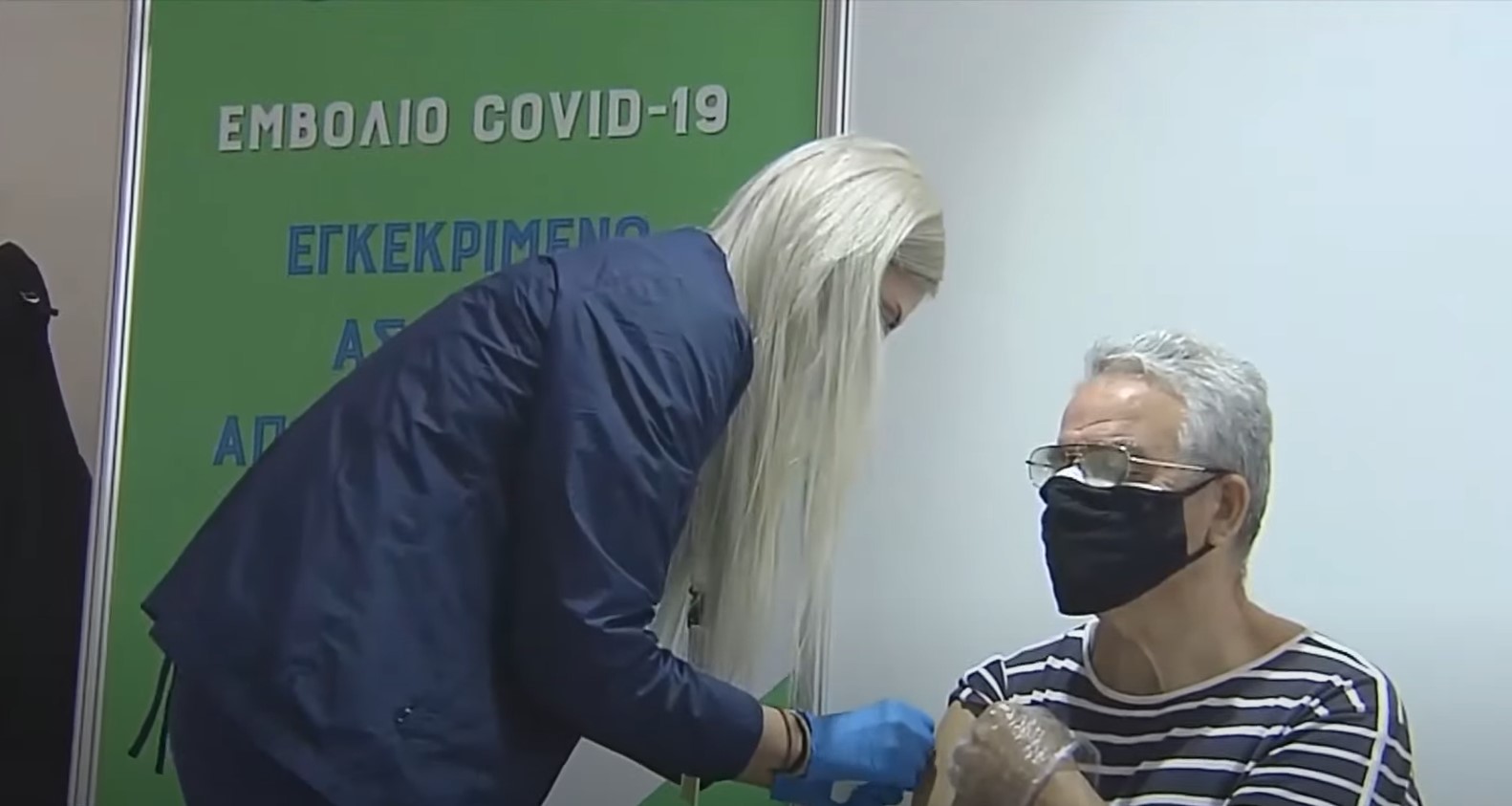
Triaridis was a true phenomenon: in his effort to ensure that no one was left without an examination, he voluntarily held outpatient clinics in the afternoon until late at night, and despite the fact that his illness entitled him to take endless leave, he not only did not do so, but on the contrary, increased his working hours.
There were many who believed that his illness was a lie or an exaggeration. It was logical: it seemed impossible that anyone could endure such a schedule after chemotherapy. However, logic did not apply in his case. He was someone who countered every weakness of the body with the strength of his mind, stood by each of his patients with tremendous solidarity and humanity, and never once thought of asking for anything in return or cashing in on his fame in any other way.
It is characteristic that when people brought him various gifts of gratitude, he simply distributed them with a smile to the nurses or other patients who needed them most.
Triaridis battled cancer for ten years. He died on December 12, 2013, at the age of 45. But as they say in superhero movies: ideas never die. Their bearers may, but the ideas themselves do not.
Read what his friend Lefteris Mavrikos wrote about him:
But his most important characteristic was his humor, his self-deprecation, and his constant willingness to joke around and accept jokes. We spent endless hours with various friends teasing each other with jokes that others would consider rude. Especially during the years of his illness, we had created «joke medicine.» In the cafes of Toumba, because he couldn't go any further, between drinks at first and sodas later, we dealt with his illness with jokes.
When he first got cancer in his lymph nodes, I told him he had female cancer in his... When he got it in his lung, I told him, «How deceitful are you, doctor? You went and used cancer as an excuse for smoking.» «Finally,» he said, «now they'll stop nagging me about smoking.».
When he had brain cancer and was undergoing radiation treatment, I told him I would take him camping with me to use as a flashlight, and he said that now he would make the best firework of his career as a fisherman, because his head would glow from the radiation. «Not to mention that you'll become super smart and write a book like Thanasis,» I would say to him. «Are you serious?» he would say. «I'll become a writer too? I'll be famous. Now when I type Thanasis Triaridis into Google, it brings up ten pages about the kid and one about me.».
This continued until the very end. A few days before he passed away, while he was being treated at Theagenio Hospital, I saw him in a very uncomfortable and awkward position and started with the usual: «What kind of posture is that, you lazy man? I'll take a photo of you and blackmail you into buying me beers for the rest of your life.» He smiled with that characteristic smile of his, more with his eyes than his mouth, and said, «Ha ha, as if you'll ever get beers out of me!»
It was tough and sometimes painful, but I learned that you have to stick your tongue out at fear. You must never show that you are afraid, because then you will stop fighting. I don't know if he was afraid (perhaps the only person who knows is his wife Natalia), but in the end it doesn't really matter because he never showed it, never stopped fighting. He fought harder than anyone else. There may be no other person in history who endured almost six years of continuous chemotherapy.
Thanasis, Michalis, Giannis, and a few others are precious friends, friends for life. We lived, we talked, we dreamed, we realized some of our plans, while others remained just plans (such as Michalis's PPP).
Whatever qualities I have as a person are the qualities of dreams, of conversations about the small and big moments we experienced locked in the elevator at Thanasis's house, on a beach talking about Brecht, in Theagenes' bed, first me and then Thanasis, the music at Yannis' house, the ode to the forgotten afternoon in Santorini... Now that the first of us has left, I want to thank you all for what you have given me.
From Thanasis, I choose to keep one phrase, as recorded by his namesake Thanasis Triaridis. I need it for the difficult years ahead.
«It's not bad to be afraid. But don't stop fighting for a moment...»
His cousin, writer, publisher, and columnist Thanasis writes about him:
If Thanasis were alive today, he would be turning fifty-four. We would celebrate it in Makrafou (where else?), old friends and new friends, all together—as always.
We would be at sea from dusk till dawn, smoking terrible cigarettes, dancing to demonic music, Ramones and Joey Division and Clash and Queen and many others. And he would whirl around with a cigarette in one hand and a drink in the other, at the center of the wonderful celebration he constantly organized to expand the territory of our lives.
Doctor Thanasis Triaridis, my beloved cousin with whom I shared the same name, was born on July 9, 1966, and died on December 13, 2013.
More and more people in Thessaloniki are telling the same story, something like a strange urban legend: a doctor with cancer who, for nine years, went straight from the harshest chemotherapy treatments to operating on his patients, working extra hours and doing so entirely voluntarily, against all logic and physical endurance.
And in the afternoons, he would voluntarily offer extra outpatient services for EVERYONE, without a health insurance card or appointment...
A short while ago, I met a woman on the train, around fifty years old, married, with grown children. Thanasis had operated on her father.
«All of the patients» relatives knew his story and considered him a saint or Superman... I only knew him for a few days, but I still talk to him as if he were someone very close to me... Whenever I want to find meaning, I think of him... I'm embarrassed to tell you this, but I feel like I'm in love...« I smiled: »Don't be embarrassed at all... We were all in love with Thanasis..."
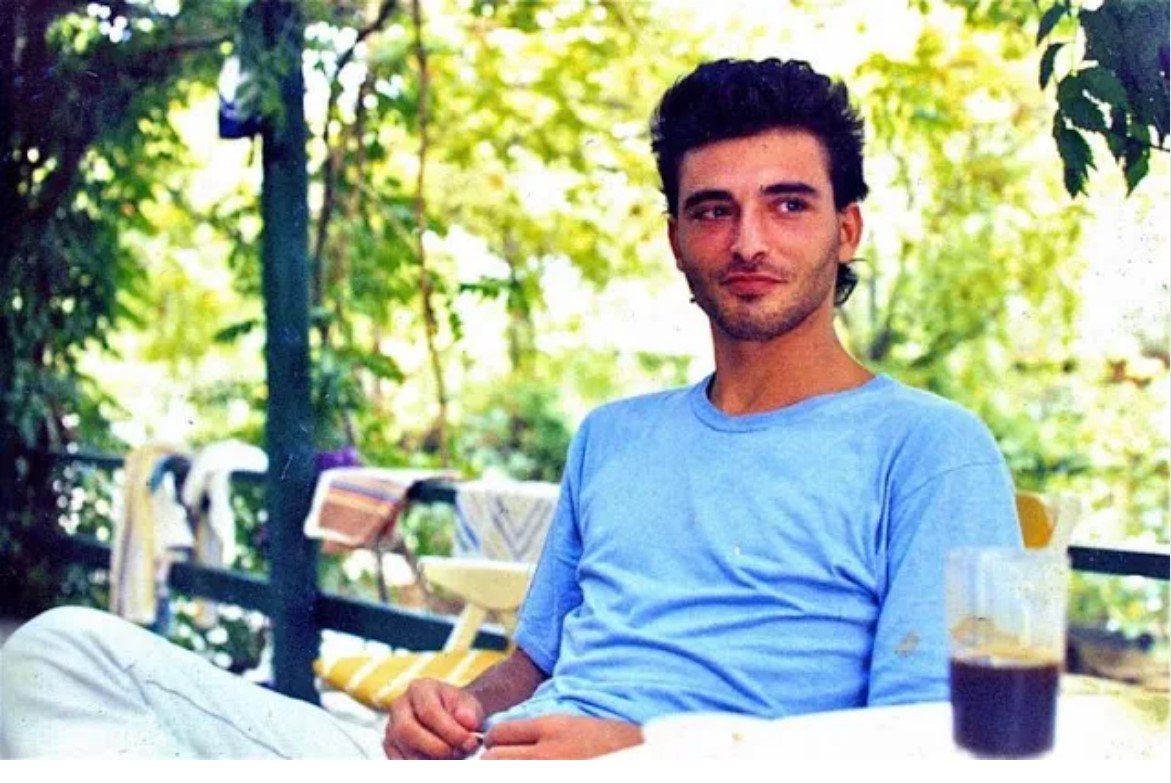
Aleka N. sent me this photograph a few months after he left. It was, of course, in Makrafou, in the green house, in the heart of the wild summer, sometime in the second half of the 1980s—perhaps 1986, perhaps 1987. The bath towels are drying on the railings. A little further away in the garden, Dinos would be watering with a hose in his hand.
The coffee would remain endless. Soon Thanasis would get up and say to me, «Cousin, let's go...», a phrase that meant that the hours of shade were over, that we finally had to go and collect octopuses.
But now there is no more time, nor death, there is only that something in his eyes, at the corner of his lips.