The ceasefire agreed between Armenia and Azerbaijan has been in force since Wednesday evening, Armenian Security Council Secretary Armen Grigoryan announced. «A ceasefire agreement was reached with the mediation of the international community,» Grigoryan told Armenian television, specifying that the ceasefire came into effect at 8 p.m. Wednesday night.
There is no confirmation of the ceasefire agreement from the Azerbaijani government, the German News Agency (dpa) underlines.
Armenian Prime Minister Nikol Pasinyan told parliament that more than 100 Armenian soldiers had died in the hostilities of the last few days and that 50 square kilometres of Armenian territory had been occupied by Azeri soldiers. The Azerbaijani Defense Ministry announced the death of 54 of its soldiers.
Despite the announcement of a ceasefire, thousands of demonstrators took to the streets of Yerevan last night, demanding Pashinian's resignation, accusing the Armenian Prime Minister of not showing any strength towards Azerbaijan.
Armenia requested the assistance of the Collective Security Treaty Organisation (CSTO), which is led by Russia. However, with Moscow committed to the war in Ukraine, the CSTO has contented itself with sending experts to the region, whose arrival was scheduled for today.
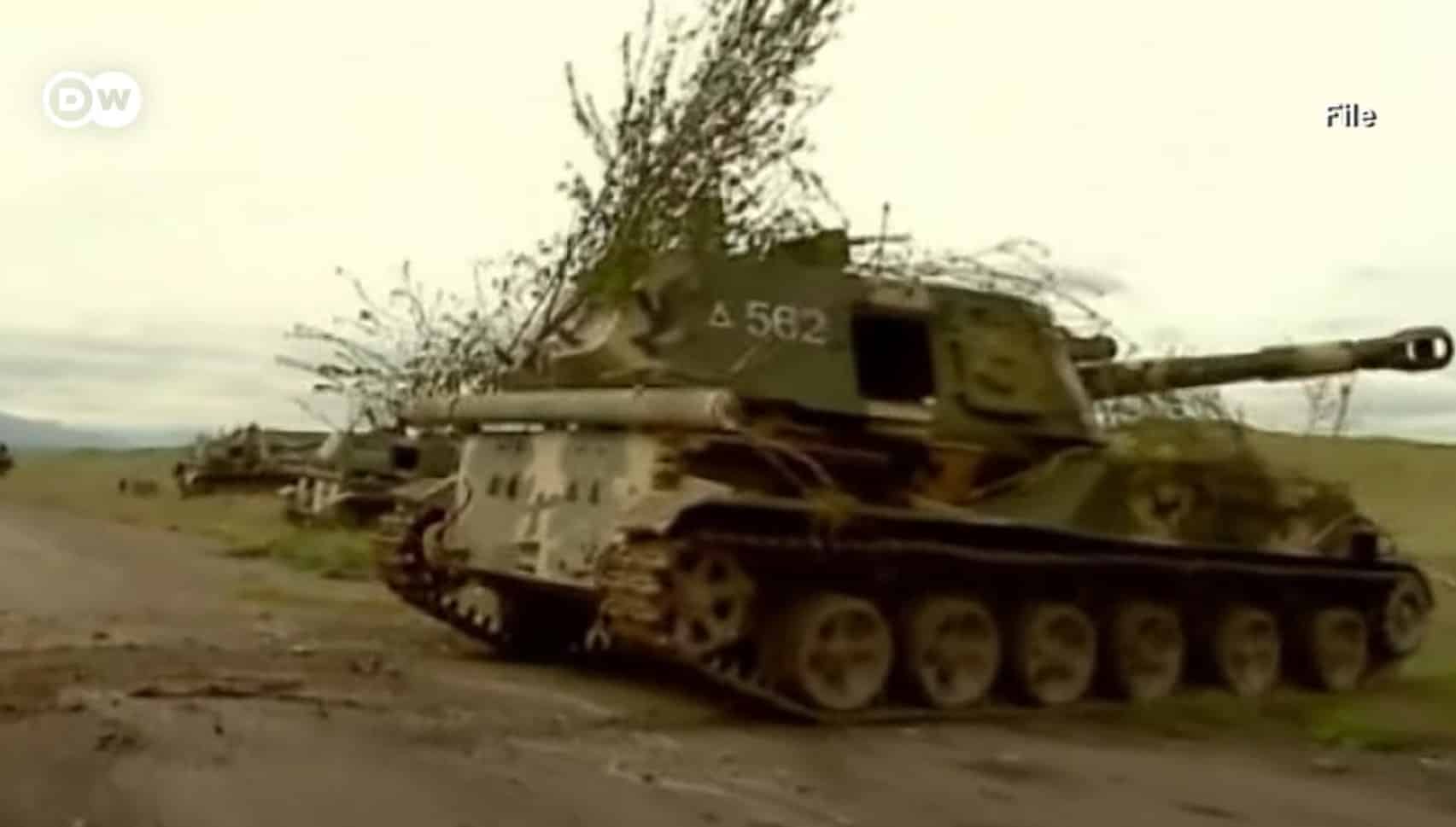
Relations between the two former Soviet republics have been strained since 1991 over the disputed enclave of Nagorno-Karabakh. The dispute over its control escalated again in the autumn of 2020, when a 44-day war broke out, during which Azeri forces took control of several sectors.
The war ended thanks to the Russian-brokered peace agreement, but Baku and Yerevan have at times accused each other of ceasefire violations along the border.