An international team of researchers, led by a Greek scientist, wants to shed light on why some people may have a natural genetic resistance to the coronavirus, meaning they do not contract Covid-19 or transmit it to others. They hope, thus, that they will find new drugs and treatments.
Η pandemic has highlighted certain paradoxes, such as cases where a single person in a family is not infected with coronavirus when everyone else around them is sick or people who do not become infected even though they work in a high-risk environment. And of course because quite a few people have no symptoms whatsoever when they become infected, while others—even though they have no underlying conditions—become seriously ill or die.
So far, no one really knows why there is such diversity in response to coronavirus infection. Until now, the focus has been on finding rare mutations that make some people less susceptible to severe Covid-19, but now attention is turning to the «elite» who may have complete natural resistance to the coronavirus.
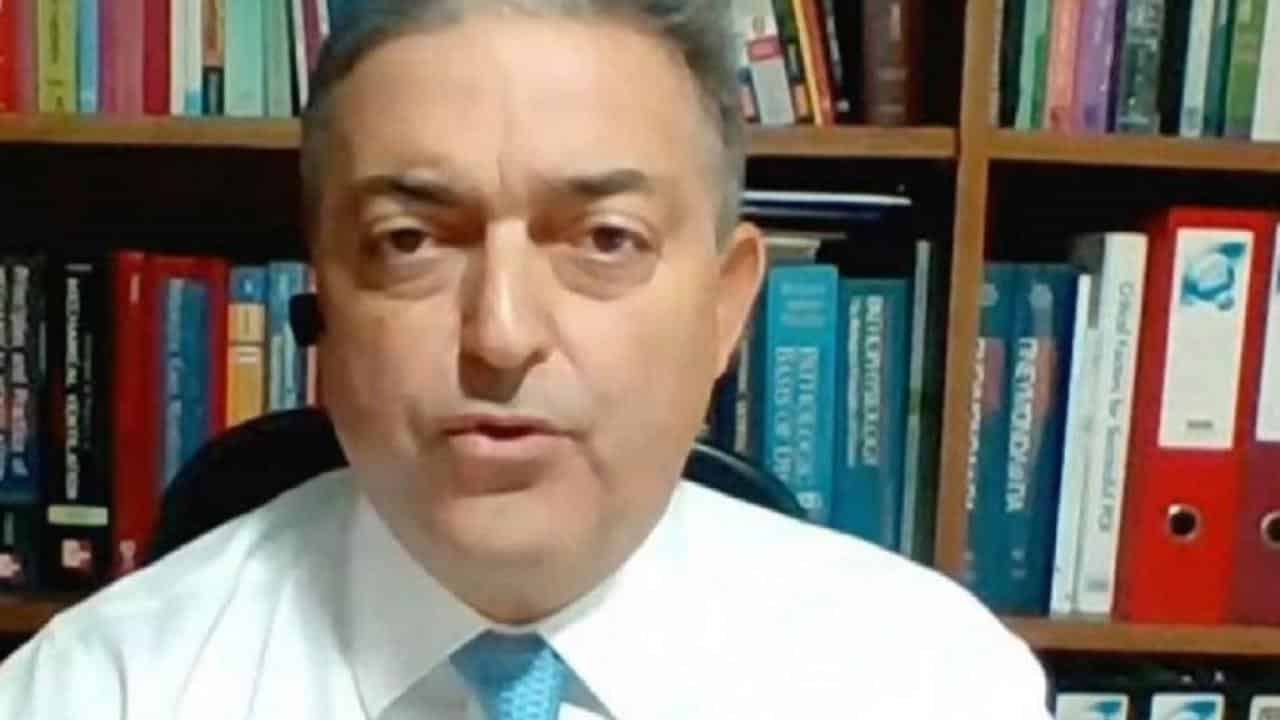
The researchers, led by immunologist Dr. Evangelos Andreadakos, researcher at the Immunobiology Laboratory of the Center for Clinical, Experimental Surgery & Translational Research of the Biomedical Research Foundation of the Academy of Athens, who published their findings in the immunology journal «Nature Immunology,» have launched an international research project aimed at discovering specific genes that protect certain people from Covid-19.
If there really is innate resistance to coronavirus at the DNA level, it is probably only found in a very small number of people on Earth, so it may prove difficult to identify the relevant protective genetic factors, as Isabelle Meitz, a specialist in pediatric immunology at the Catholic University of Leuven in Belgium, told Nature. Isabelle Meitz, a pediatric immunology specialist at the Catholic University of Leuven in Belgium, told Nature, so the challenge is to find these «lucky» people.
However, E. Andreadakos remains optimistic that they can be located. As he says, «We are confident that we will find them. Even if we find just one, it will be really important.».
The research is primarily targeting people who have been exposed to the coronavirus for a long time without protection, e.g. due to close contact with someone infected with Covid-19, but who have not fallen ill themselves. There is particular scientific interest in those who sleep in the same bed as a person with coronavirus, but do not become infected themselves.
Researchers from ten research centers in various countries (including Greece) have already found approximately 500 candidates for the study who appear to meet the above criteria, while after the publication of their study, another 600 people—some from India and Russia—have expressed their willingness to participate, which surprised the researchers, whose goal is to find at least 1,000 people for their study. According to Andreadako, however, the analysis of the data has already begun.
One of the difficulties is for researchers to ensure that the study participants had indeed been exposed to partners or roommates who shed large doses of active coronavirus around them. The fact that many people have now been vaccinated, which probably «masks» any genetic resistance in their bodies, limits the possibility of finding suitable candidates.
Once a sufficient number has been found, researchers will compare the genomes of the «invulnerable» with those of Covid-19 patients, hoping to find critical differences in certain genes. If these are identified, they will be studied in cell cultures and experimental animals. to confirm that they provide genetic resistance.
One possible discovery will be people who do not have an active ACE2 receptor, which the SARS-CoV-2 virus uses to invade human cells. Other people may have an unusually strong immune response, particularly in the cells inside their nose, thus preventing the coronavirus from establishing a foothold.
Andreidakos considers it possible that some people have mutations in genes such as that «slow down» the virus so that it cannot multiply into new viral particles or break down the viral RNA inside the cells.
Researcher A, Dr. Evangelos Andreakos, completed his doctoral thesis in immunology and related postdoctoral research at Imperial College London. In 2005, he became a researcher at the Center for Immunology and Transplantation of the Biomedical Research Foundation of the Academy of Athens. His studies focus on the role of innate immunity in the training of adaptive immune responses in the airways, as well as on the development and persistence of inflammation.