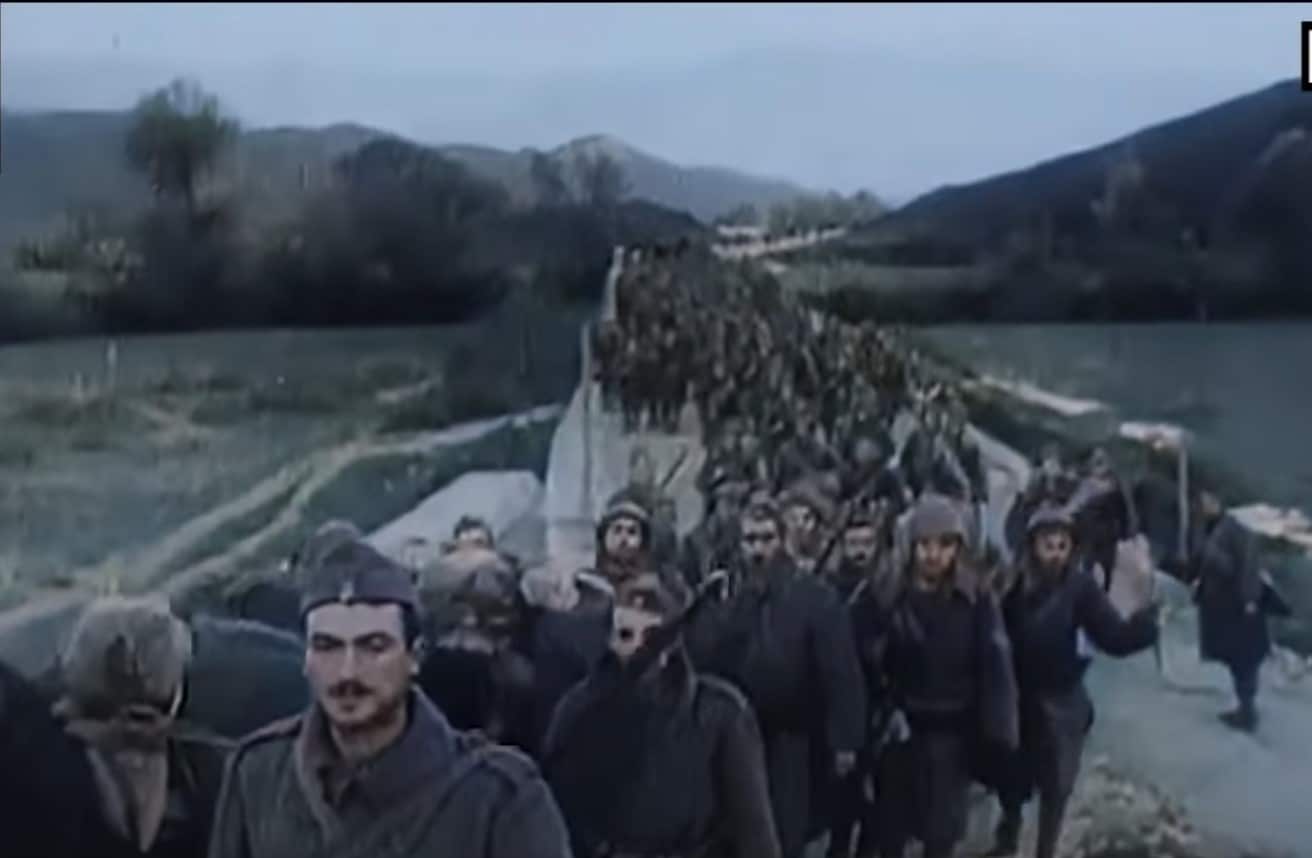
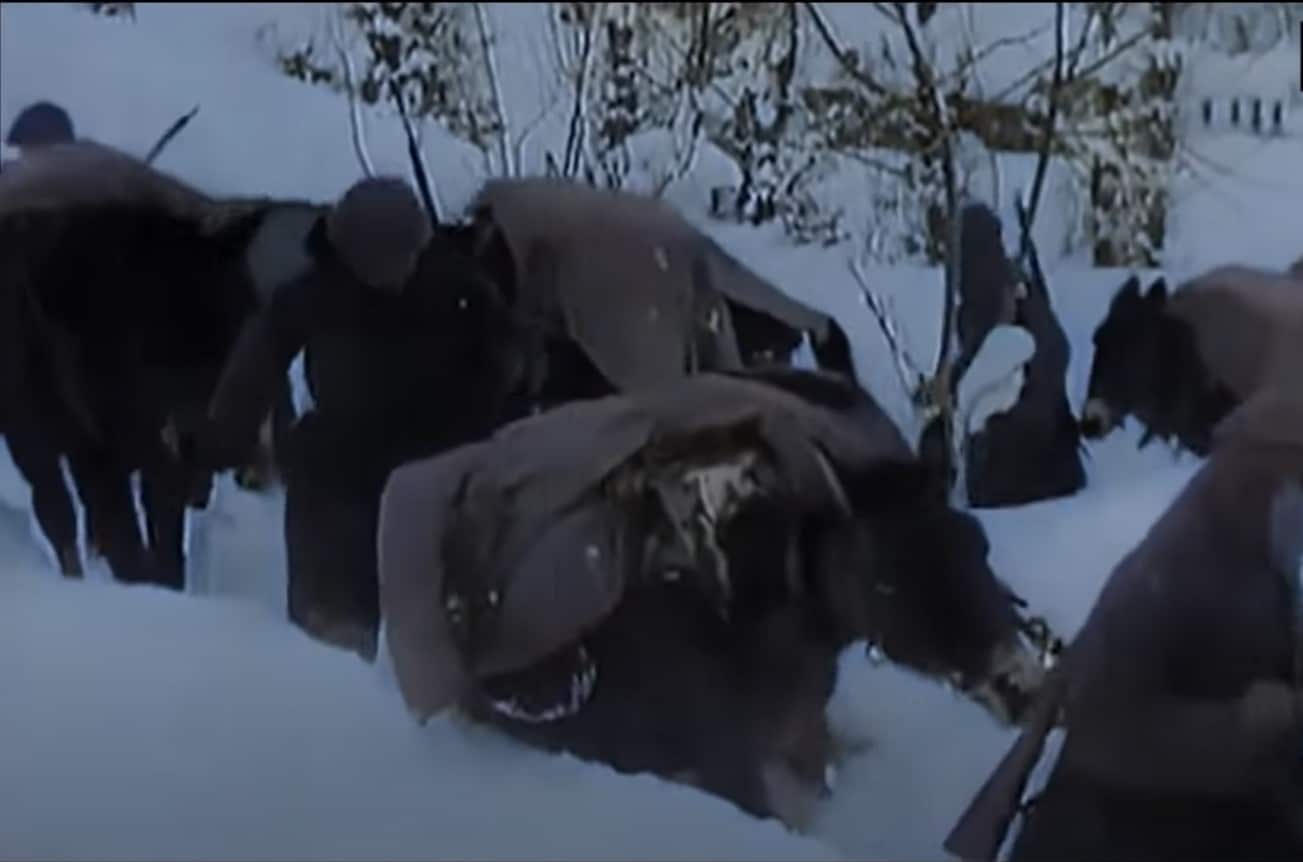
One of the important personalities that come to mind on the day of 28 October is of course the leading Greek singer and actress Sophia Vembo. The great performer went down in history as the «Singer of Victory» because of the national songs he performed in a unique way during the Greek-Italian war of 1940. One of them is the legendary and unrepeatable «Children of Greece Children».
Her artistic career extends from the interwar period to the early postwar years and the 1950s. The Her real name was «Sophia Bembou», but she chose to adopt the adjective «Vembo» by doing the necessary legal procedures because that's how the public was used to pronounce her name. Born in Gallipoli, Eastern Thrace on February 10, 1910 and passed away at the age of 68 on March 11, 1978 - with her funeral turning into an all-out rally. In 1912 her family relocated to Istanbul.
In 1914, with the signing of the Greek-Turkish population exchange agreement negotiated by the government of Eleftherios Venizelos, her family was forced to leave Constantinople and returned to Tsaritsani and from there settled permanently in Volos.
In September 1933 she decided to go to Thessaloniki to find her brother George, who was studying there and had not written a letter for a long time. So taking her guitar she boarded the A/P Kefallinias where during the journey she started singing with her guitar. In no time all the passengers and crew were around her and applauding her enthusiastically. by her voice. This was theoretically her first public appearance.
Smuggled disguised as a nun in the Middle East
In 1939 Sophia Vembo had already established herself as the first female singer of Greek light song. On 28 October 1940 at 10.00 a.m., when the radio programme of the Zappeion was about to continue with the broadcast of S. Vembo's songs, the announcer Kostas Stavropoulos interrupts the programme and makes the historic announcement of the attack of the Italian forces against Greece and the defence of the days. The Greek-Italian war had begun.
https://www.instagram.com/p/B8L2QxRlQjs/?utm_source=ig_embed&ig_rid=9ef59422-f3d7-4070-84cf-4b82199e0f53
Vembo sings satirical and war songs and becomes the national voice that inspires the Greek soldiers on the front and shocks the nation. At the same time, in a symbolic act, he offers the Greek Navy 2,000 gold pounds. When the Nazi troops entered Athens, she fled disguised as a nun to the Middle East, where she continued to sing for the Greek and Allied troops there.
«Children of Greece Children» with lyrics by Mimis Traiforos
One of the songs that were indelibly engraved in the epic of the ‘40s and is still sung today on the anniversary of 28 October is «Children of Greece children» with lyrics by Mimis Traiforos and music by Michalis Sougioul. It was the first song of the 1940s epic, the one that launched Vembo's career. The song is actually ’Zehra« from 1938 (lyrics by Emilios Savvidis, music by Michalis Sougioul, first performed by Sophia Vembo), to which Traiforos changed the lyrics in 1940 and it became »Children of Greece Children«.
It is said that in the last lyrics of the famous song Mimis Traiforos had written: «If you do not come victorious, never come.». This verse seemed harsh to Vebo and he persuaded Traiphorus to change the verses by turning them into: «With the branches of victory, we await you guys».
The «Children of Greece Children» has been the the starting point of the great love of Sophia Vembo and Mimi Traiforos, who adored her until her death.
In the summer of the 1940s, the poet and lyricist Mimis Traiforos was a great success as an extra in the famous ’Oasis« at the Zappeion, while Vembo was a hit at the theatre. It is said that she went to see him with her company, and he made some comment that annoyed her. In August »40, Sophia declares. «I never want to meet him. Neither artistically nor in my life» - but he doesn't.
Backstage at the «Montial» theatre» Sophia approaches Traiphorus and asks him to write a war song for her, based on the music of «Zehra», «Since when do the gods ask favours from men?» he replies. For her sake, he writes in an intermission of the performance the «Children, children of Greece».
They would finally marry in 1957, but their relationship has always been stormy, full of tensions, homeric quarrels, separations and reunions.
https://www.instagram.com/p/CVinrerL10J/?utm_source=ig_embed&ig_rid=1c9b1af1-1923-47e8-97c2-bae8d994cb3a
Sofia Vembo - Lyrics «Children of Greece children»
Through the streets the mothers walk around and look around,
their children swore at the station when they were separated
to win.
But for those who are gone and glory enfolds them, let us rejoice,
and let no one ever cry, let her every pain burn, and let us wish:
Children, children of Greece, who fight hard on the mountains,
children to the sweet Virgin Mary we pray you all come again.
I say to those who love and for whom they stay up all night and sigh,
that bitterness and trembling in an honest Greek girl are not suitable.
Greeks of Zalongo and the city and the hill and Plakiotissa,
no matter how bitterly we ache, we proudly practice as Souliot women.
Children, children of Greece, who fight hard on the mountains,
children to the sweet Virgin Mary we pray you all come again.
With the branches of victory, we are waiting for you guys.
In «Stella» with the unforgettable Melina Mercouri
Η Sofia Vembo has participated in the Greek films «The Refugee Girl» (1938) as Sophia Nakou, «Stella» (1955) as Maria and in the 1959 film «Stournara 288» in the double role of the elderly piano teacher Mrs. Eugenia (the once famous Jenny Blanche) and Sophia Vembo. Her performance in Kakoyannis« »Stella« as Maria in the role of Maria in the popular shop »O Paradisos" is also great.