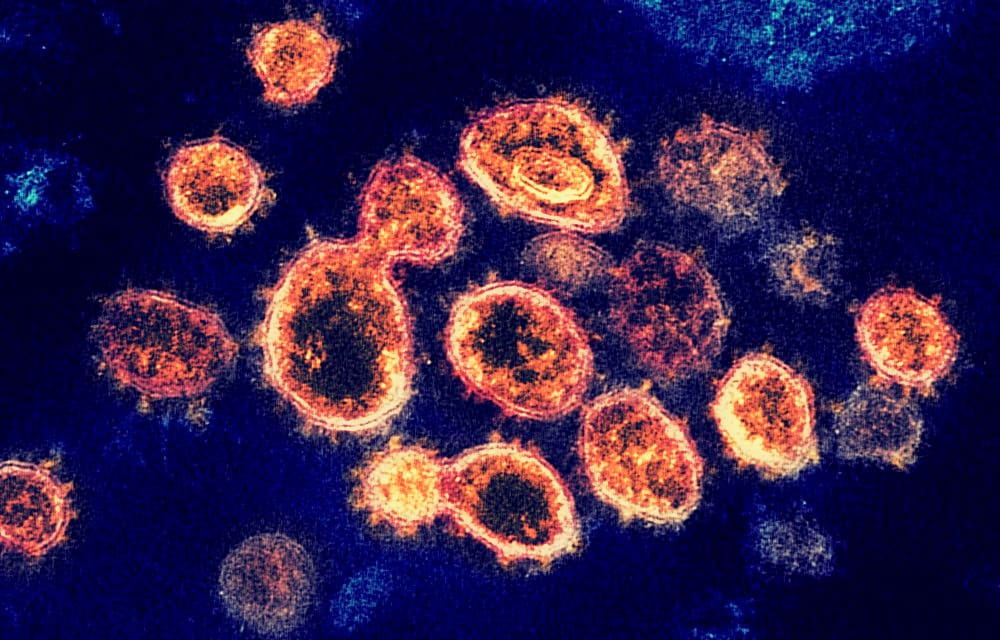
The technology, called messenger RNA (mRNA), with molecular messengers providing genetic instructions, has become known mainly because it was used in the development of vaccines Pfizer-BioNTech and Moderna against coronavirus. However, the use of this technology in vaccine development may continue for many years, even for many different diseases.
What exactly is mRNA technology?;
First of all, it is important to mention at this point that the functions of proteins in our body are very many, different and important and for this reason, we rely on them for almost every action we do.
So messenger RNA molecules tell our cells which proteins to produce. So in the case of coronavirus, this technology «instructs» our cells to make the vaccine that will protect us through a mechanism that is: Once they accept the command, our cells will produce the S-protein of the virus that is the antigen (the stimulus). Our body's cells will then make antibodies, identifying this protein with an «invader» that has entered our body. For this reason, whenever our cells recognise this protein in the future, they will be so well trained that they will greatly reduce our risk of contracting coronavirus.
A new discovery?;
Of course, mRNA technology was not invented in 2020. More than 40 years have passed since the first research was carried out by a Hungarian scientist. From the 1970s until 14 December 2020, the date when the first mRNA vaccine began to be distributed in vaccination centres in the United States, many scientists have spent a significant part of their careers researching this technology.
The first of these was Katalin Karikó. Working at the Biological Research Centre in Szeged, Hungary, she started thinking about the idea of mRNA. In the 1980s, she left Hungary for the United States and the University of Pennsylvania, where she tried to create an mRNA technology that the human body could accept. However, he failed. But he did not give up and continued, together with researcher Drew Weissman. So shortly after 2000, after many, many attempts, the two researchers realized that in order for the synthetic mRNA to make it into cells, they needed to ’sneak in‘, some minor adjustments had to be made to the nucleotides, which were its building blocks.
So, in the US, this particular research has received enormous attention from many, many academics. Of course, of course, it also received the attention of several companies. One of them was Moderna. At the same time, in Germany, Ugur Sahin and Özlem Türeci, a married couple specialising in immunotherapy, found several companies interested in researching how this technology could help find cures for cancer. Η BioNTech, was one of them.
«There was really a lot of caution when we started, because it was essentially a new technology and people in the pharmaceutical industry didn't want to deviate from the already known paths,» Özlem Türeci tells The Atlantic.
So as the years went by, both BioNTech and Moderna tried to create mRNA-based products, unsuccessfully. But they continued to improve their methods, more and more.
«We thought this technology would be excellent for simple flu because of its speed and flexibility.», Philip Dormitzer, who is in charge of Pfizer's vaccine programs, tells The Atlantic.
But when the outbreak of the new coronavirus became known across the globe, the major issue for these companies was no longer finding the flu vaccine, but the SARS-Cov-2.
«What we did was actually change the influenza protein and replace it with the coronavirus protein. As it turned out, it wasn't that hard,» Dormizer said.
That was the reason why Pfizer and Moderna moved so quickly. On January 11, Chinese scientists published the genetic sequence of the coronavirus. Just 48 hours later, Moderna's vaccine «recipe» was in its final stages. In late February, batches of the company's vaccine were sent for the first clinical trials. The next step is known.
The future of mRNA
It is very likely, of course, that mRNA technology will continue to be used to develop vaccines for many diseases in the future.
In early 2021, a Yale research team tried to develop a vaccine for malaria, based on mRNA. Note that, malaria kills more than 400,000 people every year, a significant proportion of whom are children. This disease is not caused by a virus or bacteria, but by a plasmodium. Plasmodia have the ability to change the way they «invade» the body, as a result, they can «fool» the body's defences, and one can catch the disease over and over again. As a result, the development of a vaccine is particularly complex.
«We have been working on the development of a malaria vaccine for years. But everything has changed in recent months because of the success of the coronavirus vaccines,» Richard Buccala, a researcher at Yale, told the Atlantic.
At the same time, Pfizer has announced plans to use this technology against seasonal flu. In turn, BioNTech, is developing individual therapies, related to the treatment of cancer, based on mRNA. Of course, cancer is not just one disease, but a set of more than 100 different «conditions». BioNTech's proposal, however, involved the development of a set of treatments that would «train» our immune system to defend itself against any cancer «threat» that would manifest itself in the body.
In other words, BioNTech aims to: To be able, by taking a sample from each patient, to develop an individual vaccine through genetic analysis using mRNA technology, which will give «instructions» to the patient's cells on how to produce proteins to deal with the cancer «threat». In this way, the immune system would be able to deal with the cancer cells in the body. In essence, the way in which the German company is aiming to develop an anti-cancer treatment is not so different from the method it used against coronavirus.
«We hope and believe that what we have learned from the coronavirus can be applied to cancer treatments. The company is currently in the process clinical trials, where personalised vaccines are used for each type of cancer,» says Türeci.
In fact, a study from the University of North Carolina pointed out that, although progress in such treatments has been slow in recent years, now, with pandemic, the clinical trials being carried out are «very promising». «We hope that the mRNA technology can be used in cancer treatments very soon,» the researchers state in their study.
It is also worth mentioning that, with mRNA technology, trials are being carried out in experimental animals, which have shown very positive results in the treatment of multiple sclerosis.
«We have in our hands a technology that can be applied to several different diseases. Essentially, at least on a theoretical basis, anything you can make with protein can be replaced with mRNA,» says Türeci.
«mRNA is not a magic wand»
«It is always important to bear in mind that the technology used in one epidemic may not be as effective for another, and you don't know that until it's proven,» said Peter Hotez of Baylor College of Medicine in Atlantic, who also pointed out that, «even after the success of mRNA, we should not yet talk about a “miracle”. Because, no one knows how it will work against the next virus. What is certain, however, is that the coronavirus vaccine was found very easily.
In the same vein, Dormitzer, stated, «indeed, this technology is by no means a magic wand. We should not assume that it can be used perfectly for every disease.».
«Obviously we are not talking about a “holy grail” that cures everything. We have to look at each disease individually. One at a time. And then we will see where we can use it successfully and where we cannot,» Türeci stresses in turn.
«Five years ago, we were in a state of ignorance about this technology. And five years from now, we'll see where we are. But one thing is for sure, in 2026, we'll be saying that, in 2021, we were in an ignorance phase. That's the beauty of science, and just in the “world of science”, you can't deny that mRNA was by far the most important achievement of 2020,» John Mascola of the National Institutes of Health, who, along with a number of other scientists, when the MERS coronavirus appeared in South Korea, studied the structure and behavior of the coronavirus, making a major contribution to the development of today's vaccines, tells The Atlantic.
By Evangelos Theodoros